Fractal geometry has two literatures that barely speak to each other. One is visual and popular — the Mandelbrot set, coastlines, the word chaos on a cover. The other is measure theory: Hausdorff dimension, self-similar measures, and a great deal of careful analysis. The usual failure is to read the first, enjoy it, pick up the standard graduate text, and discover on page twenty that it assumes you already know what a Borel measure is.
So this path is built around the join. Read the popular books for motivation, the picture-and-algorithm books to keep the intuition alive, and then choose your entry to the mathematics according to how much real analysis you have. Two authors dominate the list and two titles collide, so names matter: there is a Fractals by Kenneth Falconer and a Fractals by Jens Feder, and they are aimed at completely different readers.
The story first
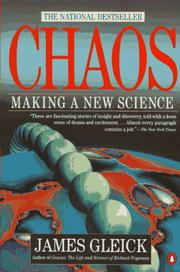
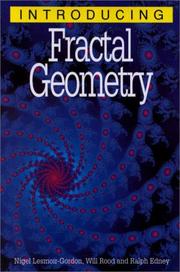
James Gleick's Chaos is the narrative history that put this material in front of a general audience; it is journalism, it is forty years old, and it is still the best account of why anyone got excited. Introducing fractal geometry is an illustrated graphic guide — an hour's read, useful for vocabulary. Falconer's Fractals is the Very Short Introduction, written by the author of the standard textbook, and it is the one to read if you intend to continue: it is short but it does not lie to you about what the definitions cost. The Colours of Infinity collects essays around the documentary of the same name, with contributions from Arthur C. Clarke among others.
Mandelbrot in his own voice
The fractal geometry of nature is the 1982 book that assembled the field and named it. It is not a textbook — there are no exercises, the argument wanders, and the tone is closer to a manifesto than a course. Read it for the claim that irregularity is the normal case in nature rather than a nuisance, and for the illustrations. The (mis)behavior of markets, written with Richard Hudson, applies the same argument to finance, contending that standard models systematically underestimate extreme moves. Economists disagree about how much of it holds up; the critique of Gaussian assumptions has aged better than the constructive part.
Pictures with mathematics attached
The Beauty of fractals by Heinz-Otto Peitgen and Peter Richter pairs the famous Mandelbrot set images with the complex dynamics that generate them. The Science of Fractal Images is the algorithms volume — how the pictures are actually computed. Chaos and fractals, by Peitgen, Hartmut Jürgens and Dietmar Saupe, is an enormous undergraduate text that only assumes calculus and works patiently through iteration, dimension and dynamics. If real analysis is out of reach, this is the deepest book you can read without it.
The mathematics proper
Gerald Edgar's Measure, topology, and fractal geometry is the gentlest route into the rigorous material because it builds the metric-space topology and measure theory it needs rather than assuming them; an undergraduate analysis course is enough. Falconer's Fractal geometry is the standard reference — Hausdorff measure and dimension, box dimension, self-similar and self-affine sets, applications — and it does assume measure theory and comfort with analysis proofs. Falconer's Techniques in fractal geometry is its sequel, aimed at research students, and should not be attempted first.
Two specialised entries round the path out. Michael Barnsley's Fractals Everywhere develops iterated function systems from the contraction mapping theorem, which makes it a satisfying self-contained course if you like constructive arguments; it wants metric spaces. Jens Feder's Fractals is written for physicists, with percolation, scaling and diffusion-limited aggregation, and it is the right book if your interest is modelling rather than proving.
Read the whole path in order and you get the sequence that the field itself took: pictures, then a claim about nature, then the measure theory that made the claim precise.
Follow the full ordered path here: The Best Books on Fractals and Fractal Geometry, in Reading Order.