Fortunes of War by Olivia Manning Reading Order: Where to Start
Fortunes of War is six novels written over twenty years and read in one straightforward line: the three Balkan books first, then the three Levant books, following Guy and Harriet Pringle from Bucharest in 1939 ahead of the German advance to Cairo and Alexandria in 1942. Publication order and story order are the same here, which is rare for a sequence this long, so there is no argument to have — the only decision is whether you buy the six novels singly or as the two trilogy omnibuses, which contain exactly the same text under different covers. Read it slowly; Manning is writing a marriage and a retreat at the same time, and the war is mostly weather.
Start Here: Bucharest
IntermediateMeet the Pringles in the first weeks of their marriage and the first weeks of the war, and learn to read Manning's method — enormous events reported at the edge of a dinner party.
▸ Study plan for this stage
Pace: Five to six weeks for the two novels — The Great Fortune is 296 pages and The Spoilt City 304, and neither should be hurried. Manning writes in scenes rather than chapters of action, and the pleasure is entirely in attention: a dinner, a conversation about money, a walk through a city that is slight
- Manning's method, which you must learn in the first fifty pages or the whole sequence will seem to be about nothing: the war is reported at the edge of the scene. Poland falls while someone is complaining about a restaurant bill, and that proportion is deliberate and sustained across two thousand pa
- Harriet as the consciousness of the sequence. She has married a man she barely knows and arrives in a foreign city as his appendage, and almost everything is seen through her intelligence and her resentment
- Guy Pringle and the sequence's real subject: a man of enormous generosity who belongs to everybody, which is admirable in public and unbearable in a marriage. Manning is not writing a bad husband and it would be a much lesser book if she were
- Prince Yakimov, the White Russian sponger with the sable-lined coat, who is the comic engine of the early books and also Manning's method in one character — he registers the war entirely in terms of who might buy him lunch
- Guy's production of Troilus and Cressida in The Great Fortune, which is the sequence's most celebrated set piece and its clearest statement of theme — a play about a doomed city staged by people whose city is about to fall, with Guy directing everyone and noticing nothing
- Sasha Drucker and the fate of the Jewish banking family, which is where Manning lets the historical horror into the domestic frame directly. Watch what Harriet does and what Guy does, and note the difference
- The Spoilt City's structural design: the same Bucharest degraded. Manning is showing you the identical streets, restaurants and people under the Iron Guard, and the contrast with book one is the entire method
- The historical spine of the Romanian books — the cession of Bessarabia, the Second Vienna Award, the Iron Guard in the streets, the abdication of King Carol — arriving as rumour and disruption rather than as narrated events, because that is how it reached the people in the room
- In the first chapter, what does Harriet learn about Guy that she did not know before she married him? Manning puts it very early and very quietly
- How much of the outbreak of war reaches the reader directly, and how much through overheard talk? Count the direct reports in the first hundred pages
- What is Yakimov actually doing in every scene he appears in, and why is he funny rather than pathetic in the early books?
- Why Troilus and Cressida rather than any other play? Consider both what Guy thinks he is doing and what Manning is doing
- How do Guy and Harriet each respond to Sasha's situation, and what does the difference tell you about the marriage?
- Name three specific ways Bucharest is different in The Spoilt City from The Great Fortune. Manning gives you the same locations deliberately
- Read the first thirty pages and write down everything you learn about Guy from Harriet's observation alone. Keep the list. You will revise it several times across six novels and the revisions are the sequence.
- Mark every place in The Great Fortune where a major historical event is mentioned and note what the characters are doing at the time. The pattern is the method, and once you see it you cannot unsee it.
- During the Troilus and Cressida chapters, note who Guy casts in which part and why. Manning's casting is characterisation for about eight people at once and it repays being read slowly.
- At the end of The Spoilt City, write two hundred words on what has changed in the Pringles' marriage. It is less than you expect and the smallness is the point.
- Note every time Harriet is left alone because Guy is with other people. The count matters and it is the argument of the whole sequence.
Next up: Romania is finished for them and the first retreat is under way, which is where Manning shows you what exile does to a marriage that was already unequal.
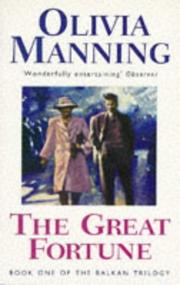
The opening novel and the only place to begin. Harriet arrives in Bucharest as a new wife to a husband who belongs to everybody, and the sequence's whole subject — being married to a generous man — is set up before the Germans are anywhere near. Prince Yakimov's begging is the comic engine you will miss for six books once he is gone.

Romania comes apart, the Iron Guard take the streets, and the English colony realises it is going to have to run. Second: Manning is deliberately showing you the same city degraded, so the contrast with book one is the point.
Athens
IntermediateFollow the first retreat, and watch the marriage tested by exile rather than by war.
▸ Study plan for this stage
Pace: Three to four weeks for Friends and Heroes, which at 352 pages is the longest of the six. It is also the most sociable and easiest to read quickly, and that is a trap — the warmth is doing structural work and rushing it costs the ending. Read it directly after The Spoilt City with no gap; the arriva
- The structural function of the warmth: Friends and Heroes is the happiest book of the six, set in a city that welcomes them, among people who like them, in a country winning its war against Italy. Manning makes it pleasant precisely so that you feel the loss of it
- Guy in a new professional setting, and the recurrence of the pattern: he acquires a fresh set of dependants within weeks and is again unavailable at home. Watch how quickly it re-forms
- Harriet's growing separateness, which is the real development of this book. She begins to have a life that is not an extension of Guy's, and Manning treats that as both a gain and a loss
- The Greek characters and the English refugees from Bucharest reappearing, which gives the sequence its sense of a shrinking world — the same people washing up in each successive city, each time fewer
- What happens to Yakimov in this book, which you should let arrive rather than look up. He has been the comic relief for two novels, and Manning's handling of it is the moment the sequence's tone changes permanently
- The Greek campaign as historical backdrop: the successful resistance to the Italian invasion, then the German intervention in April 1941 and the collapse. Again mostly offstage, again arriving as rumour and departure
- The second evacuation, and the accumulating theme of the Balkan books: these are people who keep having to leave, taking less each time, toward a place that is also temporary
- The twelve-year gap that follows. Manning published Friends and Heroes in 1965 and The Danger Tree in 1977, so the sequence you are reading was interrupted for longer than the war lasted, and the second half is written by a considerably older novelist
- Why does Manning make this the warmest book of the six? What would be lost if Athens were as grim as Bucharest?
- How long does it take Guy to acquire a new circle in Athens, and what does Harriet do while he does it?
- In what specific ways is Harriet different at the end of this book from the woman who arrived in Bucharest?
- What happens to Yakimov, and what does the sequence lose with him? Be specific about the tonal change
- How much of the German invasion of Greece is on the page? Compare the proportion to the fall of Romania
- This is the end of the Balkan Trilogy. What, if anything, has been resolved?
- Write two hundred words on Harriet's happiest scene in this book. Then reread it after finishing the sequence — very little in the six novels rewards rereading more.
- Take your list of what you know about Guy from stage one and revise it. Mark what you have added and what you have crossed out.
- Track the recurring characters from Bucharest as they reappear in Athens and note who is missing. The shrinking cast is Manning's quietest device.
- At the end, write down what you expect the Egyptian books to be about. The twelve-year gap means Manning did not simply continue, and comparing your expectation to what arrives is instructive.
- If you want to see how the sequence reads as drama, the 1987 television adaptation covers all six novels. Watch an episode of the Balkan half now rather than at the end — it makes clear how much of Manning's effect is interior and unfilmable.
Next up: Two retreats have brought the Pringles to Egypt, where Manning breaks the form she has used for three novels and lets the war onto the page directly.

Greece, and the last months before the German invasion — the warmest and most sociable book of the six, which is precisely why it hurts. Third and last of the Balkan Trilogy; if you are reading the omnibuses, this is where the first volume ends.
The Levant Trilogy
BeginnerRead the second half, where Manning breaks her own form by cutting away from the Pringles to a soldier in the desert, and see why the sequence needed it.
▸ Study plan for this stage
Pace: Six to eight weeks for the three novels, which are much shorter than the Balkan books — The Danger Tree is 201 pages, The Battle Lost and Won 185 and The Sum of Things 203. That compression is itself a change of method and you should notice it. Read them consecutively with no other book in between;
- The structural break, which is the reason this trilogy exists rather than being three more Pringle novels: Manning cuts away to Simon Boulderstone, a young officer arriving in Egypt, and gives him his own alternating narrative. After three novels of war-as-weather, the war gets its own point of view
- The Danger Tree's opening, which announces the change in tone before Simon does — a death at a picnic, arriving with no warning and no consolation. Manning is telling you that this trilogy will not protect you the way the last one did
- Simon as a deliberate contrast to Guy: young, unformed, without conversation, and doing the thing that everyone in the Cairo drawing rooms is talking about. His chapters are plainer in prose and that is not a lapse
- The Battle Lost and Won's central technique: the desert strand and the Cairo strand set directly against each other, so the reader moves between men dying at Alamein and people arranging dinners a few hours' drive away. The effect exists only in sequence and cannot be summarised
- The Cairo social world, with Angela Hooper, Bill Castlebar and Aidan Pratt, which gives Harriet her first substantial friendship independent of Guy. Watch how differently she behaves inside it
- Harriet's illness and the question of evacuation, which sets up the sequence's sharpest sustained irony in The Sum of Things. Let it arrive; it is the one genuine plot surprise in two thousand pages
- The marriage's resolution, which is the thing the whole sequence has withheld. Manning has spent six novels refusing to make Guy either a villain or a reformed man, and the ending honours that refusal rather than escaping it
- The Sum of Things as an actual ending: Manning died in 1980, the year it was published, so the sequence stops where she stopped it rather than being abandoned mid-course. Read it as final, because it is
- Why does Manning introduce Simon Boulderstone, and what would The Levant Trilogy be without him?
- How does the prose in the Simon chapters differ from the Pringle chapters? Is the difference a weakness or a design?
- The Danger Tree opens with a sudden death. What does that opening tell you about how this trilogy will treat the war compared to the Balkan books?
- In The Battle Lost and Won, what is the effect of cutting between Alamein and Cairo? Try to state it without using the word irony
- How does the sequence resolve the marriage, and is it an honest ending or an evasive one? Defend your answer
- Having read all six: what has Harriet actually learned across two thousand pages, and what has Guy?
- After The Danger Tree, write down what you think Simon's function in the sequence is. Revise the note after each of the remaining two books. The revisions are the best record of what Manning is doing with him.
- Take one Alamein chapter and one Cairo chapter that sit next to each other in The Battle Lost and Won and read them again back to back, aloud if you can. The juxtaposition is the technique and hearing it makes it obvious.
- Put a paragraph of The Great Fortune beside a paragraph of The Sum of Things and write two hundred words on how the sentences have changed. Twenty years of writing separate them and the difference is visible at the level of the clause.
- Take your list of what you know about Guy — begun in stage one, revised in stage two — and complete it. Then write one paragraph deciding whether Manning wants you to forgive him. She is careful not to tell you.
- Immediately after finishing, before reading any criticism, write five hundred words on what Fortunes of War is about. This is the part of the sequence most flattened by other people's summaries, and Manning's subject is unusual enough to be worth naming in your own words.
- Now watch the 1987 adaptation of the Levant half and compare it with the Balkan episodes you saw earlier. What survives the translation is the plot and what does not is Harriet's interior, which tells you where the novels' value actually sits.
Next up: This is the end of the path — all six novels in the only order they can be read — and the natural next move is to reread the first fifty pages of The Great Fortune, which are a different book entirely once you know the marriage they are opening.

Egypt, twelve years after the Balkan books were begun, and a structural change: the young officer Simon Boulderstone gets his own alternating narrative. Fourth, and the volume that turns a domestic sequence into a war novel.
Alamein, told from inside the fighting and from the terraces of Cairo at the same time. Fifth: the two strands Manning separated in book four are set against each other here, and the effect only works in sequence.
The final novel, and the resolution of a marriage that has been unresolved for two thousand pages. Sixth and last — Manning died the year it was published, so this is genuinely the end of the sequence, not a pause in it.