Best Books to Learn Fiber Optics and Photonics, in Order
Photonics is what you get when light stops being something you observe and becomes something you engineer — generated by a laser, guided down a glass fibre, modulated at tens of gigabits per second, amplified without ever converting back to electricity, and detected at the far end of an ocean. The internet runs on it: essentially all intercontinental traffic travels as infrared pulses in silica. This path is built for an engineer or physicist and ramps accordingly. It starts with the accessible technician-level books and the history, then goes back for the wave optics and the photonics fundamentals the rest requires, then covers link and network design, then the laser and device physics that supplies the components, and ends at the research frontier — nonlinear propagation, photonic crystals and silicon photonics.
The Accessible Entry
BeginnerUnderstand what a fibre link is made of and what each part does — source, fibre, connector, amplifier, detector — plus the loss and dispersion budget that governs how far a signal can go, before any of it is derived.
▸ Study plan for this stage
Pace: 2–3 weeks. Understanding Fiber Optics is a week of ordinary reading — it assumes only algebra and logarithms, since everything is stated in decibels rather than derived. Crisp's Introduction to Fiber Optics is shorter still and can be read in a few evenings. City of Light is narrative history and re
- The parts of a link and what each does: source, fibre, splice and connector, optical amplifier, photodetector, receiver
- Total internal reflection, numerical aperture, and the difference between step-index multimode, graded-index multimode and single-mode fibre
- Attenuation mechanisms — Rayleigh scattering, OH absorption, bend loss — and why 1310 and 1550 nm are the windows
- Dispersion in its three practical forms: modal, chromatic and polarisation-mode, and what each does to a pulse
- The loss budget and the dispersion budget as the two independent limits on span length
- Decibels and dBm: absolute versus relative power, and why every number in the field is logarithmic
- Kao's 1966 argument that glass loss was impurity rather than physics, and why that reframing is the origin of the industry
- Why is single-mode fibre used for long haul when its core is harder to couple into and align?
- Given a transmitter output, a receiver sensitivity and a fibre loss per kilometre, how far can the link go before an amplifier is needed?
- Which kind of dispersion dominates in a 2 km multimode datacentre link, and which in a 600 km single-mode span?
- What does an OTDR trace actually measure, and how do you read a splice loss and a fibre break off one?
- From City of Light: what specifically had to change between the 1950s and 1970 for fibre to become viable, and was it a physics result or a manufacturing one?
- Work the loss budget Hecht sets out in Understanding Fiber Optics for a specified link, then redo it three times: with 0.35 dB/km fibre, with 0.20 dB/km fibre, and with four extra connector pairs. Tabulate the maximum reach in each case.
- Using Crisp's OTDR chapter, sketch by hand the trace you would expect from a 20 km span containing one fusion splice, one mechanical connector and one macrobend, and label the height of each feature in dB.
- Convert a full set of link numbers — transmitter power, coupling loss, fibre loss, connector loss, receiver sensitivity — between mW and dBm and back until the arithmetic is automatic. Every later book states power only in dBm.
- From City of Light, write a one-page timeline of the loss figure in dB/km by year, from the 1000 dB/km of early glass to the sub-0.2 dB/km of modern silica, and note who achieved each step.
Next up: You now know what every component in a link does and what limits it; the next stage supplies the wave optics and quantum electronics that let you derive those limits instead of quoting them.
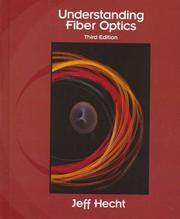
The best non-mathematical introduction and the right first book for anyone at any level: fibre types, attenuation mechanisms, splicing and connectors, sources and detectors, and system design, all explained physically rather than derived. Read it in a week and the textbooks in stage two stop being abstract.

Shorter and more hands-on than Hecht, aimed at technicians and installers — measurement with an OTDR, splice loss, practical cable handling. Read it second if you will ever touch real hardware; skip it if the interest is purely theoretical.
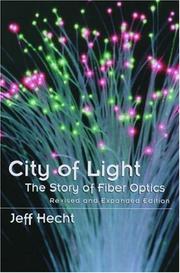
Hecht's history of fibre optics — the physics of total internal reflection known since the 1840s, Kao's 1966 argument that glass losses were an impurity problem rather than a fundamental limit, and the Corning breakthrough that followed. Read it here because it explains why the technology took the shape it did, which no textbook does.
The Optics Underneath
IntermediateAcquire the wave optics, Gaussian beams, Fourier optics and quantum-electronic foundations that the systems and device books use freely. This is the largest single step on the path.
▸ Study plan for this stage
Pace: 12–16 weeks, and this is deliberately the longest stage on the path. Eugene Hecht's Optics is a full undergraduate course — assume multivariable calculus, complex exponential notation and comfort with linear algebra; work its problems rather than reading it, at about a chapter a week for the chapter
- The hierarchy Saleh and Teich are built on: ray optics inside wave optics inside electromagnetic optics inside photon optics, each a limiting case of the next
- Gaussian beams — waist, Rayleigh range, divergence, the ABCD matrix formalism — which every laser and coupling calculation uses
- Fourier optics: the far field as a Fourier transform, the transfer function of free space, and spatial filtering
- Guided modes as eigenvalue solutions of the wave equation in a dielectric waveguide, and the V-number that decides how many exist
- Coherence, both temporal and spatial, and its relation to source linewidth
- Photon optics and the semiclassical treatment of absorption, spontaneous and stimulated emission
- Nonlinear optics at introductory level: second- and third-order susceptibility, phase matching
- That Optics is the prerequisite and Fundamentals of Photonics is the subject — Saleh and Teich assume Hecht's material silently and will not re-derive any of it
- Derive the Gaussian beam waist evolution from the paraxial Helmholtz equation. What is the Rayleigh range physically, and why does it control coupling into a fibre?
- For a step-index fibre with a given core radius and index contrast, compute V and state how many modes propagate at 1310 nm and at 850 nm.
- How does the group velocity dispersion parameter D relate to the second derivative of the propagation constant, and what units does each carry?
- Why does a Fourier-transform relationship exist between the near field and the far field, and what does that predict for the output of a single-mode fibre?
- Where in Saleh and Teich does the treatment stop being classical, and what does the photon description buy you that the wave description cannot give?
- Which chapters of Eugene Hecht did you have to go back for, and what does that tell you about which prerequisite is actually weak?
- Work Saleh and Teich's derivation of the modes of a symmetric slab waveguide by hand, then solve the transcendental eigenvalue equation numerically for a specific index contrast and plot the effective index of each mode against thickness.
- Reproduce, with the book's own numbers, the calculation of the number of guided modes and the mode-field diameter for a standard SMF-28-like fibre, then verify the result against the fibre datasheet value quoted in stage one.
- Take one interference or diffraction problem set from Eugene Hecht and solve it analytically, then simulate the same configuration numerically and compare. The agreement — or the failure of it — is what tells you whether the analytic assumptions were satisfied.
- Propagate a Gaussian beam through a two-lens system using ABCD matrices, compute the output waist, and then repeat the calculation for a beam that is 10% off the design wavelength. Everything in the laser stage will use this machinery.
- Work through Saleh and Teich's chapter on Fourier optics and reproduce the transfer function of free space, then use it to predict the diffraction pattern of a square aperture at three distances spanning the near-to-far field transition.
Next up: With the wave, beam, Fourier and photon machinery in place, the systems books can be read as engineering rather than as assertion — every constant they quote is now one you could derive.
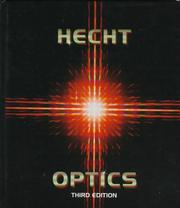
The standard undergraduate optics text, and the prerequisite rather than the subject: interference, diffraction, polarisation and coherence, done thoroughly and well illustrated. Read it first here if your optics is rusty — Saleh and Teich assume every chapter of it.
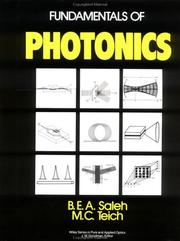
Saleh and Malvin Teich, and the comprehensive standard text of the whole field: ray, wave, beam, Fourier and electromagnetic optics, then photons, lasers, waveguides, fibres, detectors, modulators and nonlinear optics, each layer built on the last. The single most important book on this path — work through it rather than consulting it.
Fibre Communication Systems
BeginnerDesign a link and then a network: power and dispersion budgets, modulation formats, noise accumulation in amplified chains, wavelength-division multiplexing, and the routing and protection layers built on top.
▸ Study plan for this stage
Pace: 10–12 weeks. Optical Fiber Communications is a course text with worked examples and end-of-chapter problems; four to five weeks at a chapter a week, doing the problems. Fiber-Optic Communication Systems is denser and more professional — it assumes the whole of Saleh and Teich plus probability and ra
- The complete power budget and the complete dispersion budget, and which one binds in a given system
- Receiver noise: shot noise, thermal noise, and in amplified systems signal-spontaneous beat noise — leading to a Q-factor and a bit error rate
- The EDFA: gain, noise figure, gain flatness, and how noise figures accumulate along a chain of amplifiers
- Dispersion management: dispersion-shifted and non-zero dispersion-shifted fibre, dispersion-compensating fibre, and electronic compensation
- Modulation formats from NRZ through DPSK to coherent QAM, and the spectral efficiency each buys
- Wavelength-division multiplexing: channel plans, the ITU grid, crosstalk and filter cascading
- Network layers above the link: wavelength routing, ROADMs, protection and restoration, and control-plane signalling
- That Keiser is pedagogical and Agrawal is a working reference — Agrawal will state a result Keiser spends a chapter building
- For a given launch power, span loss, amplifier spacing and noise figure, what is the optical signal-to-noise ratio at the receiver, and what bit error rate does that imply?
- Why does raising launch power stop improving reach beyond a certain point, and which chapter of Agrawal is that limit hiding in?
- What is the dispersion penalty for a 10 Gb/s NRZ signal over 100 km of standard fibre, and how does it scale to 40 Gb/s?
- Why did dispersion-shifted fibre turn out to be a poor choice for dense WDM, given that it solved the dispersion problem?
- In Ramaswami and Sivarajan, what makes routing and wavelength assignment computationally hard, and what do real networks do instead of solving it exactly?
- What does a ROADM let an operator do that a fixed point-to-point WDM link cannot?
- Work Keiser's complete worked link-budget example exactly as printed, then rebuild it as a spreadsheet and sweep bit rate from 1 to 40 Gb/s. Identify the rate at which the binding constraint switches from loss to dispersion.
- Reproduce Agrawal's OSNR-versus-span-count calculation with his own numbers for amplifier spacing and noise figure, then vary the spacing from 80 km to 40 km at constant total distance and explain the result physically.
- Compute the Q-factor and BER for a receiver from the noise terms Keiser gives, then check your answer against his worked value before changing anything. Only then substitute an APD for the PIN and redo it.
- Design a 16-channel WDM system on the ITU grid over 500 km: choose fibre type, amplifier spacing, per-channel power and dispersion compensation, and justify each number against a specific equation in Agrawal.
- Take a six-node ring from Optical Networks, assign wavelengths for a given traffic matrix by hand, then add a single fibre cut and work out what the protection scheme does. Count the wavelengths the protection consumes.
Next up: You can now design a link treating the transmitter and receiver as specified black boxes; the next stage opens those boxes so that linewidth, chirp and modulation bandwidth become things you can reason about.
The standard course text on fibre communications, and the right first systems book: fibre structures and attenuation, sources and detectors, receiver noise, and complete worked link budgets. More pedagogical than Agrawal and a gentler transition out of Saleh and Teich.

The professional reference for link design: dispersion management, optical amplifiers, WDM system engineering, and the impairments that limit real long-haul systems. Read it after Keiser — it assumes the fundamentals and goes considerably deeper into what actually degrades a signal over a thousand kilometres.
Ramaswami and Sivarajan on the layer above the link: WDM network architecture, wavelength routing, add-drop multiplexers, protection and restoration, and network control. The book that connects the physics to the thing carrying your traffic; read it last in this stage.
Lasers and Device Physics
BeginnerGo inside the components. Understand gain, resonators, modes and semiconductor laser dynamics well enough to reason about linewidth, chirp and modulation bandwidth rather than reading them off a datasheet.
▸ Study plan for this stage
Pace: 12–14 weeks. Principles of Lasers is the approachable one — rate equations, ordinary differential equations and a light touch of quantum mechanics; four weeks at a chapter a week. Siegman's Lasers is a graduate reference of well over a thousand pages assuming Fourier analysis, Gaussian beam and ABCD
- Absorption, spontaneous and stimulated emission, the Einstein coefficients, and population inversion as a condition on the pumping scheme
- Three-level and four-level systems, gain saturation and the threshold condition
- Optical resonators: stability diagram, transverse and longitudinal modes, free spectral range, finesse
- Laser dynamics — relaxation oscillations, Q-switching, mode locking — and the rate-equation model they come from
- Semiconductor laser specifics: double heterostructure, DFB and DBR gratings, threshold current, differential quantum efficiency
- Linewidth and the linewidth enhancement factor, and the chirp that direct modulation therefore produces
- Modulation: electro-optic and acousto-optic effects, the Mach-Zehnder modulator, and why external modulation is used at high bit rates
- Detection and noise from the device side: responsivity, avalanche gain and excess noise factor
- Derive the threshold condition for a Fabry-Perot laser from the round-trip gain and loss. What does it say about facet reflectivity?
- Why does directly modulating a semiconductor laser produce frequency chirp, and how does that interact with fibre dispersion in the system you designed in the last stage?
- What sets the linewidth of a DFB laser, and why does coherent detection care about it so much more than direct detection does?
- From Siegman: what makes a resonator stable, and how do you read the stability condition off the g-parameter diagram?
- What is the physical origin of relaxation oscillations, and what does their frequency tell you about the modulation bandwidth available?
- Which of Svelto, Siegman and Yariv and Yeh would you consult for each of: a resonator design, a modulator choice, a pumping scheme? Say why for each.
- Work Svelto's derivation of the four-level rate equations and solve them numerically for a step change in pump power. Plot the relaxation oscillation and extract its frequency; then compare that to the analytic expression he gives.
- Using Siegman's stability criterion, take three specific mirror-curvature and length combinations, place each on the stability diagram by hand, and compute the resulting Gaussian mode waist. Then propagate that mode with the ABCD matrices from stage two.
- Reproduce Yariv and Yeh's calculation of the half-wave voltage for a lithium niobate Mach-Zehnder modulator using their own material constants, then recompute it for a doubled electrode length and explain the trade against bandwidth.
- Compute the chirp-induced dispersion penalty for a directly modulated DFB over 80 km using the linewidth enhancement factor from Yariv and Yeh and the dispersion parameter from Agrawal. This is the single calculation that connects this stage to the previous one.
- Take a commercial DFB laser datasheet and derive, from the physics in these three books, every number on it you can — threshold current, slope efficiency, side-mode suppression, linewidth. Mark the ones you cannot derive and find out why not.
Next up: With the components understood from the inside, you are ready for the regime where the fibre itself stops being linear and where devices are built out of structured, rather than uniform, material.

The most approachable serious laser text: absorption and stimulated emission, pumping, resonators, continuous and pulsed operation, laser types. Read it first in this stage — it is the bridge from Saleh and Teich's laser chapters to the specialist literature.

The definitive graduate treatment, and the reference on resonator theory, Gaussian beam propagation and laser dynamics that everything else cites. Enormous and rigorous — read the chapters you need rather than the whole book, but do not try to work at the research level without it.
Yariv and Pochi Yeh, published as Photonics: Optical Electronics in Modern Communications, and the device physics volume of this path: semiconductor lasers, electro-optic and acousto-optic modulation, detection and noise, developed from quantum electronics. Read it after Svelto for the components a systems designer treats as black boxes.
The Research Frontier
BeginnerReach current work — the nonlinear effects that both limit and enable modern systems, and the two platforms that are changing what a photonic device can be.
▸ Study plan for this stage
Pace: 12–16 weeks, and this stage is open-ended by design. Nonlinear Fiber Optics assumes the nonlinear Schrödinger equation, perturbation theory and enough numerical analysis to implement a split-step Fourier solver; six weeks with code written. Photonic Crystals is a short, beautifully organised book th
- The Kerr effect and self-phase modulation, cross-phase modulation, and four-wave mixing as the WDM crosstalk mechanism
- The nonlinear Schrödinger equation, and the split-step Fourier method used to solve it
- Solitons: the balance of anomalous dispersion against self-phase modulation, and why the balance is fragile in real links
- Stimulated Raman and Brillouin scattering — as impairments, as amplifiers, and as the basis of fibre lasers and supercontinuum sources
- Photonic band gaps from periodic dielectric structure, and defect states as waveguides and cavities
- The scaling invariance of Maxwell's equations that lets a photonic-crystal design be moved between wavelengths
- Silicon photonics as a foundry process: waveguide loss, grating couplers, ring resonators, thermal tuning, and the absence of an efficient silicon light source
- The design–simulate–lay out–measure loop, which is what Chrostowski and Hochberg are actually teaching
- Why does four-wave mixing set a floor on channel spacing in dense WDM, and why did zero-dispersion fibre make it worse?
- What conditions must hold for a pulse to propagate as a fundamental soliton, and what does the nonlinear Schrödinger equation predict happens when the power is doubled?
- How does Raman amplification differ operationally from an EDFA, and where in a span is the pump injected?
- What is the physical origin of a photonic band gap, and why does a complete three-dimensional gap require so much more than a one-dimensional stack?
- Why can silicon not efficiently emit light, and what are the working responses to that in a commercial silicon photonics platform?
- Take a device you laid out: what is its insertion loss budget, and which term dominates?
- Implement a split-step Fourier solver for the nonlinear Schrödinger equation and reproduce one of Agrawal's own published pulse-evolution figures with his stated parameters. Verify agreement before changing anything, then vary the launch power and watch the soliton break up.
- Compute the four-wave-mixing product powers for a three-channel system on the ITU grid using Agrawal's expressions and your fibre's dispersion, then repeat for dispersion-shifted fibre. The difference is the argument against DSF, in numbers.
- Take the one-dimensional multilayer example in Photonic Crystals, compute its band structure yourself from the transfer-matrix method, and check your gap edges against the book's plotted result before moving to a two-dimensional lattice.
- Work through the Silicon Photonics Design flow end to end on one component — a ring-resonator filter is the standard exercise: simulate it, lay it out, run the design-rule check, and produce a mask file. Compute the expected free spectral range and Q first, then compare with the simulation.
- Design a supercontinuum or Raman-amplified span on paper using the nonlinear coefficients from Agrawal, and state precisely which effect you are exploiting and which you are fighting. Both answers are in the same chapter.
Next up: This is where the path ends and current literature begins: with the systems, the devices and the nonlinear and structured regimes in hand, journal papers in optical communications and integrated photonics become readable without further scaffolding.
The standard reference on what happens when the power gets high: self-phase modulation, four-wave mixing, stimulated Raman and Brillouin scattering, and solitons. These are simultaneously the dominant impairment in dense WDM systems and the basis of fibre lasers and supercontinuum sources. Read it after the systems stage.

Joannopoulos, Johnson, Winn and Meade, subtitled Molding the Flow of Light, and the founding text of periodic photonic structures — photonic band gaps, defect waveguides, and the free version the authors made available. The theoretical basis for photonic-crystal fibres and much of integrated photonics.

Chrostowski and Michael Hochberg, subtitled From Devices to Systems, and the most practical book here: designing, simulating, laying out and testing silicon photonic circuits on a real foundry process. The right closing book, because it is where the field is commercially heading and it turns everything above into something you can tape out.
Discussion
Keep reading
Paths that share books, cover the same subject, or open a related topic.