Father Brown Reading Order: Where to Start with G.K. Chesterton
There are fifty-three Father Brown stories and G. K. Chesterton published them in five collections between 1911 and 1935. That is the only order that matters, and almost nobody reads them in it — the stories are endlessly reprinted in themed selections, best-of anthologies and television tie-ins that scramble the sequence and hide which book a story came from. It matters more than it does for most detective series, because the collections are not interchangeable: the first is Chesterton at his most dazzling and least serious, and the later ones are a Catholic convert working out a theory of sin that the early puzzles only gesture at. This path takes the five collections in publication order, offers the one-volume alternative if you would rather have them all at once, and then opens out into the fiction and the theology that explain why a priest solves crimes by assuming he could have committed them.
Start Here: The First Two Collections
BeginnerRead the stories that made the character, in order, and work out the trick Chesterton is running — that the solution is almost always a matter of seeing an ordinary thing correctly rather than of finding a clue.
▸ Study plan for this stage
Pace: Two to three weeks. These are short stories, not novels, and they were written for magazine publication one at a time, so read them one or two per sitting rather than in long stretches. The Innocence of Father Brown holds twelve stories in about 208 pages and The Wisdom of Father Brown twelve more i
- Chesterton's central trick: the solution is almost never a hidden clue but an ordinary thing seen correctly. The Invisible Man is the purest case, and it is in this first book.
- Father Brown's method, unstated for now: he does not deduce from evidence, he works out what a man in that position could have wanted. The stories demonstrate it long before The Secret of Father Brown explains it.
- The Flambeau arc. The Blue Cross introduces the thief; his situation changes across Innocence and again in Wisdom, and it is the only continuing thread in the early books.
- The theological reversal. In The Sign of the Broken Sword and The Hammer of God the crime is solved by an argument about pride or self-deception rather than by physical evidence.
- The pattern of the false marvel: an event presented as impossible or supernatural, resolved as mundane. Chesterton runs it repeatedly and then inverts it in the later collections.
- The narrator's misdirection. Chesterton describes the scene accurately and lets the reader's assumption do the concealing, which is why rereading a story rarely finds a cheat.
- Priest as detective. Father Brown's authority comes from the confessional, meaning he claims professional knowledge of what people actually do, and that claim is the engine of the whole series.
- In The Invisible Man, what exactly does the reader assume that the text never states, and where does Chesterton give you the information you fail to use?
- How does Flambeau's situation differ between The Blue Cross and his appearances in The Wisdom of Father Brown, and what in the first story makes the change plausible?
- Pick any three stories from Innocence and say which are solved by physical observation and which by a claim about human motive. What is the ratio?
- What does Father Brown know in The Hammer of God that a police detective would not, and how does he say he came by it?
- Chesterton is running a formula. State it in one sentence, then name the story in these two books that departs from it most.
- Keep a two-column list as you read the twenty-four stories: in one column the thing the reader is invited to assume, in the other the sentence in which Chesterton actually told you the truth. By the end of Innocence you should be able to spot the sentence on a first reading.
- Reread The Blue Cross immediately after finishing The Wisdom of Father Brown. Details in the first story that read as scene-setting turn out to be characterisation of Flambeau, and the second reading is where that becomes visible.
- Take The Sign of the Broken Sword and The Hammer of God and write down the argument in each in ordinary prose, without the story. Both reduce to a claim about a specific vice; name it in each case.
- Sort the twelve stories in Innocence by whether the marvel turns out to be a trick or an ordinary event misdescribed. Keep the sorted list; the later collections deliberately break the proportion you find here.
Next up: You now have the formula and the arc as Chesterton first set them up, which is what makes the twelve-year gap and the change of purpose in the next three collections legible rather than simply a decline.
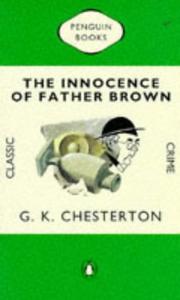
The first collection, 1911, and the only correct starting point: The Blue Cross, The Queer Feet, The Invisible Man and The Sign of the Broken Sword are all here, and the first of them introduces both the priest and Flambeau, the thief whose long arc runs through the early books. Note the catalogue record carries a junk publication year.
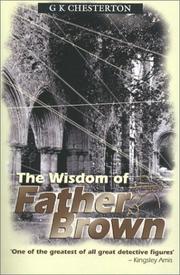
The second collection, 1914, and read immediately after the first — Flambeau's situation has changed in a way that only makes sense if you have read The Blue Cross, and the stories start testing the method against harder material. The Man in the Passage and The Perishing of the Pendragons are the standouts.
The Later Three
BeginnerFollow the series after a twelve-year gap, as the puzzles get stranger and the theology moves from the background to the argument — and see the collection where Chesterton states his method outright.
▸ Study plan for this stage
Pace: Three to four weeks. The Incredulity of Father Brown is about 192 pages and eight stories, The Secret of Father Brown 176 pages and ten, The Scandal of Father Brown 184 and nine. They are shorter books than the first two but slower going, because the argument has moved into the foreground and the pu
- The inversion of the early formula: in Incredulity, the sceptics are the credulous ones, and the priest is the person insisting on a natural explanation. The Miracle of Moon Crescent and The Oracle of the Dog both turn on it.
- The stated method. The frame of The Secret of Father Brown has him say he solves murders by imagining himself committing them until he can feel how it was done, and refusing to treat the criminal as a different kind of creature.
- That the frame is retrospective. It is offered as an explanation of stories you have already read, which is why reading Secret before the first two collections wastes it.
- Chesterton's target has changed. The early stories play with rationalists; the later ones argue with spiritualism, psychical research and a particular kind of modern superstition.
- The late style: shorter, more argumentative, less interested in the elegant reversal. The Scandal of Father Brown is uneven and the unevenness is itself informative about how the series was produced.
- The uncollected stories. A handful written after 1935 appear only in the omnibus editions, so the five-book sequence does not contain the complete series.
- In what specific sense is the priest the sceptic in The Oracle of the Dog, and who in that story is being credulous?
- State Father Brown's method as he gives it in the frame of The Secret of Father Brown, in his own terms rather than in the language of detection.
- Take three solutions from The Innocence of Father Brown and check them against the method as stated. Do they fit, or is the frame a later rationalisation?
- What has changed in the length, structure and ending of a typical story between Innocence and Scandal? Quantify it rather than describing it.
- Where does the series actually end, and what would you have to buy to read every story Chesterton wrote about the character?
- Read the frame chapters of The Secret of Father Brown first, then reread three early stories of your choice, testing each solution against the stated method. Write down which of the three the method genuinely explains and which it does not.
- Time yourself, or count pages, on five stories from Innocence and five from Scandal. The late stories are measurably shorter; work out where the reduction falls, whether in setup, investigation or explanation.
- Track the word miracle and its cognates across the eight stories of Incredulity and note in each case whether the marvel is real, faked, or simply misdescribed. Compare the result against the sorted list you made in the previous stage.
- Pick the weakest story in The Scandal of Father Brown and write a paragraph saying precisely what fails in it: the premise, the concealment or the solution. Doing this for a bad story tells you more about the formula than analysing a good one.
Next up: Having read all five collections in sequence, you are now in a position to judge which edition is worth owning, and to notice what the omnibuses add and what they scramble.
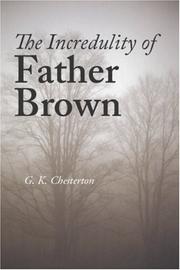
The third collection, 1926, written after Chesterton's conversion to Catholicism and openly concerned with false miracles and credulous rationalists. The Oracle of the Dog and The Miracle of Moon Crescent are the ones people remember. Darker and slower than the early books, and read third for exactly that reason.
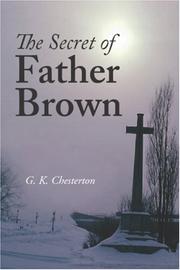
The fourth collection, 1927, and structurally the important one: it is framed by Father Brown explaining his method — that he solves murders by imagining himself committing them until he can feel how it was done. Read it after Incredulity, because the frame is a retrospective account of everything you have already read.
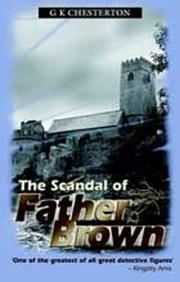
The fifth and last collection, 1935, published the year before Chesterton died. Uneven, and the late stories are shorter and more argumentative, but this is where the sequence ends. Read it last; the handful of uncollected stories written afterwards appear only in the omnibuses below.
The One-Volume Alternative
BeginnerDecide whether to buy five books or one, and understand what each omnibus actually contains — this is the choice that determines whether you can tell which collection a story came from.
▸ Study plan for this stage
Pace: An afternoon of comparison, not a reading stage. If you have not yet bought anything, decide here before spending money on five separate volumes. The Penguin Complete Father Brown runs about 566 pages and contains all five collections in publication order plus the late uncollected stories; The Fathe
- The two editions are not the same book. The 1931 Father Brown Stories predates the fifth collection; the Penguin volume is genuinely complete and includes stories no individual collection holds.
- Publication order is preserved in the Penguin volume, so reading it front to back reproduces exactly the sequence of the two previous stages.
- What themed selections and best-of anthologies destroy: the Flambeau arc, the twelve-year gap, and the fact that a story belongs to a specific collection with a specific purpose.
- Why collection membership matters here more than in most series: the five books are not interchangeable, and a story reads differently depending on whether it sits in Innocence or in Incredulity.
- The buying decision itself: one volume of about 566 pages against five slim books, with the trade-off being portability and the ability to see the collection boundaries.
- Which stories does the Penguin Complete Father Brown contain that no one of the five collections does?
- Why does The Father Brown Stories from 1931 stop where it does, and what is missing from it?
- If you own only an omnibus, how would you tell which collection a given story came from, and does your edition let you?
- What would a reader lose by starting with a themed selection such as a best-of anthology, given what you now know about the arc and the shift after 1922?
- Open whichever edition you have to its contents page and mark the four boundaries between the five collections. If your edition does not indicate them, reconstruct the boundaries from the two previous stages and write them in.
- Compare the running order of any anthology or television tie-in selection you can find against the publication order in the Penguin volume, and list what the selection has moved, dropped or renamed.
- Check whether your copy contains the post-1935 uncollected stories. If it does not, note that the sequence you have read is not the complete series and where the gap falls.
Next up: With the whole series read in its proper order, the next question is what else the same imagination produced, starting with the novel that runs on exactly the trick the stories run on.
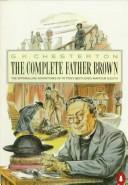
The standard single volume, and the practical answer for most readers: all five collections in publication order plus the late uncollected stories, which no individual collection contains. Buy this instead of the five, not as well — and read it front to back, which reproduces the order above exactly.
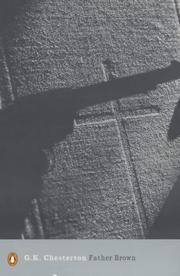
The earlier collected edition, from 1931, which therefore stops before The Scandal of Father Brown. Listed here because it is common secondhand and easily mistaken for a complete edition — if you want everything, the Penguin volume above is the one. This is a distinct record, not another printing of it.
Chesterton's Other Fiction
IntermediateRead the novels alongside the stories and see the same imagination working at length — including the one book that is essentially a Father Brown plot expanded to a hundred and fifty pages.
▸ Study plan for this stage
Pace: Three weeks for the three, and note that these are novels, so the story-at-a-time cadence of the previous stages no longer applies. The Man Who Was Thursday is about 162 pages and is best read fast, in two or three sittings, because the plot depends on accumulating reversals. The Club of Queer Trade
- The same engine as the stories: the surface reading of a situation is always wrong, and the correction is a single reversal rather than an accumulation of evidence.
- In The Man Who Was Thursday, the reversal is repeated rather than singular, and the effect of stacking it is the point of the book. Read what Chesterton does with a device he had been using at story length.
- The Club of Queer Trades as the precursor: an apparently sinister mystery resolving into something absurd and innocent, with a detective figure who is not yet Father Brown.
- What is missing from The Club of Queer Trades that the Father Brown stories have. Compare the resolutions and you can see Chesterton looking for the right detective.
- The Napoleon of Notting Hill has no detective at all, and is the clearest statement of the politics underneath the fiction: localism, the defence of the small against the efficient, a joke taken seriously.
- Subtitle as instruction. A Nightmare tells you how to read The Man Who Was Thursday, and the ending is legible only if the subtitle is taken at face value.
- How many times does the situation in The Man Who Was Thursday reverse, and what is left standing after the last one?
- In The Club of Queer Trades, what does each resolution have in common, and what does the collection lack that the Father Brown stories have?
- What does the subtitle A Nightmare license Chesterton to do with the ending, and would the book work without it?
- The Napoleon of Notting Hill contains no crime and no detective. What of the Father Brown method survives in it, if anything?
- Take one Father Brown story and one of these three books and state the trick they share in a single sentence that covers both.
- Read The Man Who Was Thursday in as few sittings as you can manage and mark every reversal as it happens. Then go back and find the sentence before each reversal in which Chesterton had already told you.
- Set The Club of Queer Trades beside The Innocence of Father Brown and compare the two detectives directly: what Basil Grant can do that Father Brown cannot, and what Father Brown has that makes the later series work where the earlier one stopped.
- Take the localism argued for in The Napoleon of Notting Hill and find the Father Brown story that assumes the same politics without stating them. There is more than one candidate; defend your choice from the text.
- Write one paragraph on what happens if you read the ending of The Man Who Was Thursday as literal rather than as nightmare. The paragraph should end by explaining why the subtitle is doing work.
Next up: The fiction shows the method in action; the non-fiction of the next stage states the view of human nature that makes a priest assume every criminal's motive is available to him.
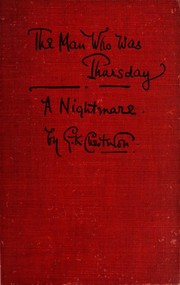
His best novel and the obvious next read: an undercover detective infiltrates an anarchist council whose members are all named after days of the week, and the plot turns inside out repeatedly. Subtitled A Nightmare, and it runs on the same trick as the stories — the surface reading of a situation is always the wrong one.

An earlier story cycle, from 1905, about men who invented their own professions — the direct precursor to Father Brown, with the same structure of an apparently sinister mystery resolving into something absurd and innocent. Read it to see the form before Chesterton found the right detective for it.
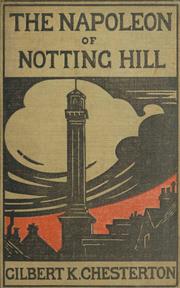
His first novel, from 1904: a future London in which a joke about medieval city-states is taken seriously by one man. Read it last of the three — it has no detective in it at all, and it is the clearest statement of the politics that sits underneath the fiction.
The Ideas Behind the Priest, and a Life
IntermediateUnderstand why Father Brown's method is theological rather than forensic, by reading the arguments Chesterton was making in prose at the same time — then place the whole body of work in the life.
▸ Study plan for this stage
Pace: Six to eight weeks, and this stage is not optional reading at the same pace as the rest. Orthodoxy is 156 pages and Heretics 166, both argumentative essays rather than narrative, and each takes longer than its length suggests; two weeks for the pair is realistic. The Everlasting Man is 274 pages and
- The argument of Orthodoxy: Chesterton describes arriving at Christian orthodoxy by constructing his own philosophy and finding it already written down. It is autobiography in the form of an argument, and it is not evidence.
- The view of human nature that Father Brown's method rests on: that every criminal's motive is available to any person willing to look honestly at themselves, because the capacity is common rather than alien.
- Heretics as the earlier book, attacking named contemporaries, and the challenge it provoked that produced Orthodoxy. The order they were written in is not the order they are usually read in.
- Chesterton's habit of stating an opponent's position more strongly than the opponent did, then attacking the strengthened version. This is the same move Father Brown makes in imagining the crime.
- The Everlasting Man as the long form of the same argument, and its reception history, including C. S. Lewis crediting it in his own conversion.
- Ker's biography takes Chesterton seriously as a thinker rather than as a producer of paradoxes, and places the Father Brown stories where they belong, as journalism written to pay for the arguments.
- The paradox as a method rather than a mannerism, and the case against it. Ker addresses the standard charge that Chesterton's style substitutes inversion for reasoning.
- State the argument of Orthodoxy in five sentences without using any of Chesterton's own paradoxes. What survives the translation?
- Where in Orthodoxy does Chesterton state the view of human nature that Father Brown's method depends on, and how would you quote it to someone who has read only the stories?
- Heretics attacks specific contemporaries. Pick one and say whether Chesterton has represented their position fairly, using anything you can find on what they actually held.
- Ker calls the Father Brown stories journalism written to pay for the arguments. What in the biography supports that, and does it change how you read the late collections?
- The Everlasting Man is written against a specific book. What is Wells's claim, and what exactly is Chesterton's counter-argument?
- Read the chapter of Orthodoxy on the maniac and then reread The Secret of Father Brown's frame. Both are about the limits of pure reason and the availability of one's own worst impulses; write out the two passages side by side and mark where the wording overlaps.
- Take three paradoxes from Heretics and rewrite each as a plain declarative claim. Then decide, for each, whether the plain version is true, and whether the paradox was doing argumentative work or decorative work.
- Use Ker's biography as a reference rather than a narrative for one specific question: find what he says about the composition and payment of the Father Brown stories, and about the 1922 conversion, then reread one story from before and one from after with that context.
- Attempt The Everlasting Man only after Orthodoxy, and stop at the end of part one. Write down the argument so far in your own words before continuing; if you cannot, the second half will not repay the effort.
- Return to your list from the first stage of what the reader is invited to assume, and add a final column: which Chestertonian conviction, stated in the non-fiction, makes each concealment work.
Next up: This closes the path with the arguments the fiction was paid for, so the fifty-three stories can be read as what they are, a serious moralist's popular entertainment rather than a puzzle series with a priest in it.
The book to read if you read only one piece of Chesterton's non-fiction: his account of arriving at Christian orthodoxy by working out his own philosophy and finding it had already been written down. It contains, in argument form, the view of human nature that makes Father Brown assume every criminal's motive is available to him. The record carries a junk publication year.
The earlier companion volume — attacks on the leading thinkers of his day, written before Orthodoxy and provoking the challenge that produced it. Read it first of the two chronologically or second for the arguments; either way it shows Chesterton's habit of taking an opponent's position more seriously than they did.
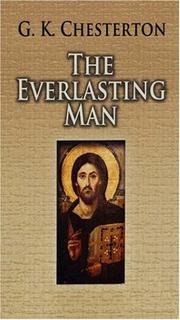
His longest sustained argument, a history of humanity and of Christ written against H. G. Wells's Outline of History, and the book C. S. Lewis credited with his own conversion. The most demanding thing on this path — read it after Orthodoxy, if at all.

The standard modern biography, published as G. K. Chesterton: A Biography, and the right closing book: it takes him seriously as a thinker rather than as a producer of paradoxes, and it puts the Father Brown stories where they belong — as journalism written to pay for the arguments. Catalogued under the bare name.