Eugene O'Neill Reading Order: Where to Begin with America's First Great Playwright
O'Neill wrote close to fifty plays across three decades, and the ones that made his name in the 1920s — the masked, expressionist, formally noisy experiments — are the worst possible introduction. This path opens with the two most readable plays, works backwards through the early sea and expressionist work once you know what he was reaching for, takes on the enormous middle-period ambitions, and ends where every serious reader ends: the four late plays written in illness and secrecy, which are the reason he still matters.
Where to Actually Begin
BeginnerMeet O'Neill in his two most straightforwardly enjoyable plays, and see the New England family and the ruined idyll that the whole body of work keeps returning to.
▸ Study plan for this stage
Pace: Three weeks. Desire Under the Elms is a compact three-part play and reads in two sittings; Ah, Wilderness! is a conventional four-act comedy and reads in one. Leave several days between them, because the whole reason for this pairing is the contrast, and reading them back to back flattens it. Read t
- The New England farm as O'Neill's recurring stage: stone walls, a withholding father, sons who want the land and cannot say so, all present here in their first fully achieved form
- A Greek frame under a realistic surface — Desire Under the Elms is built on the Phaedra and Medea material, and knowing that changes what the ending is doing
- Ephraim Cabot's God as a character in the play: a hard, stony deity who justifies everything the old man takes, stated in his own long speeches rather than described
- Eben's claim on his dead mother's farm as the motive under every action, which is the same buried-inheritance mechanism that drives the late plays
- Ah, Wilderness! is O'Neill's only comedy and is deliberately the family he wished he had had — warm, funny, and set in a Connecticut house that looks a great deal like the one in Long Day's Journey into Night
- Reading the comedy second means it is still in memory when the late play reverses it item by item, which is the single most useful piece of sequencing in this path
- O'Neill's stage directions are unusually long and prescriptive, and treating them as part of the text rather than as production notes is a habit to acquire now
- How does O'Neill describe the elms in the opening direction, and what has he told you about the house before any character speaks?
- What does Ephraim believe God wants of him, and does the play treat that belief as sincerity or as self-justification?
- Desire Under the Elms is built on Greek material. What does the myth supply that a purely realistic version of the same farm story could not?
- In Ah, Wilderness!, what happens to the drunken uncle, and how differently would the same character be treated in any other O'Neill play?
- Both plays are set in a New England family house. List three things the comedy has that the tragedy withholds.
- Read the opening stage direction of Desire Under the Elms aloud. It is long, and hearing it is the fastest way to learn that O'Neill's directions carry meaning rather than blocking.
- Sketch the Cabot farmhouse from the directions — rooms, doors, the wall, the elms. The play depends on who can hear whom through a floor, and a sketch makes the eavesdropping legible.
- Summarise Ah, Wilderness! in 200 words as if it were a tragedy, keeping every event and changing only the tone. The exercise shows you how thin the membrane is.
- Write down the names of the family in Ah, Wilderness! and keep the list. You will want it when you meet the Tyrones.
- Read Ephraim's longest speech twice, once as a man defending himself and once as a man confessing. Note the lines that only work one way.
Next up: With the New England family and the ruined idyll in view, the early experiments become legible as a young writer reaching for effects that Desire Under the Elms would later achieve without the scaffolding.

The best entry point: a compact New England farm tragedy on a Greek frame, with the stone-wall imagery and the father-son hatred that recur everywhere later. It is realistic enough to read easily and mythic enough to show his ambition.
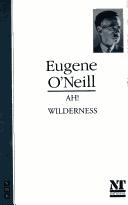
His only comedy, and the deliberate opposite of everything else — a warm, funny Connecticut boyhood he later admitted was the family he wished he had. Read second, because it is the photographic negative of Long Day's Journey into Night and will detonate when you get there.
The Sea Plays and the Experiments
IntermediateUnderstand the 1920s O'Neill who won three Pulitzers by breaking the American stage open, and be able to say honestly which experiments have dated.
▸ Study plan for this stage
Pace: Four to five weeks. Beyond the Horizon and Anna Christie are full-length realist plays of around 160 pages each and take a sitting or two apiece. The Emperor Jones is under 60 pages and is one continuous accelerating movement — read it in a single sitting, without a break, because the drumbeat struc
- Beyond the Horizon as the first American play taken seriously as literature — two brothers swap the lives they were suited for and each destroys the other by accident
- The argument O'Neill was making against Broadway melodrama: a play could end badly, in an ordinary house, without a villain, and still be worth an evening
- Anna Christie's ear for waterfront speech, which is where his dialogue is at its most reported and least written, and the reason the play still reads fresh
- The tacked-on hopeful ending of Anna Christie, which O'Neill regretted for the rest of his life — a useful case of a writer conceding to an audience and knowing it
- The Emperor Jones as the formal breakthrough: eight scenes, one man disintegrating, a drumbeat that accelerates from a resting pulse across the whole play
- German expressionism arriving in America through these two plays — masks, choruses, distorted sets, the crowd as a single organism — and what O'Neill kept from it
- The Hairy Ape as the clearer of the pair: a stoker is told he belongs nowhere and spends the play proving it, ending in the one place that will have him
- Which experiments have dated and which have not is a question to answer for yourself, and both plays give you evidence on each side
- In Beyond the Horizon, at what point could either brother still have chosen differently, and does the play make that moment visible?
- What is the ending of Anna Christie, and what would the play be without it? Try writing the last page as the earlier acts imply it.
- How does the drumbeat function in The Emperor Jones — as sound effect, as clock, or as the protagonist's pulse? The text tells you.
- The Emperor Jones and The Hairy Ape both stage a man's disintegration. What does each blame, and are they the same explanation?
- Where do the racial politics of The Emperor Jones come from — the character, the author, the period's stage conventions? Separate the three before deciding what you think, and notice how much of the difficulty lives in the stage directions rather than the dialogue.
- Read The Emperor Jones in one uninterrupted sitting, timing yourself. It runs under an hour and the acceleration cannot be felt in fragments.
- Mark every stage direction in The Emperor Jones that specifies the drumbeat's tempo and list them in order. That list is the play's structure on one page.
- Write 200 words on what The Hairy Ape claims about class, using only Yank's own speeches. He is not an articulate character and assembling the argument from his words is the point.
- Read Anna Christie's dialogue aloud for two pages. The dialect is written phonetically and is nearly unreadable silently, which tells you what O'Neill assumed about how plays are received.
- Compare the final scene of Beyond the Horizon with the final scene of Desire Under the Elms. Both are New England farms and both end in ruin; describe the difference in technique in three sentences.
Next up: Having seen O'Neill push realism until it broke, you can read the two huge middle-period works as attempts to get the interior life onto the stage without the expressionist apparatus.
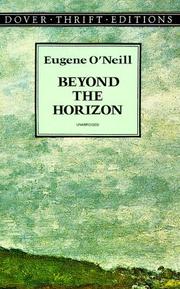
The first full-length success and the first American play taken seriously as literature — two brothers, one farm, and each takes the other's life by mistake. Read it for the argument he was making against Broadway melodrama.
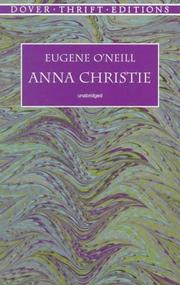
The waterfront play, and the one where his ear for the way sailors and barflies actually spoke is at its best. It also carries the tacked-on hopeful ending O'Neill spent the rest of his life regretting, which is instructive.

The formal breakthrough — eight scenes of a man disintegrating in a jungle to an accelerating drumbeat. Its racial material is genuinely difficult and needs reading with its 1920 context in view, not around it.
The companion expressionist piece, and the clearer one: a stoker who is told he does not belong anywhere and destroys himself proving it. Reading the two together shows exactly what O'Neill took from German expressionism and what he did with it.
The Enormous Middle
IntermediateTake on the two vast experiments in psychological scale, and judge for yourself whether the ambition justifies the length.
▸ Study plan for this stage
Pace: Six to eight weeks, and the heaviest stage on the path. Strange Interlude is nine acts and over 320 pages, written to be performed across an entire evening with a dinner break; read it in nine sittings, one act each, or it will defeat you. Mourning Becomes Electra is a trilogy of three full plays pe
- Strange Interlude's device: every character speaks their unspoken thoughts aloud alongside their dialogue, so the reader gets the said and the meant in alternation
- What that device costs and buys — the play is exhausting and it achieves an interiority no other American play of its era attempted
- Nina Leeds as a character constructed almost entirely from what she does not say, which is why the aside technique is not decoration but the only way to write her
- Mourning Becomes Electra as the Oresteia relocated to New England after the Civil War, with the returning general, the waiting wife, the lover and the two children all mapped onto real American types
- Psychoanalysis substituted for the Furies: O'Neill replaces divine retribution with inherited family compulsion, which is the trilogy's central bet and the main thing critics argue about
- The recurring physical resemblance between the living and the dead, staged as a device, so that characters look like their own ancestors and cannot escape the likeness
- This is the summit of the mythic phase and the last thing produced before the long silence, which is why it sits immediately before the late plays
- In Strange Interlude, find a passage where the spoken line and the aside contradict each other. What does the contradiction give you that a novel's free indirect style would not?
- Does the aside technique still work, or has it dated? Argue both, and identify the specific act where your view settled.
- How faithfully does Mourning Becomes Electra follow the Oresteia, and at which point does O'Neill deliberately break from it?
- The trilogy replaces the Furies with family psychology. Is the substitution convincing, and what does it lose in exchange for what it gains?
- Both works are enormous. In each case, name a specific thing that could not have been achieved at half the length.
- Read one act of Strange Interlude per sitting and stop even when you want to continue. It was written for an audience with an interval and reads badly in long stretches.
- Take any two pages of Strange Interlude and read them twice: once skipping every aside, once reading only the asides. Two coherent and different plays emerge, which is the whole technique demonstrated.
- Before starting Mourning Becomes Electra, read a plot summary of Aeschylus's Oresteia. Twenty minutes of preparation makes the trilogy's departures visible rather than invisible.
- Draw the Mannon family tree as you read, marking who resembles whom physically. The resemblances are the plot's mechanism and are easy to lose track of.
- Summarise the trilogy's argument about inherited compulsion in 200 words. If it comes out sounding like a case history rather than a tragedy, that is the criticism the play has always faced and you have just reproduced it.
Next up: The middle plays are O'Neill trying to say everything with technique; the late plays say more with none of it, and the contrast is only available to a reader who has done the middle ones properly.
Nine acts, a full evening's theatre, with every character speaking their unspoken thoughts aloud. It is exhausting and it is the most audacious thing anyone attempted on the American stage; read it before Mourning Becomes Electra because the technique clarifies the trilogy's interiority.
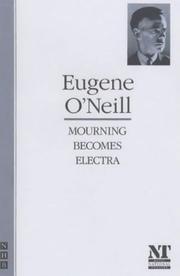
The Oresteia relocated to post-Civil-War New England as a trilogy in one sitting. This is the summit of his mythic phase and the last thing he wrote before the long silence, so it belongs immediately before the late plays.
The Late Plays
IntermediateRead the four plays O'Neill wrote after 1939 with no expectation of production, and understand why they revalued everything before them.
▸ Study plan for this stage
Pace: Two to three months, and the reason for everything before it. Read The Iceman Cometh first, slowly — around 240 pages and four hours in performance, with repetitions that look like padding and are the structure; a week, an act at a time. Long Day's Journey into Night is around 180 pages and one day
- These four were written in illness and near-secrecy with no expectation of production, which is why they are unguarded in a way nothing earlier is
- The Iceman Cometh's method: a saloon full of men with pipe dreams, a salesman who arrives to cure them of hope, and the systematic demonstration that the illusions were load-bearing
- Repetition as structure in Iceman — each man states his dream, is stripped of it, and collapses, and the pattern's monotony is the argument rather than a lapse
- Long Day's Journey into Night as one day, one house and four Tyrones, with everything in Ah, Wilderness! reversed item for item, down to the Connecticut summer house
- Mary Tyrone's retreat across the day as the play's clock: the morphine takes her back through her own life, so the family's past arrives through her rather than through exposition
- A Moon for the Misbegotten as absolution — written so that his dead brother could be forgiven, and functioning only as a sequel to the play that condemned him
- Hughie as a two-hander in a hotel lobby, the only survivor of a planned cycle of monologue plays, and the most economical thing he ever finished
- A Touch of the Poet as the sole completed play from an eleven-play American cycle he destroyed, read for the shape of the unwritten work rather than for itself
- What does Hickey actually offer the men in the saloon, and why does removing their illusions make them worse rather than better?
- In Long Day's Journey, what does each Tyrone accuse the others of, and which accusations does the play let stand?
- Mary's speech travels backwards through her life across the day. Track the earliest point she reaches, and say what the play gains by ending there.
- A Moon for the Misbegotten forgives a man Long Day's Journey has just shown you. Does the forgiveness convince you, and does the earlier play permit it?
- Hughie is a fraction of the length of the others and is often called perfect. What is it doing that the long plays do, and what has it dropped?
- Having finished, does the late work revalue the early experiments, or replace them? Name a specific early play whose stock rose or fell for you.
- Read The Iceman Cometh one act per sitting and keep a list of each man's pipe dream. The list is the play's architecture and makes the repetition legible as design.
- Read Long Day's Journey's dedication before the play and again after. It is a page long and it changes completely.
- Set the Miller family of Ah, Wilderness! beside the Tyrones on one sheet — same house, same summer, same number of sons. Doing it in writing is the payoff for the sequencing at the start of this path.
- Read Jamie's confession in A Moon for the Misbegotten aloud. It is the longest speech in the late work and it is written to be endured in real time.
- Read Hughie in one sitting and time it. Under an hour, two characters, one of whom barely speaks, and knowing the duration is part of understanding the form.
- After A Touch of the Poet, write 300 words on what the eleven-play cycle appears to have been about. It is speculation, and it is the only way to feel the size of what was burned.
Next up: This is the end of the path. The natural next step is not another playwright but a reread of Desire Under the Elms, where the father, the sons and the stolen inheritance are already fully present two decades before Long Day's Journey admits whose family they were.
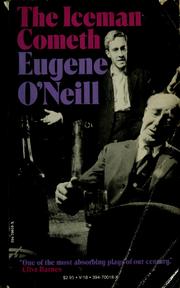
Four hours in a Bowery saloon where nothing happens except the systematic removal of everyone's illusions. The repetitions that look like padding are the structure; read it slowly and the length becomes the point.
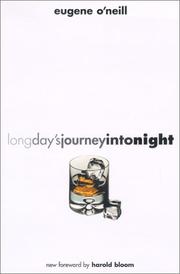
The masterpiece, withheld from publication until after his death, and the play the whole path exists to deliver you to. One day, one house, four Tyrones, and everything in Ah, Wilderness! reversed.
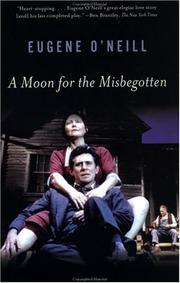
The sequel and the absolution — Jamie Tyrone's last night, written so his brother could be forgiven. It only works if you have just read Long Day's Journey, which is why it sits here and nowhere else.
A one-act two-hander in a hotel lobby, the sole survivor of a planned cycle of monologue plays. Short, late and quietly perfect, it is the best possible last thing to read.
The only completed play from the abandoned eleven-play American cycle he burned most of. Read it as an appendix once the four great late plays are done, for a sense of the vast unwritten shape they were meant to sit inside.