Start with Long Day's Journey into Night. It is the best American play, it is autobiographical to the point of being unbearable, and it is the one that makes everything else in his career legible. O'Neill wrote it late and asked that it be withheld for twenty-five years after his death; his widow released it three years after he died, and it won him a fourth Pulitzer posthumously.
The obvious alternative is to start at the beginning, with the early sea plays or Beyond the horizon. Do not. The early O'Neill is apprentice work in styles — naturalism, expressionism, masks — that he tried and abandoned, and reading it first makes him look like a period curiosity rather than the writer who ended up producing four permanent plays in the last decade of his working life.
The late plays, which are the reason
The iceman cometh is the other masterpiece: a back-room saloon full of men living on postponed plans, and a salesman who arrives to cure them of hope. It is very long and the first act is deliberately repetitive, which is the point and is also why it is easier to read than to sit through.
A moon for the misbegotten is a sequel of sorts to Long Day's Journey, following the older brother into his final year, and it is tender in a way O'Neill almost never permitted himself. A touch of the poet is the only surviving completed play from an eleven-play cycle he abandoned and largely destroyed. Hughie is a one-act two-hander that runs about half an hour and is the tightest thing he wrote.
The middle period
Desire under the elms is a New England farm tragedy built on the bones of Greek myth, with a shocking ending it fully earns. Mourning Becomes Electra transplants the Oresteia to a New England family after the Civil War; it is a trilogy and a serious commitment, and it is the most successful of the mythic experiments.
Strange interlude runs nine acts and has characters speak their inner thoughts aloud alongside their dialogue. It was a sensation and it is now the hardest of his major plays to enjoy — most readers find the device exhausting long before the end. Read it for the ambition, or skip it without much loss.
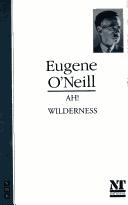
Ah, wilderness! is his only comedy and the exact inverse of Long Day's Journey: the same town, the same family shape, and a warm, forgiving version of a childhood he elsewhere described as a wound. Reading the two back to back is the single most instructive pairing in his work.
The early plays, with a warning
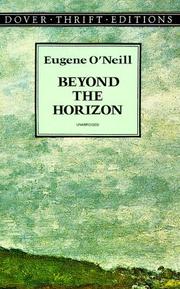
Beyond the horizon was his first Broadway success and first Pulitzer; Anna Christie followed. Both are competent naturalism with endings the author himself was uneasy about.
The Emperor Jones and The Hairy Ape are the expressionist experiments, and they need stating plainly. The Emperor Jones was written as a serious tragic role for a Black actor at a time when the American theatre offered almost none, and it is also written in heavy phonetic dialect and structured around a descent into what the play frames as ancestral African terror. Actors, directors and critics disagree publicly about whether it can now be staged, and about whether its historical importance offsets its stereotypes. That argument is live and we are not settling it here. The Hairy Ape, filed in our catalogue with its subtitle about ancient and modern life, has aged better and hits harder.
Where to stop
Four plays give you O'Neill: Long Day's Journey into Night, The iceman cometh, A moon for the misbegotten and Ah, wilderness!. Add Desire under the elms and Mourning Becomes Electra if the Greek material interests you. The rest is for people who want the whole arc. More drama sequences sit on the O'Neill hub.
Follow the full ordered path here: Eugene O'Neill Reading Order: Where to Begin with America's First Great Playwright.