Perry Mason books in order: where to start with Erle Stanley Gardner
Eighty-two Perry Mason novels is a wall, and the television series has left most people with the wrong impression of them. The early books are hard-edged pulp in which Mason bends the law considerably further than the TV version ever did. This path takes the sharp early run and one later example.
Start here
BeginnerBegin at the debut, which is far tougher than the reputation suggests.
▸ Study plan for this stage
Pace: Three or four evenings. The Case of the Velvet Claws is 288 pages of very large-print, very fast prose — Gardner dictated these and they read at dictation speed. One long sitting is not unreasonable; two is ideal.
- This is the 1933 debut and it is far harder-edged than the television series left anyone expecting. Mason is closer to a fixer than to a courtroom lawyer, and he says outright that he takes the clients other lawyers will not touch.
- The client lies to him from the first page. That is not a twist — it is the standing condition of the early books, and Mason's job is to work out what she is actually buying.
- The plot runs on a scandal sheet and the leverage it gives its owner. Gardner is writing about blackmail and money, not about justice.
- Della Street and Paul Drake are present from the first novel. The supporting cast was fixed almost immediately, which is part of why eighty-two books were possible.
- There is no Hamilton Burger and no Lieutenant Tragg yet. The antagonists in the earliest books are different, and noticing their absence is the cleanest way to date the series from the inside.
- Gardner was a practising lawyer, and the interest is in procedure as leverage — what a lawyer can legally do to slow, redirect or blow up a case.
- What does Mason actually do here that a modern reader would call unethical, and how does the book frame it?
- Who is lying to Mason, about what, and when does he know?
- How does Gardner establish Della Street and Paul Drake in a single book, and how much characterisation does each get?
- Where does the novel's tension come from, given how little time is spent in a courtroom?
- If your image of Perry Mason came from television, name three specific things this book contradicts.
- Time yourself on the first fifty pages. Gardner's whole commercial proposition is pace, and knowing your rate here makes the rest of this path's schedule real.
- Write down, at the halfway point, what you believe the client actually wants. Then check it at the end — this is the game the early books are playing.
- List the recurring cast as they appear and note who is missing. Keep the list; you will add Tragg to it in the last stage and the date will be the point.
- Mark every legal manoeuvre Mason uses — a filing, a delay, a technicality. Gardner was a lawyer and the manoeuvres are real; this list is what distinguishes him from other pulp writers.
Next up: You have the raw version of the character; the next three books are the two years in which Gardner worked out the formula that would run for four decades.
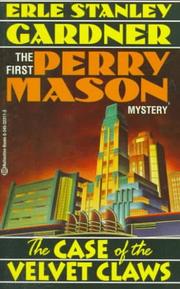
The 1933 first Mason novel. He is closer to a fixer than a lawyer here, and he says outright that he takes clients other lawyers will not touch. Fast, cynical and short.
The early run
BeginnerThe books from the first two years, which are the best of the series.
▸ Study plan for this stage
Pace: Two and a half weeks for three books — 251, 237 and 295 pages, all short and all fast. Roughly one book every four or five days. Read them in the order given; they were written that close together and the formula visibly tightens across them.
- The Case of the Sulky Girl is where the formula locks into place: a trust fund, a bad guardian, a murder, and a courtroom finish that reverses the case in front of the jury.
- The Case of the Lucky Legs is Gardner at his most cheerfully unscrupulous — a beauty-contest swindler, and a lawyer handling evidence in ways no bar association would defend.
- The Case of the Howling Dog is the best plotted of the very early books: a neighbour's complaint about a dog becomes a murder trial, and the escalation is the craft.
- The formula has a fixed shape by the end of these three: a client with a partial story, an investigation by Drake, a body, Mason as suspect-adjacent, and a courtroom reversal. Once you can state it, you can watch it being tuned.
- Gardner writes almost entirely in dialogue and action. Description is minimal, interiority is nearly absent, and this is a deliberate commercial method rather than a limitation.
- The titles all follow The Case of the [Adjective] [Noun], which Gardner adopted early and kept for eighty-two books. The pattern is a brand, and it is worth noticing that it starts here.
- State the formula in five steps after reading all three. Which of the three books departs from it most?
- In The Case of the Howling Dog, at what point does the dog stop mattering, and what has Gardner used it for?
- How does Mason handle evidence in The Case of the Lucky Legs, and would it survive a modern courtroom?
- Which book has the best courtroom reversal, and what makes a reversal work — surprise, or setup?
- How much has changed between Velvet Claws and Howling Dog, in one year?
- After all three, write the formula out as a numbered sequence. You will use it as the measuring stick in the final stage, so make it specific.
- Take the courtroom scene from each of the three and compare their lengths and their structure. Gardner is learning how long to make them, and the page counts show it.
- Count the paragraphs of physical description in any one chapter. The number is close to zero, and that is the finding.
- Track Paul Drake's function across the three books. He exists so that Mason never has to leave the office, and watching Gardner realise this is watching the series become sustainable.
Next up: With the formula written down, the last stage is a controlled experiment: the same machinery a year later and then a decade later.

A trust fund, a bad guardian and a courtroom finish. The second novel and the one where the formula locks into place.

A beauty-contest swindler, and Mason at his most cheerfully unscrupulous about evidence.
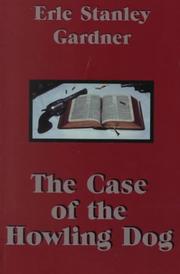
A neighbour dispute over a dog becomes a murder trial. The best plotted of the very early ones.
The formula at full strength
BeginnerTwo from the mature series, to see what forty years of practice produced.
▸ Study plan for this stage
Pace: Two weeks. The Case of the Curious Bride is 220 pages and The Case of the Careless Kitten 264 — the shortest pair in the path. A week each, or a single weekend each if you have got up to Gardner's speed by now.
- The Case of the Curious Bride is a bigamy problem that turns into a murder charge, and it carries the courtroom reversal Gardner became famous for in its most polished early form.
- The Case of the Careless Kitten is wartime — a poisoned kitten and a disputed inheritance — and it shows how efficient the machinery had become by the forties.
- Lieutenant Tragg is present in the later book and absent from all four earlier ones. He arrived in 1940 and became Mason's permanent police antagonist, and his presence is the clearest single marker of the series settling.
- The 1942 book has almost no fat at all. Every scene either advances the case or plants the reversal, and the reduction is measurable against the 1933 debut.
- What is lost is the roughness. The Mason of Velvet Claws could genuinely have been the villain of a different book; by 1942 he is a fixed and reliable quantity.
- Eighty-two novels is a wall, and the honest conclusion of this path is that the early run is the best of them. You now have the evidence for that judgement rather than the received opinion.
- Compare the courtroom reversal in The Case of the Curious Bride with the one in The Case of the Sulky Girl. What has Gardner learned?
- What does Lieutenant Tragg do for the series that the earlier police did not?
- How does the wartime setting show up in The Case of the Careless Kitten, and does Gardner use it or merely date-stamp the book?
- Is Mason a better or a worse character by 1942? Distinguish between better-written and more interesting.
- Having read six, could you now predict the shape of the other seventy-six? Is that a criticism?
- Run your five-step formula against both books, marking the page number at which each step occurs. The 1942 book will hit them earlier and more cleanly, and the page numbers prove it.
- Add Tragg to the recurring-cast list you started in the first stage. You now have the arrival date of every major fixture in the series, derived from reading rather than from a reference work.
- Read the first chapter of The Case of the Velvet Claws and the first chapter of The Case of the Careless Kitten back to back. Nine years apart, same author, and the difference in confidence is visible in the first page.
- Decide which of the six you would hand to someone who has only seen the television series, and write one sentence saying why. It forces you to state what the early Gardner is actually for.
Next up: This closes the path: the hard-edged debut, the two years in which the formula was built, and the mature machine running at full efficiency.
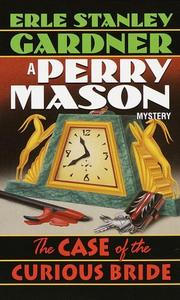
A bigamy problem that turns into a murder charge, with the courtroom reversal Gardner became famous for.
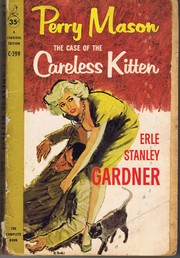
Wartime, a poisoned kitten and a disputed inheritance. A good demonstration of how efficient the machinery had become by the forties.