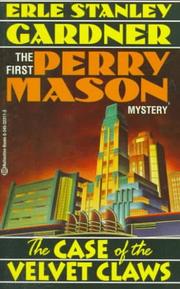
Start with The case of the velvet claws. It is the first Perry Mason novel, published in 1933, and it is the fastest correction to the impression most people carry. If your Mason is the television lawyer — dignified, courtroom-bound, winning by cross-examination in the last ten minutes — the opening pages will surprise you. This Mason takes a client he knows is lying, conceals evidence, misleads the police, and tells her outright that he is not a conventional attorney but the kind of lawyer people come to when they are in trouble of a sort respectable firms will not touch.
That gap is the reason to read the early books rather than sampling the series at random. Gardner wrote for the pulps, at speed, and the first Masons are hard-edged crime novels with a lawyer in them. The courtroom formula that the show made famous hardened later.
The pulp run, in order
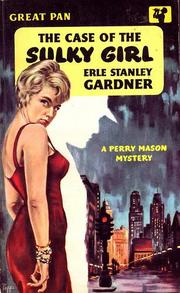
The case of the velvet claws (1933) first. Then The case of the sulky girl (1933), published the same year, in which a young woman's inheritance is controlled by an uncle who is shortly murdered — the plotting is tighter than the debut and the legal manoeuvring is already doing real work.
The case of the lucky legs (1934) is third and the lightest of the early books, built around a swindling talent-contest promoter. It is a good demonstration of how much Gardner could carry on pace alone.
The case of the howling dog (1934) is the strongest of the first four and the one to read if you only read one. It also has a genuinely unusual ending for a series about a defence attorney, and it was the first Mason filmed, in the same year, with Warren William playing him as a fast-talking operator much closer to the books than to the later television version.
The Case of the Curious Bride (1934) closes the initial run: a woman asks a hypothetical question about a first husband who may not be dead, which is exactly the kind of opening Gardner used best.
The formula settling
The case of the careless kitten (1942) shows the series eight years on. The pace is intact, the improvisation is still there, but the shape is more standardised and the courtroom is doing more of the work. It is a good book and a useful marker of the change. Read it last of the six.
How to read the rest, and where to stop
Gardner published more than eighty Perry Mason novels and nobody should attempt all of them. They are largely self-contained: Della Street and Paul Drake are constants, the client changes, and no continuing plot rewards completism. Publication order matters only in the loose sense that the earliest books are the roughest and most interesting, the 1930s and 1940s are the strongest stretch, and the long postwar run becomes formulaic — competent, readable, and increasingly interchangeable.
Six early books, as laid out above, give you the writer. After that, pick titles rather than working sequentially.
Two other parts of his output are worth knowing about and are not in our catalogue: the Cool and Lam novels, written under the pen name A. A. Fair and often funnier than the Masons, and The Court of Last Resort, the non-fiction account of the real innocence project Gardner ran, which won an Edgar and explains a good deal about why his fiction is so preoccupied with wrongful accusation.
The full ordered path with stage notes is below.
Follow the full ordered path here: Perry Mason books in order: where to start with Erle Stanley Gardner.