Eric Ambler books in order: where to start with the pre-war spy novels
Eric Ambler wrote eighteen novels over fifty years and roughly six of them are the reason anyone still reads him. He invented the shape modern spy fiction still uses: not a professional agent on a mission, but an ordinary man — an engineer, a language teacher, a journalist — who takes one small step off the path and finds himself inside somebody else's intelligence operation with no training and no way out. Le Carre and Greene both said they started here. This path is deliberately selective rather than complete: it starts with the two novels that are worth reading first, works through the pre-war run that made his name, then covers the post-war return and the late comic phase, and says plainly which books you can skip.
Start Here: The Two Essential Novels
IntermediateRead the two books that establish the Ambler formula and its finest execution, so you can judge the rest of the career against them rather than working up to them.
▸ Study plan for this stage
Pace: Two weeks. Both are short by modern thriller standards — Epitaph for a Spy runs around 220 pages and The Mask of Dimitrios around 250 — so a week each is generous and either can be read in two or three sittings. Read them in that order and do not skip Epitaph on the grounds that Dimitrios is the fam
- The Ambler formula, stated as book one states it: not a professional agent on a mission but a civilian with a specific and useless competence — a language teacher, an engineer, a journalist — who takes one small step off the path and cannot find his way back. Josef Vadassy in Epitaph for a Spy devel
- Statelessness as a plot engine. Vadassy has no passport any country will honour, which is why the police can hold him and why he cannot simply leave. Ambler's protagonists are usually held in place by paperwork rather than by physical threat.
- The closed-cast structure of Epitaph: a small hotel, a fixed set of guests, one of whom is the spy. It is a detective novel's shape used for a political purpose, and it is why the book works as an entry point.
- The Mask of Dimitrios abandons the formula almost as soon as it is established. Charles Latimer, a detective novelist, sets out to reconstruct the life of a dead Balkan criminal, and the novel becomes a documentary of interwar Europe assembled from testimony.
- Dimitrios himself is never a viewpoint character and is only ever described by people with reasons to lie. The reconstruction is the book, and Latimer's professional habits as a crime writer are quietly shown to be inadequate to it.
- The political content, which is what separates Ambler from every other thriller writer of the 1930s: the villains are arms dealers, financiers and concession-hunters, and the machinery of European politics is presented as commercial rather than ideological.
- The prose is plain, fast and unshowy, and the pleasure is structural rather than stylistic. Ambler withholds explanation and lets the protagonist's confusion stand as the reader's.
- Both le Carre and Greene named Ambler as the writer who made the genre serious, and reading these two first is what makes that claim legible when you meet the later books.
- What exactly forces Vadassy to co-operate with the police? Name the specific legal fact rather than the general threat.
- How does the hotel setting in Epitaph for a Spy change the kind of investigation Vadassy can conduct?
- Who is the villain of The Mask of Dimitrios, and at what point in the book does the answer to that question change?
- Latimer is a writer of detective fiction. Where does his professional training help him and where does it mislead him?
- What does Dimitrios do for a living across the course of his life? List the occupations in order and say what the list is arguing.
- Which of the two novels would you press on someone who has never read a spy novel, and why that one?
- Chart the sources in The Mask of Dimitrios: for each stage of Dimitrios's life, note who told Latimer about it, what that person wanted, and whether the account can be checked. The chart is the novel's real structure and it does not survive a casual read.
- In Epitaph for a Spy, keep a list of the hotel guests and update it after each interview with what Vadassy now believes about each. Reread the list at the end. Ambler is fair with the clues and the list shows how the misdirection was done.
- Take the first two pages of each novel and mark every piece of information Ambler gives about the protagonist's job, money and legal status. He establishes vulnerability through circumstance rather than character, and it is all in the opening.
- Write out the Ambler formula as five beats, based on Epitaph for a Spy alone. Keep it — the next stage is about how far the formula stretches, and the last stage is about what happens when he abandons it.
Next up: You now have the formula and its finest execution; the next stage covers the rest of the five-year burst that produced them and shows the politics that drove it.
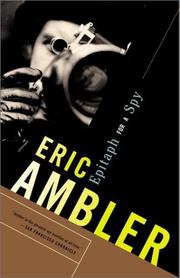
The best entry point in the whole run. A stateless Hungarian language teacher develops holiday photographs at a French resort, finds military installations on his film, and is given a choice between prison and unmasking the real spy among the other guests. Short, self-contained, and the purest statement of the ordinary-man-in-trouble premise.
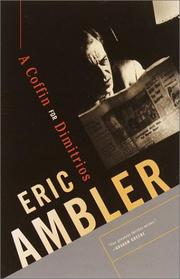
His masterpiece and the one that changed the genre: a detective novelist reconstructs the life of a dead Balkan criminal and discovers that European politics between the wars ran on exactly this kind of man. Read it second, once you know the formula, because this is Ambler abandoning it for something closer to a documentary. Published in the United States as A Coffin for Dimitrios, which is a separate catalogue record of the same novel — do not buy both.
The Rest of the Pre-War Run
IntermediateCover the remaining novels from Ambler's great five-year burst before 1940, and see how the anti-fascist politics that drive them differ from anything else in thrillers of the period.
▸ Study plan for this stage
Pace: Three weeks. All three are short — Uncommon Danger and Cause for Alarm around 220 to 250 pages, Journey Into Fear around 200 — and each is a few evenings' reading. Read them in publication order, ending with Journey Into Fear, which is the tightest and the one that dispenses with the political expla
- Uncommon Danger is the first fully-formed Ambler: Kenton, a broke freelance journalist, takes a courier job in Austria for the fee and becomes the expendable middle of an oil-concession conspiracy. Money, not idealism, is what gets every Ambler protagonist into trouble.
- The political inversion nobody else was writing in 1937 — the Soviet agents Zaleshoff and his sister are the sympathetic professionals, the arms and oil cartel is the villain, and fascism is the paying customer. Ambler's left politics of the period are explicit rather than implied.
- Zaleshoff recurs in Cause for Alarm, which makes the two books a loose pair. Note how differently he functions when the protagonist is not a journalist who half-understands the game.
- Cause for Alarm puts an English engineer, Nicholas Marlow, into a machine-tool job in Mussolini's Italy purely because he needs the salary, and reveals that his predecessor was murdered. Same machinery as Uncommon Danger, run at higher pressure.
- The escape across the Yugoslav border in Cause for Alarm is the best sustained action sequence Ambler wrote before the war, and it is worth reading attentively as a piece of construction — it is almost entirely walking, waiting and cold.
- Journey Into Fear compresses everything into a small Italian steamer: Graham, an armaments engineer, is shot at in Istanbul and put aboard a ship to get him home safely, with the assassin already on it. A closed-room chase at sea.
- The change in Journey Into Fear is that Ambler stops explaining. There is no Zaleshoff to tell the protagonist what is happening, and the political architecture recedes behind pure situation. This is the direction the post-war books take further.
- Read across all five pre-war novels and the recurring engine is visible: a competent professional whose competence is worth something to people he has never heard of, and who is therefore worth killing.
- What does Kenton want at the start of Uncommon Danger, and how much money would have made him walk away?
- How does Ambler characterise Zaleshoff, and what does it cost the book politically to have made a Soviet agent the most trustworthy figure in it?
- Compare Marlow's situation in Cause for Alarm with Kenton's. Which is more constrained, and by what?
- In Journey Into Fear, what does Graham actually know at any given point? Track his information against the reader's.
- Journey Into Fear removes the political explanation the earlier books provide. Is the novel stronger or weaker for it?
- Across the five pre-war novels, what makes a protagonist valuable to the people trying to kill him? Give the answer for each.
- Test the five-beat formula you wrote in the first stage against all three of these novels. Mark where each one deviates. Journey Into Fear will break it in at least one place, and identifying where is the point of the exercise.
- Read the border-crossing sequence in Cause for Alarm and note how many pages pass without anything happening. Then note what Ambler puts in those pages instead. It is the clearest lesson in the book about how he generates tension.
- Compare Zaleshoff's function in Uncommon Danger and in Cause for Alarm by listing what he explains to the protagonist in each. The shift from ally to handler is visible in the ratio.
- Take the opening chapter of Journey Into Fear and rewrite the first two paragraphs as Ambler would have written them in 1937, with the political situation spelled out. Doing the rewrite makes the change in method obvious.
- For each of the five pre-war novels, write one sentence naming the commercial interest behind the plot — oil, arms, machine tools, and so on. Five sentences in a column is the argument of Ambler's entire first period.
Next up: The pre-war run ends with a war; the next stage picks Ambler up eleven years later, writing about occupation, decolonisation and coups rather than about the approach of conflict.
The first fully-formed Ambler: a broke freelance journalist takes a courier job in Austria and becomes the disposable middle of an oil-concession conspiracy. Notable for having the Soviet agents be the sympathetic professionals and the arms cartel be the villain — an inversion nobody else was writing in 1937. Sold in America as Background to Danger, a separate record here.
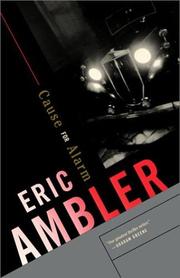
An English engineer takes a machine-tool job in Mussolini's Italy for the salary and finds his predecessor was murdered. Read after Uncommon Danger: it is the same machinery run at higher pressure, and the escape across the Yugoslav border is the best sustained sequence he wrote before the war.

The last of the pre-war run and the most claustrophobic — an armaments engineer is shot at in Istanbul and put on a small Italian steamer to escape, with the assassin aboard. A closed-room chase at sea, and the tightest thing in the sequence. Read it last of the four because it dispenses with the political explanation entirely.
The Post-War Return
IntermediateFollow Ambler after an eleven-year silence, writing about occupation, decolonisation and the mechanics of the coup rather than about approaching war.
▸ Study plan for this stage
Pace: Four to five weeks. These are slightly longer and slower than the pre-war books — Judgment on Deltchev and The Schirmer Inheritance around 250 pages each, State of Siege around 220, Passage of Arms around 250 — and the pleasure is in the detail rather than the pace, so allow a week each. Read them i
- Judgment on Deltchev is the comeback and the break. Foster, a British playwright, is sent to cover the trial of a politician in an unnamed Eastern European state, and the sympathy for the Soviet side that animated Uncommon Danger is entirely gone.
- What that cost Ambler: the book was read as an apostasy by some of his earlier admirers, and reading it directly after the pre-war stage is the only way to feel the size of the change. He does not announce it; the reader is simply in a different moral world.
- The unnamed country as a technique. Ambler stops writing about identifiable regimes and starts writing about the mechanics that any of them share, which is what makes the later books portable.
- The Schirmer Inheritance swaps the innocent-caught-up-in-events plot for a genuine investigation: an American lawyer traces a missing heir from occupied Germany into the Greek civil war. The historical texture here is the strongest in Ambler's work.
- The long central section of Schirmer, in which a soldier's war is reconstructed from records and testimony, is the same method as The Mask of Dimitrios applied to an ordinary man rather than a criminal. Read the two as a pair.
- State of Siege begins the subject that occupies the rest of the career: what actually happens on the ground during a coup — the confusion, the telephone exchange, the radio station, the small number of people who decide anything. An engineer trapped in a hotel is the observer.
- Passage of Arms is the structural experiment: an Indian clerk in Malaya finds a hidden arms cache and tries to sell it, and Ambler follows the weapons through a chain of entirely reasonable people to an entirely unreasonable end. Nobody in it is a villain.
- The post-war protagonists are less innocent and more implicated. Compare Girija Krishnan in Passage of Arms with Kenton in Uncommon Danger: both want money, and only one of them is presented as a victim of the wanting.
- What does Foster believe about Deltchev's guilt at the start of Judgment on Deltchev, and what changes it?
- Compare the political sympathies of Judgment on Deltchev with those of Uncommon Danger. Where precisely has Ambler moved, and does he acknowledge the move?
- In The Schirmer Inheritance, what does the lawyer actually establish about the missing heir, and how is the evidence assembled?
- What does State of Siege show about the mechanics of a coup that a newspaper account would not? Name three concrete things.
- In Passage of Arms, at what point does anyone in the chain do something unreasonable? If nobody does, what is the book arguing?
- How do post-war Ambler protagonists differ from pre-war ones in their moral position? Answer with two named characters.
- Read the reconstruction section of The Schirmer Inheritance immediately after rereading the corresponding method in The Mask of Dimitrios, and write half a page on what Ambler does differently when the subject is an ordinary soldier rather than a criminal.
- Chart the weapons in Passage of Arms from the cache to their final use, noting at each transfer what the person handling them believed they were for. The chart is the novel's argument and it is easy to miss while reading.
- In State of Siege, list everything the narrator can see or hear from his position and everything he has to infer. Ambler is deliberately restricting the viewpoint, and the list shows how much of the coup is constructed from noise.
- Set the opening of Judgment on Deltchev against the opening of Uncommon Danger and mark every phrase that signals the author's political position. Fifteen years apart, the same author, and the difference is in the adjectives.
- Apply your five-beat formula from stage one to all four post-war novels and record which beats have disappeared. By Passage of Arms most of them will be gone, which is the finding.
Next up: The frightened innocent has been steadily replaced by someone more implicated; the next stage completes the substitution with a narrator who is a crook and knows it.
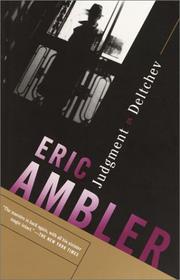
The comeback novel, and the correct one to read first of the post-war books: a British playwright covers a show trial in an unnamed Eastern European state. The early idealism about the Soviet side is gone, which cost Ambler some of his old admirers and is exactly what makes it worth reading here.

An American lawyer traces a missing heir through occupied Germany into the Greek civil war. Read second in this stage: it is the book where Ambler swaps the innocent-caught-up-in-it plot for a genuine investigation, and the historical texture is the strongest in his work.

An engineer in a newly independent South-East Asian country is trapped in a hotel through a coup. The subject that occupied him for the rest of his career — what actually happens on the ground when a government falls — starts here. Published in Britain as The Night-Comers; that is the same novel under a separate record, so pick one.
An Indian clerk in Malaya finds a hidden arms cache and tries to sell it, and the weapons move through a chain of entirely reasonable people to an entirely unreasonable end. His funniest serious book, and the bridge into the late comic novels in the next stage.
The Late Comic Ambler
IntermediateRead the last phase, where the frightened innocent is replaced by a small-time crook who is out of his depth for reasons that are entirely his own fault — and decide whether you think the change is a decline or the point.
▸ Study plan for this stage
Pace: Four weeks. The Light of Day is around 250 pages, The Levanter around 280 and Doctor Frigo around 270, and all three read faster than the post-war books because the narration carries them. Read The Light of Day first — the late period does not make sense without it — then The Levanter, then Doctor F
- Arthur Abdel Simpson, narrator of The Light of Day, is the pivot of Ambler's whole career: a petty Cairo hustler, a pornographer and a thief, blackmailed into driving a car full of weapons into Istanbul, and telling the story himself in a voice that is continuously self-serving.
- The unreliable first person is the technique the late period runs on. Simpson tells you what happened and simultaneously tells you why none of it was his fault, and the comedy is entirely in the gap between the two.
- The moral inversion: the earlier protagonists were innocents who did not deserve their trouble. Simpson deserves all of his, and Ambler makes him more sympathetic rather than less. Whether this is a decline or the point of the whole career is the question the stage exists to make you answer.
- The Levanter is the strongest of the late books and the closest to pre-war seriousness: Michael Howell, a Levantine businessman with British and Armenian and Cypriot connections, is forced to host a Palestinian guerrilla operation inside his own factory in Syria.
- Howell is a commercial man first, and his responses to a political crisis are inventory, insurance and contracts. Ambler's oldest theme — that politics runs on commerce — arrives here in its most developed form.
- The Levanter's operational detail on the planned attack is deliberate and cold, and the book gives the guerrilla leader a coherent account of his own position rather than a caricature.
- Doctor Frigo is the most novelistic and the least thriller-shaped: the exiled son of an assassinated Central American president works as a doctor on a French island and is pulled back toward a coup he wants no part of. Patient, cool, and largely about a man's refusal.
- Doctor Frigo is a reasonable place to stop. The last two novels, The Siege of the Villa Lipp and The Care of Time, are for completists, and nothing in the shape of the career requires them.
- Where does Simpson lie to the reader in The Light of Day, and how do you know? Find a passage where the narration contradicts itself.
- Is The Light of Day a comedy or a thriller? Point to the structural features that support your answer.
- How does Howell in The Levanter respond to the occupation of his factory, and what does his first instinct tell you about him?
- Does The Levanter give the guerrilla operation a fair hearing? Quote the passage that most supports your view.
- Doctor Frigo is largely a book about a man declining to act. What holds it together in the absence of a plot engine?
- Is the late Ambler a decline from the pre-war novels or the completion of them? Argue it with reference to at least three books across the path.
- Take any chapter of The Light of Day and rewrite one page in third person, removing Simpson's excuses. The comedy will vanish entirely, which is the demonstration of where it was coming from.
- List every claim Simpson makes about his own conduct in the first fifty pages, then check each against what he is later shown doing. The mismatches are the novel's method.
- In The Levanter, note every place Howell reaches for a commercial solution to a political problem, and what happens each time. The list is Ambler's oldest theme in its final form.
- Compare Howell's position with Graham's in Journey Into Fear from stage two. Both are professionals trapped with people who want something from them; write half a page on what thirty years changed in how Ambler stages it.
- Rank the three late novels against The Mask of Dimitrios and write one paragraph defending the ranking. Whatever you decide, the exercise forces the decline-or-completion question into the open.
- Read the first paragraph of Doctor Frigo aloud, then the first paragraph of Epitaph for a Spy. The two voices belong to the same writer thirty-six years apart, and hearing them consecutively is the clearest measure of the distance.
Next up: The career is now complete from Uncommon Danger to Doctor Frigo; the last stage goes back to the apprentice novel and forward to the memoir, both of which only make sense with the shape of the run in hand.
The pivot, and the one to read first here. Arthur Abdel Simpson is a petty Cairo hustler blackmailed into driving a car full of weapons into Istanbul, and he narrates the whole thing himself — self-serving, cowardly and very funny. Filmed as Topkapi. Start the late period with this and the rest makes sense.
A Syrian-based businessman is forced to host a Palestinian guerrilla operation in his own factory. The best of the late novels and the one closest in seriousness to the pre-war work — read it after The Light of Day to see him return to real stakes without giving up the comic narrator.
The exiled son of an assassinated Central American president works as a doctor on a French island and is pulled back toward a coup he wants nothing to do with. Cool, patient and the most novelistic thing he wrote. A good place to stop: the last two books are for completists.
The Beginning and the End
IntermediateClose the loop with the apprentice novel and the memoir, both of which are more interesting once you know the shape of the career they bracket.
▸ Study plan for this stage
Pace: Two to three weeks. The Dark Frontier is around 230 pages and Here Lies around 230 as well, so a week each is generous. Read The Dark Frontier first, then the autobiography. Neither is a starting point and both are actively worse if read early — the debut is a parody of a genre you need to know Ambl
- The Dark Frontier is the 1936 debut and a deliberate parody: a physicist named Carruthers suffers concussion and comes to believe he is Conway Carruthers, the fictional secret agent of a thriller he has been reading, then behaves accordingly and is unaccountably successful.
- What is being parodied is the Buchan and Sapper school — the gentleman amateur who is competent at everything and morally uncomplicated — which is exactly the figure the next five novels were written against.
- The book's other oddity, worth noting as a matter of record rather than a claim about prescience: it is built around a small state's attempt to develop an atomic weapon, written in 1936.
- It reads as a young writer working out what he did not want to do, which is why the joke is only legible once you know what he did instead. Read early it looks like a bad thriller; read here it looks like a manifesto.
- Here Lies is the autobiography and covers the East End childhood, the music-hall background of his parents, the engineering training, and the advertising copywriting job that he credits with teaching him structure and compression.
- The wartime section covers his service with the Army Film Unit and his post-war screenwriting, which explains the visual economy of the later novels better than any critical account does.
- The useful part for a reader of this path is Ambler's own flat account of why he wrote the early books the way he did — the deliberate choice of ordinary protagonists, the deliberate politics, the deliberate refusal of the gentleman hero. He confirms the project rather than mystifying it.
- A memoir is a primary source about its author's intentions and an unreliable one about their achievement. Take the account of what he was trying to do at face value, and check the claims about what he accomplished against the novels themselves.
- What is being parodied in The Dark Frontier, and how would you have read the book without knowing?
- Does the parody work as a novel in its own right, or only as a document? Defend the answer.
- What does Ambler say in Here Lies about why he chose ordinary men as protagonists? Quote it and then test it against Epitaph for a Spy.
- How does he account for his politics in the 1930s, and how does he account for the change visible in Judgment on Deltchev?
- What does the advertising and film work explain about the prose? Point to a specific technique in the novels.
- Where does the memoir's account of his career differ from the account you had formed by reading the novels in this order?
- Read the first chapter of The Dark Frontier immediately after rereading the first chapter of Uncommon Danger. Written a year apart, they are almost opposites, and the pairing is the clearest evidence that the parody was deliberate.
- Mark every passage in The Dark Frontier where Ambler is imitating the genre and every passage where his own voice breaks through. The second set is short, and its shortness is informative.
- Take three claims Ambler makes in Here Lies about his own intentions and find the passage in a novel that confirms or contradicts each. Treat the memoir as testimony to be checked, which is exactly how Latimer should have treated his sources in The Mask of Dimitrios.
- Write the reading order you would now give someone who has never read Ambler, using only four of his books, and defend each choice in a sentence. Compare it with the order in this path and note where you would depart from it.
- Return to the five-beat formula from stage one and write its final version, amended by everything you have read. The distance between the first version and the last is the shape of Ambler's career.
Next up: This is the final stage; you have the pre-war run, the post-war return, the late comic novels, the apprentice work and the author's own account, which is the whole of Ambler that anyone needs and the foundation the modern spy novel was built on.

The 1936 debut, and deliberately not the starting point: a physicist with concussion believes he is a fictional secret agent and behaves accordingly. It was written as a parody of the Buchan-style thriller Ambler despised, and it reads as a young writer working out what he did not want to do. Read it late, when the joke is legible.
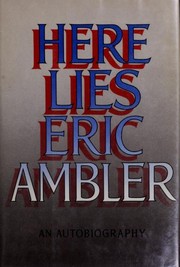
The autobiography, and the right last book: it covers the East End childhood, the advertising job that taught him plotting, the wartime film unit, and — the useful part — his own flat account of why he wrote the early novels the way he did. Confirms in his own words the anti-heroic project the first stage of this path describes.