Ellery Queen books in order: where to start with the nationality mysteries
Ellery Queen was two cousins, Frederic Dannay and Manfred Lee, writing under a name they also gave to their detective. The early novels are the strictest fair-play puzzles in the genre — several literally stop and challenge the reader to solve it. Then, around 1942, they changed course completely.
Start here: the Nationality series
IntermediateBegin with the early puzzles, which are pure deduction and nothing else.
▸ Study plan for this stage
Pace: Two and a half weeks. The Roman Hat Mystery is 319 pages and The French Powder Mystery 318, but a good half of each is interrogation and inventory, so they read faster than the count implies. A week each, and stop at the Challenge to the Reader for at least a day before continuing.
- Ellery Queen was two cousins — Frederic Dannay and Manfred Lee — writing under a name they also gave to their detective. The byline, the sleuth and the later magazine are all the same name on purpose.
- These are the strictest fair-play puzzles in the genre. Every fact needed for the solution has been given to you before the Challenge to the Reader, which stops the book and says so outright.
- The Roman Hat Mystery hangs its entire solution on a missing top hat at a theatre. The apparatus around it — floor plans, lists of persons present, seating charts — is the form declaring what kind of book it is.
- The French Powder Mystery ends by naming the murderer in the last two words of the novel, which is a piece of showmanship and also a claim: the deduction is complete before the name is needed.
- The prose is stiff and formal and Ellery himself is insufferable in these early books — pince-nez, quotations, condescension. That is period costume for the puzzle, and it is worth knowing before you start rather than being disappointed by it.
- Inspector Richard Queen and the police apparatus give the books a procedural surface, but the detection is pure armchair reasoning. Nothing is solved by a lab.
- In The Roman Hat Mystery, why does the absence of an object prove more than its presence would?
- When you reached the Challenge to the Reader, did you have the solution? Which clue did you have and fail to use?
- What is the function of the floor plans and cast lists — are they genuinely necessary, or are they a ritual of the form?
- The French Powder Mystery withholds a name until the final two words. Does that add anything to the deduction, or is it a trick?
- How much characterisation do these novels contain, and how much do they need?
- Stop at the Challenge to the Reader in each novel and write down your solution and the reasoning before turning the page. This is not optional here; the books are constructed around a reader who does it.
- After finishing The Roman Hat Mystery, go back and list every mention of the hat. Fair play is a checkable claim and this is how you check it.
- Keep the cast list beside you for The French Powder Mystery and mark each character's alibi as it is established. The novel expects the reader to be doing this bookkeeping.
- Note the point in each book where Ellery visibly knows and the narration stops telling you what he is thinking. The Queen novels are honest about withholding conclusions but not evidence, and the boundary is precise.
Next up: You now know how the fair-play machine works when it runs correctly, which is what the next stage needs — because its most famous book is about the machine running wrong.
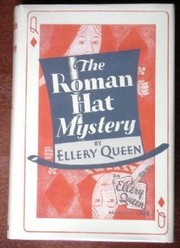
The 1929 debut. A man dies at a theatre and his hat is missing, and the entire solution turns on that. Stiff, formal and a perfect demonstration of the method.
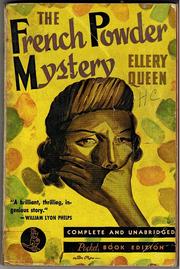
A body falls out of a department store window display. Famous for naming the murderer in the last two words of the book.
The peak
IntermediateThe novel generally agreed to be their best.
▸ Study plan for this stage
Pace: Two and a half weeks. The Greek Coffin Mystery is 364 pages, their longest and most intricate, and deserves ten days at a steady pace. The Chinese Orange Mystery is 300 and considerably lighter; a week. Read them in this order — Greek Coffin first, because it is the argument and the Orange is the fl
- The Greek Coffin Mystery is generally agreed to be their best. A coffin is opened and contains an extra corpse, and the investigation goes from there through several complete, apparently watertight solutions.
- Ellery reaches a full and convincing solution, states it publicly, and is wrong — humiliatingly and in front of everyone. That is the reason the book is remembered and why it is placed here rather than earlier.
- The false solution is not a cheat. It is fair-played too: everything supporting it was on the page, and so is everything that destroys it. The book is a demonstration that a complete-looking chain of reasoning can be complete and still false.
- Chronologically this is Ellery's first case, told out of order, which is why the young man's overconfidence is written so pointedly.
- The Chinese Orange Mystery has the strangest premise in the genre: everything in the murder room has been turned backwards, including the clothing on the body. The whole novel is the question of why.
- The Orange is the purest example of the Queen method — a single bizarre physical fact, and a solution that makes the bizarre fact inevitable rather than merely explained.
- How many solutions does The Greek Coffin Mystery offer before the last one, and what specifically kills each?
- Was Ellery's first solution fair? Could you have refuted it with what you had at the time?
- What does it do to a series detective to be publicly wrong, and how do the cousins use that afterwards?
- In The Chinese Orange Mystery, why does everything have to be backwards? State the answer in one sentence — it should be a single-sentence answer.
- Which of these two is the better novel, and which is the better puzzle? They may not be the same book.
- Write down Ellery's first solution in The Greek Coffin Mystery as if you were defending it, then find the fact that breaks it. Doing it in that order is the education the book is offering.
- In The Chinese Orange Mystery, list every object in the room that was reversed before you read the explanation. The list itself is the clue and the novel is fair about handing it over.
- Set the Challenge to the Reader in a Nationality novel beside the false solution in Greek Coffin. Both are claims about fairness; decide which is the stronger one.
- Reread the opening chapter of The Roman Hat Mystery after Greek Coffin. Ellery is the same character being written by authors who have got much better at plotting in three years.
Next up: The puzzle has now been perfected and then interrogated; around 1942 the cousins abandoned it, and the next stage is that decision.
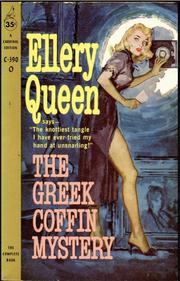
A coffin is opened and contains an extra corpse. Ellery reaches a complete, convincing solution — and is wrong, publicly and humiliatingly, which is why the book is remembered.
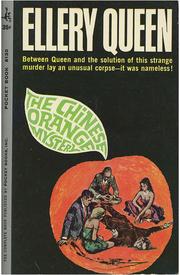
Everything in the murder room has been turned backwards, including the victim's clothes. The strangest premise in the genre.
The turn to Wrightsville
IntermediateThe later books, which are novels first and puzzles second.
▸ Study plan for this stage
Pace: Two weeks. Calamity Town is 285 pages and Cat of Many Tails 284, both easier reading than the Nationality books because there is now prose to carry you. A week each, and Cat of Many Tails is best read in long sittings — the panic in it is cumulative.
- Around 1942 the cousins changed course completely. Calamity Town has Ellery take a house in a small New England town under a false name and watch a family destroy itself, and the puzzle is subordinated to the novel for the first time.
- Wrightsville is a fully realised invented town, and the change of register from the Nationality books is total. There are no floor plans and no Challenge to the Reader.
- The writing is simply better. Characters have interiors, the dialogue sounds like speech, and the tragedy is allowed to be a tragedy rather than a configuration of alibis.
- Ellery himself is rewritten. The pince-nez condescension is gone and he is now implicated in what happens rather than presiding over it.
- Cat of Many Tails is their darkest book: a strangler loose in New York, and the novel is more interested in a panicking city than in the killer's identity.
- Greek Coffin's lesson comes back here. Ellery's certainty has consequences for people, and the later books make him carry them.
- What does Ellery do in Wrightsville that he never does in the Nationality books, and what does the change cost the puzzle?
- Is Calamity Town still fair play? Test it: could you have solved it, and does the book care whether you did?
- How does Cat of Many Tails write mass fear — what is on the page besides the killings?
- Which Ellery would you rather read about, and is that the same as which is the better character?
- The cousins gave up the form they had perfected. On the evidence of these two books, were they right?
- Read the opening chapter of Calamity Town immediately after finishing The Chinese Orange Mystery. Two pages is enough to feel the change of register; write down what is different in the first paragraph alone.
- Chart the procedural formula across all six books in this path: how a body is found, who is assembled, how the solution is delivered. The chart will show exactly where 1942 sits.
- In Cat of Many Tails, mark the passages about the city that have nothing to do with the investigation. Then ask what the Nationality novels would have done with that page count.
- Reread the last chapter of The Greek Coffin Mystery and the last chapter of Calamity Town back to back. The first ends a puzzle; the second ends a story about people, and the difference is what this stage is for.
Next up: This closes the path: the strictest fair-play puzzles in the genre, their finest and most self-critical example, and the two books in which the cousins walked away from all of it.
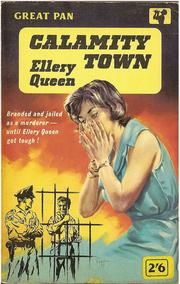
Ellery takes a house in a small New England town and watches a family destroy itself. The change of register from the Nationality books is total, and it is the better writing.
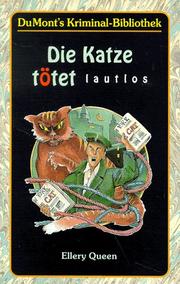
A strangler loose in a panicking New York. Their darkest book and the one most concerned with the city itself.