Elizabeth Bowen Reading Order: Where to Start with Her Novels
Bowen wrote ten novels across four decades and her reputation — Anglo-Irish country houses, drawing rooms, muted feeling — badly undersells the late work, which is genuinely strange. This path starts with the most conventionally satisfying novel and moves toward the odder ones.
Start here
IntermediateBegin with the novel usually called her best entry point.
▸ Study plan for this stage
Pace: Two and a half weeks. The Death of the Heart is 363 pages in three parts titled The World, The Flesh and The Devil — roughly a part a week, at about 25 pages a day. The middle part at the seaside moves faster than the London sections and can be read in fewer, longer sittings.
- Portia is sixteen, orphaned, and deposited on a half-brother's chilly London household. Everything in the novel follows from the fact that no one there wants her and no one will say so.
- The diary is the hinge: Portia writes down what she sees, Anna reads it, and the violation is treated by everyone as a smaller offence than the child's having noticed anything at all.
- Bowen's subject is cruelty conducted entirely through good manners. No one raises their voice, and the damage is total.
- Watch the houses. Windsor Terrace is described with the precision usually reserved for characters, and the furniture is doing the work that dialogue is forbidden to do.
- The prose is deliberately awkward — inverted clauses, adverbs in odd positions, sentences that resist a smooth reading. This is not carelessness; it is the same social discomfort transferred into syntax.
- The three-part title sets up a moral scheme the novel then declines to deliver cleanly. Nobody is quite the devil, which is the point.
- What exactly does Portia do wrong, in the household's terms? Try to state the offence as Anna would.
- Why is Matchett given the moral authority she has, and what does Bowen mean by locating it with a servant?
- How does the seaside section change the book — what is different about how people behave at Waikiki?
- Where does Bowen's syntax become hardest to read, and what is happening in the scene at that moment?
- The last pages turn on an errand and a decision by adults about a child. Is anything resolved?
- Read Portia's diary entries in sequence, on their own, once you have finished. They are a short separate document and they read very differently detached from the narration surrounding them.
- Pick one description of a room and mark every adjective that would work equally well on a person. Bowen's houses are characterised, and this makes it obvious.
- Mark three sentences whose word order you had to reread. Then rewrite each into ordinary English and see what is lost — the awkwardness is load-bearing.
- Note who is kind to Portia and count how often. The tally is smaller than your impression of the book will suggest.
Next up: You have Bowen's method in peacetime drawing rooms; the next book applies exactly the same attention to a city being bombed.

An orphaned sixteen-year-old is deposited on her half-brother's chilly London household and keeps a diary that everyone reads. Cruelty conducted entirely through good manners.
The war novel
IntermediateRead the book about London under bombardment, which is her masterpiece.
▸ Study plan for this stage
Pace: Three weeks. The Heat of the Day is 330 pages but reads much longer — the dialogue is oblique to the point of obstruction and the syntax is at its most difficult here. About 20 pages a day, and reread the two long conversations with Harrison rather than pressing on when they confuse you.
- Wartime London, a love affair, and a man who tells Stella that her lover is passing information to the enemy — and offers to stay quiet in exchange for her.
- Bowen worked for the Ministry of Information in Ireland during the war, reporting on Irish neutrality. The atmosphere of being watched and of reporting on people one knows is first-hand, and it is the novel's real material.
- This is the book where the difficult prose becomes fully purposeful. Characters speak in half-sentences and negatives because plain speech is unsafe, and the reader is put in the position of having to infer.
- The Blitz is not spectacle. Bowen writes it as an altered texture of ordinary life — blackout, shifting tenancies, a heightened present in which people say things they otherwise would not.
- The Irish sequence at Mount Morris opens the novel out: a neutral country, an inherited house, and a completely different register of time.
- Bowen said the wartime years produced a heightened, almost hallucinatory quality of feeling. The novel is an argument that this was historically real, not a literary effect.
- What does Harrison actually want, and at what point are you confident you know?
- How does Bowen write conversations in which neither party will state a thing directly? Pick one exchange and reconstruct what was really said.
- What is the Irish section doing in a novel about London under bombardment?
- Is Robert's politics explained, and does the novel need it to be?
- How does the wartime setting change what people are permitted to feel and to say, in Bowen's account?
- Take the first long Stella-and-Harrison scene and write, in plain sentences, what each of them is actually proposing. This is the single most useful thing you can do to unlock the novel.
- Read the Mount Morris chapters immediately before starting The Last September in the next stage. Bowen wrote both houses, twenty years apart, and the continuity is direct.
- Mark every use of the blackout, the siren and the requisitioned flat. She uses wartime conditions as plot machinery, not scenery, and the list proves it.
- Compare Louie's chapters with Stella's. The novel keeps a second, uneducated woman in view throughout, and it is worth asking what she is there to measure.
Next up: The Irish house at the edge of this novel is the centre of the next stage, where the same surveillance and the same good manners run under a different war.

Wartime London, a love affair and a man who may be passing information to the enemy. Bowen worked for the Ministry of Information in Ireland during the war, and the atmosphere of surveillance is first-hand.
Ireland and the middle novels
IntermediateThe Anglo-Irish material, and the one about a child among adults.
▸ Study plan for this stage
Pace: Two and a half weeks. The Last September is 208 pages and The House in Paris 240 — both are shorter and more approachable than the two novels behind you. Read The Last September in about a week; give The House in Paris ten days and read its long middle section, The Past, in as few sittings as you ca
- The Last September is set at Danielstown, a big house in County Cork during the Irish War of Independence, where the Anglo-Irish family go on giving tennis parties while the country is being fought over around them.
- The obliviousness is the subject. Bowen was Anglo-Irish and inherited such a house; the novel is written from inside a class that could not see what was ending, and it is not a defence of them.
- Lois is nineteen and wants something to happen to her, which is a very different position from Portia's, and the flirtation with a British subaltern is thin on both sides in a way the novel makes painful.
- The House in Paris puts two children in a house for a day while the adult story that produced one of them is told in a long central section set years earlier. The structure is the achievement.
- The middle section is a completely different novel from the frame — faster, hotter, more conventional — and Bowen wraps it in the children's slow day on purpose, so that a passionate story arrives as something already finished and being handed on.
- Both books turn on a house occupied by someone who controls it from a sickroom or a drawing room. Bowen's houses are always administered by someone.
- What do the tennis parties at Danielstown mean, given what is happening in the surrounding countryside?
- Is Lois in love with Gerald? What is the novel's evidence, and how does Bowen make that question uncomfortable rather than romantic?
- How does the ending of The Last September land differently because of how little the family have understood?
- Why are the children in The House in Paris there at all — what does the frame do to the story in the middle?
- Madame Fisher runs a house from a sickbed. Set her beside Anna in The Death of the Heart: what kind of power is Bowen writing about?
- Read the three parts of The House in Paris in printed order first, then reread only the middle section on its own. Detached from the frame it is a straightforward novel, which tells you exactly what the frame was doing.
- Note every time politics is mentioned aloud at Danielstown. The count will be low, and the low count is the novel's argument.
- Set the last chapter of The Last September beside the Mount Morris chapters in The Heat of the Day. It is the same class, the same kind of house, twenty years and one more war apart.
- Track who has the information in each of these two novels — who knows about the raid, who knows about the affair — and how Bowen distributes it between characters and reader.
Next up: With four novels behind you the technique is familiar, which is the only condition under which the late work can register as the deliberate break it is.
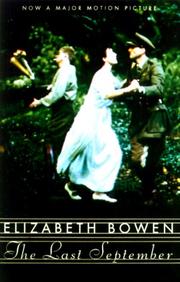
A big house in County Cork during the War of Independence, where the family go on playing tennis. The Anglo-Irish novel, and quietly devastating.
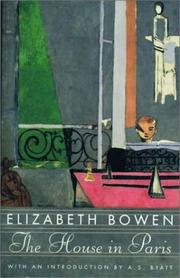
Two children wait in a Paris house while the adult story that produced them is told in the middle section. The structure is the achievement.
The late strangeness
IntermediateFinish with the last novel and the stories.
▸ Study plan for this stage
Pace: Five to six weeks. Eva Trout is 272 pages and will take longer than that suggests — the sentences are at their most dislocated and the plot jumps continents without warning. Two to three weeks at a slow pace. The Collected Stories has no page count on record and is a very large book; do not read it
- Eva Trout was her last novel — an enormous, wealthy, socially impossible young woman careering through England and America, buying things, acquiring a child, and failing at every ordinary transaction.
- It reads like nothing else of hers, and it split her admirers completely. The good manners that governed the earlier books have stopped functioning, and so has the syntax.
- Eva cannot use language properly, and the novel's broken sentences are on her side rather than the narrator's. That is the formal break: the style has migrated from the observer to the observed.
- The ending at Victoria Station is abrupt and has been called both a failure and the finest thing she wrote. Reach it having read four earlier novels and judge it yourself.
- The stories may be the best of her: the wartime ghost stories in particular are among the strongest written in English, and several do things the novels are too long to do.
- The Demon Lover and Mysterious Kôr take the atmosphere of The Heat of the Day and compress it into a few pages, which is the clearest possible demonstration of what she could do at either length.
- What is wrong with Eva, in the novel's terms — and does Bowen ever let you settle it?
- How does the prose of Eva Trout differ from The Death of the Heart, and whose difficulty is it now?
- Is the ending of Eva Trout earned? Argue it from the book rather than from its reputation.
- In The Demon Lover, how much is supernatural and how much is wartime London? Where exactly does the story leave that open?
- Having read six books, is Bowen a better novelist or a better story writer? Name the evidence.
- Read The Demon Lover and Mysterious Kôr immediately after finishing The Heat of the Day's London chapters if you can. The three together are one body of wartime writing at three lengths.
- Take a page of Eva Trout and a page of The Death of the Heart and mark the broken constructions in each. In the early novel they belong to the narrator; in the late one, work out who they belong to.
- Read Ivy Gripped the Steps and The Happy Autumn Fields, then go back to The Last September. Bowen returns to the abandoned house and the interrupted past repeatedly, and the stories are the concentrated versions.
- Pick the three stories you would give someone who had read none of the novels, and write a sentence on each explaining the choice. It forces you to state what you now think her subject was.
- Reread the first page of The Death of the Heart last of all. The path is arranged so that the earliest, most conventional novel is the one you finish on, and it will not look conventional any more.
Next up: This closes the path: the celebrated middle novels, the wartime masterpiece, the Anglo-Irish material and the late work that its own admirers could not agree on.
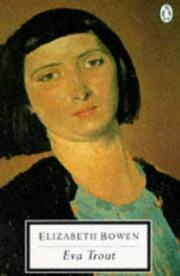
Her final novel — an enormous, wealthy, socially impossible young woman careering through England and America. It reads like nothing else of hers and divided her admirers completely.

She may be a better story writer than novelist, and the wartime ghost stories in particular are among the best written in English.