Start with The death of the heart. It is the 1938 novel most often named as her best, it is the most immediately legible of the six books here, and its premise carries itself: a sixteen-year-old orphan is deposited in her half-brother's Regent's Park house, keeps a diary, and the adults read it. What follows is a study of how cruelly well-mannered people can behave while doing nothing anyone could name.
Then set aside the reputation. Bowen is filed as an Anglo-Irish novelist of big houses and drawing rooms, and that description badly undersells her, because the late work is strange in ways the label cannot accommodate. Anyone who reads only the 1930s novels comes away thinking she is a very good minor Jamesian. She is not.
The entry point and the Irish novel
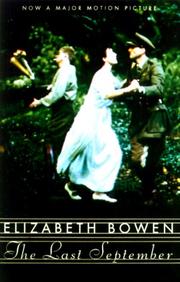
The death of the heart first. Second, The last September (1929), her second novel and the one that earned the Anglo-Irish label: a country house in County Cork during the Irish War of Independence, tennis parties continuing while lorries move on the roads and the house's destruction becomes inevitable. It is the best novel anyone wrote about that particular obliviousness, and it is short.
The house in Paris (1935) belongs third. Two children wait out a day in a Paris house, and the middle section of the book leaves them entirely to tell the story of the previous generation. The structure is the point, and it is the first sign that Bowen was more formally restless than her subject matter implies.
The wartime books
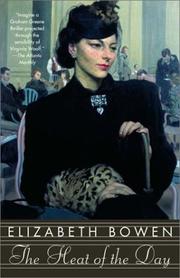
The Heat of the Day (1948) is the major mid-career novel and, for a growing number of readers, the best. London during the Blitz, a woman told by a counter-intelligence man that her lover is passing information to the enemy, and a plot that is genuinely a spy plot without ever behaving like one. The dialogue is famously difficult — clauses inverted, sentences arriving in the wrong order — and that is deliberate: it is a novel about people who cannot say things directly. Push through the first fifty pages.
The Collected Stories of Elizabeth Bowen can be read at any point, and there is a real case for reading it early. The wartime stories, in particular the ghost story about a woman's dead fiance and the one set in the ruins of a bombed London, are as good as anything in the novels and shorter. If you want to test whether Bowen suits you before committing to a novel, start here instead.
The late work, which is the actual argument
Eva Trout (1968) is her last novel and the one that makes the country-house reputation look silly. An enormously rich, socially unreadable young woman moves through a plot involving a bought house full of appliances, a deaf child acquired in America, and an ending so abrupt that readers routinely check whether pages are missing. It won the James Tait Black Memorial Prize. It also divides readers more sharply than anything else she wrote: some find it a late masterpiece in which the prose finally breaks free of period manners, others find it a mess. Read it and decide, but read it after two or three of the earlier novels, because its dislocations only register against them.
Where to stop
Four books are enough for a complete picture: The death of the heart, The last September, The Heat of the Day and Eva Trout. Add the stories if you like her at all. Her earlier novels, the Anglo-Irish family history Bowen's Court and the memoirs are for readers already committed. The full ordered path is below, and Discover has further paths through twentieth-century fiction.
Follow the full ordered path here: Elizabeth Bowen Reading Order: Where to Start with Her Novels.
Ready to learn something deeply?
Build a reading path — free