Eileen Chang in Order: Where to Start with the Shanghai Modernist
Chang wrote in Chinese and English across four decades and two continents, and the English editions appeared decades out of sequence — several of the best-known translations postdate her death. She is a central figure of twentieth-century Chinese literature and was, for political reasons, largely unreadable in the mainland for years. This path starts with the wartime Shanghai novellas that made her name at twenty-three.
Start here: wartime Shanghai
BeginnerRead the novellas that made her, written under Japanese occupation when she was in her early twenties.
▸ Study plan for this stage
Pace: Three weeks. Love in a Fallen City is 321 pages of novellas and stories — one piece per sitting, never two, because they are dense and they cancel each other out when rushed. Lust, Caution is 224 pages containing a title story of only about fifty; read that story twice in the same week rather than o
- Chang wrote these in occupied Shanghai in her early twenties, and the occupation is almost never the subject. It is the pressure under which ordinary marriages, money and manners are being negotiated.
- In the title novella of Love in a Fallen City, the fall of Hong Kong in December 1941 is what finally settles a courtship — a world war repurposed as the thing that makes two cautious people commit. That inversion is her signature.
- Her subject is the marriage market: divorcees, concubines, dowries, and the exact financial value of a woman's position. She writes it as economics, not romance.
- The imagery is famously concrete and slightly cruel — moonlight, mirrors, gramophone records, embroidered slippers — and it is always attached to money or to time passing.
- Lust, Caution is a student plot to assassinate a collaborator, and it is compressed to the point of difficulty. Chang revised it over decades, which is why so much of the story is not on the page.
- Our record files Love in a Fallen City under Zhang Ailing as well as Eileen Chang. It is the same writer: Zhang Ailing is the Mandarin form of her name.
- What does the war do for Bai Liusu and Fan Liuyuan that peacetime could not, and what is Chang saying by arranging it that way?
- Pick any story in Love in a Fallen City and identify the financial transaction underneath the emotional one. How consistently does that hold across the collection?
- Lust, Caution turns on a single decision at a jeweller's. What has Chang left off the page that a longer story would have supplied?
- How does she use physical objects — a mirror, a ring, a piece of clothing — as the carriers of a character's situation?
- These were written under occupation by a woman in her early twenties. Where, if anywhere, does either fact show?
- Read the title novella of Love in a Fallen City twice — once for the courtship, once counting only the references to money, property and social standing. The second reading is a different book.
- Read Lust, Caution, then watch nothing and read it again the next day. The compression means the second reading supplies half the story, and this is the cleanest demonstration in the collection of what revision did to her prose.
- Take one paragraph of Chang's description and rewrite it stripping out every physical object. What is left tells you how much of her meaning is carried by things.
- Note the dates of composition against the dates of the English translations. Several of these appeared in English decades after they were written and after her death; keeping the two chronologies separate will stop the later stages of this path being confusing.
Next up: You have the voice at novella length, where its compression is a virtue; the next stage asks what happens when the same irony has to sustain eighteen years of plot.
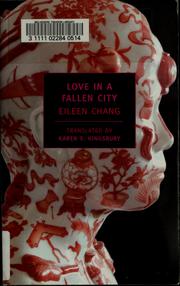
The collection to start with — the title novella turns the fall of Hong Kong into the thing that finally settles a courtship. The record files her under Zhang Ailing as well as Eileen Chang; same writer.
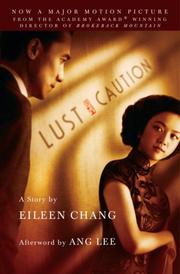
A student plot to assassinate a collaborator, and the story Ang Lee filmed. Chang revised it for decades, which shows in how compressed it is.
The novels
IntermediateMove to full length, where the same irony has room to work.
▸ Study plan for this stage
Pace: Four to five weeks. Half a Lifelong Romance is the long one — the complete translation runs far beyond the page count our record happens to carry, and it is deliberately patient. About 30 pages a day, and do not skim the middle section where nothing appears to be happening; that is the novel.
- This is her most popular novel among Chinese readers and it is built on missed timing: two people who could have married and keep failing to, over eighteen years, mostly through small decisions and other people's interference.
- The novella technique does not simply scale up. Chang has to sustain irony across hundreds of pages, and she does it by letting the reader see the misunderstanding while the characters cannot.
- The sister's role is where the book turns brutal. Family obligation, not fate, is the mechanism that separates the couple, and Chang is precise about how.
- Time itself is the antagonist. Whole years pass in a paragraph, which makes the reader feel the waste in a way that a compressed timeline could not.
- The novel was serialised and later revised under a different title, so the text has a complicated history — worth knowing so that references to two titles do not confuse you.
- Compare the ending's register to the endings in Love in a Fallen City. Chang's refusals of consolation are consistent, and at novel length the refusal costs more.
- Where is the point of no return for Shen Shijun and Gu Manzhen — the last moment at which the outcome could still have been different?
- What does Chang gain by letting the reader know more than the characters for hundreds of pages, and where does that become unbearable?
- How is family obligation used as a weapon in this book, and by whom?
- How does she handle the passage of years — what gets a scene and what gets a sentence?
- Is the ending sadder than the ending of the title novella in Love in a Fallen City, and why?
- Keep a running timeline with a date and one line per chapter. The novel's whole effect depends on elapsed time, and it is easy to lose track of how many years have gone.
- Mark every moment where a character almost says the thing that would fix it. Count them at the end; the number is the book's argument.
- Read the final chapter, then reread the first meeting. Chang wrote the opening knowing the ending, and the second reading shows it.
- Set one page of this novel beside one page of the Love in a Fallen City novella and compare sentence length and density. The long form made her write differently, and it is measurable.
Next up: You now know what Chang does with a large canvas in Chinese, which is the standard against which the two English novels of the next stage are argued about.

Her most popular novel in Chinese — a long, patient account of two people who miss each other by inches over eighteen years.
The political novels, and the argument about them
IntermediateRead the two books written in Hong Kong with American funding, and the dispute they carry.
▸ Study plan for this stage
Pace: Three weeks. The Rice-Sprout Song is 182 pages and reads quickly and unpleasantly — a week. Naked Earth is 386 pages and much more diffuse; give it two, at around 30 pages a day. Read them in this order; the shorter book is the better one and sets the terms.
- Both novels were written in Hong Kong in English, with support from the United States Information Service, and both are about the early years of the People's Republic — famine and land reform in one, ideological life in the other.
- The Rice-Sprout Song is about a village going hungry while the official account says otherwise, and it is the more controlled book: the famine arrives through food, rationing and a wife's calculations rather than through argument.
- Naked Earth follows a young man through land reform and the machinery of political life, and it is the more explicitly political and the looser of the two.
- The sponsorship is a real fact and the objection to it is a serious one: critics have argued ever since about how far American funding shaped the content. The books are also serious. This path does not adjudicate it, and neither should you until you have read them.
- Chang writing directly in English changes the prose. It is flatter and less imagistic than the translated Shanghai fiction, and whether that is loss or discipline is worth deciding for yourself.
- Her work was largely unreadable in the mainland for decades partly because of these two books, which is why her reputation there and abroad developed on different timetables.
- How does The Rice-Sprout Song make a reader feel a famine without a single scene of mass death?
- Where in Naked Earth does the novel become argument rather than fiction, and does it recover?
- Knowing about the USIS support, what specifically in the text would you point to as shaped by it — and what would you defend as simply observed?
- How does Chang's English prose differ from her translated Chinese prose? Give two concrete differences.
- Do these books belong on a shelf with the Shanghai fiction, or are they a separate career?
- Read The Rice-Sprout Song first and note every appearance of food — what is eaten, what is hoarded, what is displayed for officials. The book's method is entirely in that ledger.
- Read one chapter of Naked Earth aloud and one chapter of the Karen Kingsbury-translated novella. Hearing the two Englishes back to back settles the prose question faster than any amount of argument.
- Write down, before reading the criticism, your own answer to whether these are propaganda. Then read them again in six months; the path's position is that the question is genuinely open.
- List what these two novels share with the Shanghai fiction — the attention to household economy, the refusal of heroism — and what is new.
Next up: The fiction is complete; the essays are where Chang says in her own voice the things the novels only stage.
Famine in a village under land reform, written in English in Hong Kong.
The companion novel. Both were written with support from the United States Information Service, and critics have argued ever since about how much that shaped them. The books are serious and the objection is serious; the path does not adjudicate it.
The essays
IntermediateFinish with the prose that Chinese readers often rate above the fiction.
▸ Study plan for this stage
Pace: Two weeks, and slowly. Written on Water is 240 pages of short essays and there is no plot to carry you; three or four essays a sitting is plenty. This is the volume to keep beside the bed rather than read through.
- These are the wartime essays — on clothes, apartment living, food, money, going to the market — written at the same time as the Shanghai fiction and for the same magazines.
- Her reputation among Chinese readers rests on this prose as much as on the stories, which is the fact that most surprises readers who arrive through the fiction alone.
- The essay on the history of Chinese dress is a small cultural history done through hems and sleeves, and it shows where the fiction's obsession with clothing comes from.
- The apartment-life essays are the origin of the domestic detail in the novellas: noise, neighbours, plumbing, the sound of the city through a wall.
- The persona is not the ironic narrator of the fiction. She is funnier, more direct and more self-exposing here, and the gap between the two voices is instructive.
- Reading these last means you recognise the raw material: a detail here often reappears, transformed, in a story you have already read.
- Which details in these essays turn up again in the fiction, and what did she change when she used them?
- What is Chang's account of clothing, and how does it explain her characters' wardrobes?
- How does the essayist's voice differ from the narrator of the novellas — in humour, in distance, in what she admits?
- The essays were written under occupation and mostly avoid politics. Is that evasion, survival, or a position?
- Having read the fiction first, do the essays feel like a supplement or like the centre of the work?
- Read the essay on apartment life, then immediately reread the opening pages of any Shanghai novella. The city is being built from the same observations.
- Pick one object she writes about — a garment, a foodstuff, a piece of furniture — and find every appearance of it across everything in this path. Chang reuses her material and the reuse is the point.
- Copy out three sentences you would not have guessed were hers. The exercise is to establish for yourself how wide her range actually is.
- Go back to the very first book in this path and read the title novella once more, with the essays behind you. What looked like style will now look like reportage.
Next up: This closes the path: the wartime stories, the long Chinese novel, the contested English books and the prose her Chinese readers rate highest, in the order that makes each explain the last.
The wartime essays — on clothes, apartments, food, money. Her reputation in Chinese rests on these as much as on the stories.