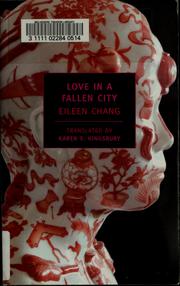
Start with Love in a fallen city. Chang's reputation rests less on her novels than on a handful of novellas written in occupied Shanghai in the early 1940s, when she was in her early twenties, and this collection gathers them. The title piece — a Shanghai divorcee and a Malayan playboy negotiating a marriage while the Japanese bombard Hong Kong around them — is the single best introduction to what she does: worldly, unsentimental, alert to money and status in every exchange, and merciless about romance without ever being cold.
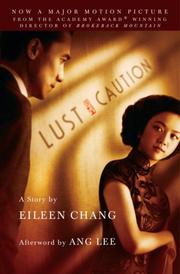
The alternative entry point is Lust, Caution, which many readers reach for because of the 2007 film. It is a superb piece of work and only about fifty pages, but it is also the most compressed and elliptical thing she wrote, and the ending is disorienting if you have not yet learned to read her silences. Come to it second.
The Shanghai novellas
Love in a fallen city first, then Lust, Caution. Between them they cover the wartime material that made her famous almost overnight in Shanghai and kept her canonical in Chinese long before English readers caught up. Chang is admired in Chinese partly for a prose surface that translation flattens; the standard English versions are good, but reviewers routinely note the loss, and that is worth knowing before you decide she is overrated.
The long novel
Half A Lifelong Romance is the one full-length Shanghai novel to read, serialised in 1948 and later revised. Two people who should marry do not, for reasons of family, timing and one deliberate act of sabotage, and the novel follows the consequences across eighteen years. It is her most conventional book and her most straightforwardly moving. Read it third, once the novellas have shown you how little she trusts happy endings.
The Hong Kong books, and the argument about them
The rice-sprout song (1955) and Naked earth were both written in Hong Kong after Chang left the mainland, both written in English rather than translated, and both depict the land reform campaigns and their famines. They are also the most contested items in her body of work: they were produced in connection with the United States Information Service in Hong Kong, and critics have disagreed ever since about how much that shaped them. Some read them as commissioned anti-Communist fiction; others argue the political sponsorship is real but the books survive it, and that The rice-sprout song in particular is among her finest.
We do not think that argument is settled, and you should read them knowing it exists. The rice-sprout song is the better of the two and the one to read if you read only one.
The essays
Written on Water collects the essays and sketches from her Shanghai years — on clothes, apartments, food, film, and the texture of a city under occupation. It is the most purely enjoyable book here and the best explanation of why she was a celebrity rather than merely a novelist. Read it last, or read it any time you want her company rather than her plots.
Where to stop
Three books cover the essential Chang: Love in a fallen city, Half A Lifelong Romance and Written on Water. Add The rice-sprout song if the political question interests you rather than deters you. Her later English-language work and the posthumously published manuscripts, including the autobiographical novels her executors released decades after her death in 1995, are for readers who already care. The ordered path with stage notes is below.
Follow the full ordered path here: Eileen Chang in Order: Where to Start with the Shanghai Modernist.
Ready to learn something deeply?
Build a reading path — free