Edwidge Danticat in Order: Where to Begin with Her Fiction and Memoir
Danticat moves between novels, linked stories and memoir, and the Haitian history behind them accumulates across books rather than being explained in any one. This path reads them so the history arrives in order, which makes the later books land far harder.
Start here
BeginnerBegin with the debut, which introduces the family and the inheritance.
▸ Study plan for this stage
Pace: Two weeks. Breath, Eyes, Memory is 234 pages in four short parts, and the parts are natural stopping places — one part every three or four days. Do not read the last part in a hurry; it is where the book collects everything it has been holding back.
- Sophie is sent from Croix-des-Rosets to a mother in New York she has no memory of, so the novel's central relationship starts as a stranger's, which is the engine of everything that follows.
- The testing — the practice inflicted on daughters by mothers in this family — is the book's hardest material and is never presented as a Haitian curiosity. It is inheritance, done by people who love each other.
- Danticat writes trauma as something transmitted down a line of women rather than as a single event. Tante Atie, Grandmè Ifé, Martine and Sophie are four positions on the same wound.
- The Marassa, the twin figures of Vodou, is the image the mother reaches for to describe an inseparable mother and daughter. The folklore is not decoration; it is how the characters explain themselves to themselves.
- Migration is doubled: the move to New York and the return to Haiti are both in the book, and neither one resolves anything.
- The prose is plain and short-sentenced, which is a deliberate choice against a subject that would carry ornament. Notice how little the book raises its voice.
- What does the novel gain by opening in Haiti with Tante Atie rather than in New York with Martine?
- How does Danticat write the testing scenes — what is on the page and what is withheld, and why?
- Where does the Marassa image appear, and who uses it? What does it mean for the person invoking it?
- What has changed for Sophie by the return to Haiti, and what plainly has not?
- Is the ending a release, a repetition, or both? Point to the line you are basing that on.
- Write down the four women of this family and one sentence each on what was done to them and what they did in turn. Keep the sheet; the same shape recurs across Danticat's later books.
- Mark every time a character tells a story rather than reports an event — the folktales, the family accounts, the things told to children. The habit is what Krik? Krak! is built entirely from.
- Reread the first chapter after finishing. The Mother's Day card and the daffodils read completely differently once you know who Martine is.
- Note the Creole words left untranslated. Decide, honestly, whether you understood them from context, and what the book is asking of a reader who does not.
Next up: You now have the family and the inheritance in view; the story collections take the same material and break it into voices that do not belong to one household.

A girl sent from Haiti to join her mother in New York, and the testing ritual that has been done to the women of her family. Her first novel and still the best entry.
The stories
BeginnerRead the linked collections, which is the form she may be best at.
▸ Study plan for this stage
Pace: Three weeks. Krik? Krak! is 224 pages in nine stories — one story a sitting, no more, because they are built to be heard one at a time. The Dew Breaker is 244 pages and should be read straight through as a novel, over about a week; reading it as separate stories works against the design.
- The title is a call and response: the Haitian storyteller asks Krik? and the listeners answer Krak! before a tale begins. The whole collection is framed as spoken, which is why the endings land the way they do.
- Krik? Krak! links its stories by character, object and place rather than by plot — a woman in one story is a name in another's letter. The book asks you to notice, not to track.
- Children of the Sea sets a boat leaving Haiti against a diary on shore, so the two halves of the diaspora are written in alternating voices that will never reach each other.
- The Dew Breaker is the same technique at novel strength: chapters that read as separate stories and are, in fact, all circling one man, a former Duvalier torturer now a quiet barber in Brooklyn.
- The Dew Breaker withholds the connection deliberately. The pleasure and the horror are both in the moment a chapter you thought was unrelated turns out to be about him.
- Danticat is asking a question the fiction refuses to settle: what happens when the torturer has a family who love him, and the daughter making his portrait does not know.
- In Children of the Sea, what does the alternating structure do that a single narrator could not?
- Which stories in Krik? Krak! are connected, and by what — a person, an object, a place? Did you notice on the first pass or only in retrospect?
- At what point in The Dew Breaker did you understand what the book was actually about, and what gave it away?
- The Dew Breaker gives the torturer a wife, a daughter and a scar. What is the novel doing by making him ordinary?
- Is The Dew Breaker a story collection or a novel? Argue it from the structure, not the cover copy.
- After finishing Krik? Krak!, list every cross-reference between stories you can find. Then reread the first story; the collection is designed to reward exactly that second pass.
- Read The Book of the Dead, the opening chapter of The Dew Breaker, again once you have finished the book. Ka's account of her father's scar is a different scene the second time.
- Map The Dew Breaker's chapters as a chronology rather than in the printed order. Then decide why Danticat did not publish it that way.
- Take one story from Krik? Krak! and read it aloud. The call-and-response frame is a claim about how these are meant to be received, and it is testable.
Next up: Both collections point back at a history the characters carry but never explain; the next book stops and tells it.
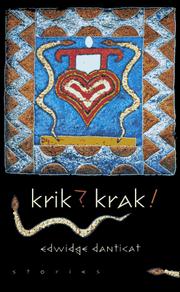
Nine stories that speak to each other across Haiti and its diaspora. National Book Award finalist.

Linked stories circling a former Duvalier torturer now living quietly in Brooklyn. Structurally her most accomplished book; the record carries a nonsense year.
The history
IntermediateTake on the historical novel that the earlier books keep gesturing at.
▸ Study plan for this stage
Pace: Two weeks and a little. The Farming of Bones is 312 pages, and the massacre sequence in the middle is not something to read at speed. About 25 pages a day, with the border crossing given a sitting of its own.
- The 1937 Parsley Massacre: the Dominican state killed thousands of Haitians living and working in the Dominican Republic. Most readers arrive knowing nothing about it, which is a large part of why the novel exists.
- The perejil test — being made to say the Spanish word for parsley, with a Kreyòl speaker's pronunciation as the verdict — is the historical detail on which the novel's horror turns, and it is a fact, not an invention.
- Amabelle is a servant in a Dominican household and a Haitian, which puts her inside the class and national fault line the massacre ran along.
- Danticat alternates a plain narrative with short italicised sections that are closer to incantation. The two registers are doing different work and the book will not merge them.
- The river is both a real border and the novel's governing image, and it recurs at every stage of Amabelle's life.
- This is a historical novel written against the grain of the form: it refuses the wide explanatory view and stays inside one woman's knowledge of what happened to her.
- Why does Danticat put the reader in a servant's position in a Dominican household rather than in a Haitian village?
- What do the italicised passages do, and what would be lost if she had written the whole novel in one voice?
- The perejil test turns language into a death sentence. How does the novel handle it — how much explanation does it permit itself?
- The last third is about survival and testimony rather than the massacre. Why does the book keep going once the violence has passed?
- What does the novel decide about official history, and where does it say so?
- Before starting, read one short account of the 1937 massacre from any reference source. Then note as you read which facts Danticat assumes you know and which she stages.
- Mark every appearance of the river across the novel, from the first page to the last. It is the same image doing four different jobs.
- Keep the italicised sections separate as you go — read them again in sequence at the end, without the narrative between them, and see what they amount to.
- Set the massacre's aftermath here beside the Duvalier material in The Dew Breaker. Danticat writes two different state terrors and does not use the same technique twice; name the difference.
Next up: You now have the twentieth-century Haitian history the earlier books were carrying without stating, which is what the memoir needs you to have.

The 1937 Parsley Massacre, in which the Dominican state killed thousands of Haitians. Most readers will not know this happened, which is part of why the novel exists.
The memoir and after
IntermediateFinish with the non-fiction and the later fiction.
▸ Study plan for this stage
Pace: Five to six weeks for the three books. Brother, I'm Dying is 288 pages and should be read first and without interruption — about two weeks. Claire of the Sea Light is 256 pages of overlapping lives, so give it a fortnight and expect to backtrack. Everything Inside is 240 pages of eight stories; one
- Brother, I'm Dying holds two deaths and a birth in the same year: her father dying of pulmonary fibrosis in Brooklyn, her uncle Joseph dying in United States immigration custody, and her first daughter arriving.
- Uncle Joseph raised her in Haiti while her parents were in New York, so the memoir is about two fathers and about what migration does to the word.
- Joseph's death in custody after seeking asylum is documented in the book through official records. Danticat sets bureaucratic paper against family memory and lets the contrast do the argument.
- The National Book Critics Circle Award went to this book, and it is the one to end on if you only read four — but it only reaches its full force after the fiction, because you have already met these people in altered form.
- Claire of the Sea Light returns to fiction with the technique of The Dew Breaker applied to a town: Ville Rose told through overlapping lives that keep handing the narrative on.
- Everything Inside is the late work — quieter, more dispersed, more often set in Miami than in Haiti, and less willing to resolve. The diaspora has become the setting rather than the subject.
- How does Danticat use the immigration records in Brother, I'm Dying, and what does she refuse to editorialise about?
- The memoir gives you the real family behind the fiction. Does that diminish the novels or change what they were doing?
- Claire of the Sea Light hands the story from character to character. Whose book is it by the end, and how did Danticat arrange that?
- What has changed in the late stories of Everything Inside — in setting, in ending, in how much is explained?
- Across all seven books, what is Danticat's account of what the diaspora costs and what it makes possible?
- Read Brother, I'm Dying first in this stage, whatever order the shelf suggests. Then reread the opening chapter of Breath, Eyes, Memory — the aunt who raises a child for absent parents is now a person you have met.
- Track who narrates each chapter of Claire of the Sea Light and where the handoff happens. Compare the structure to The Dew Breaker's; the mechanism is the same and the effect is not.
- Pick the one story in Everything Inside that could have been in Krik? Krak! and the one that could not, and write a paragraph on what twenty-five years changed.
- Take your sheet of the four women from Breath, Eyes, Memory and add Danticat's own family from the memoir beside it. The overlap and the gaps are the honest measure of how she uses her life.
- Reread the last page of Brother, I'm Dying after finishing Everything Inside. The path is arranged so that the memoir is the fact underneath all of it.
Next up: This closes the path: fiction, linked stories, history and memoir, read in the order that lets each one detonate the last.
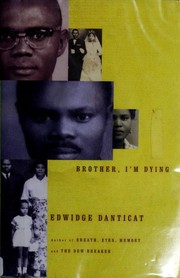
Her father's death and her uncle's death in US immigration custody, in the same year she became a mother. It won the National Book Critics Circle Award and it is the book to end on if you read only four.
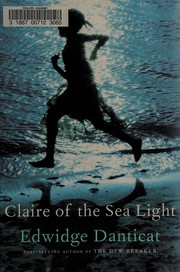
A small Haitian town told through overlapping lives.

The late stories, quieter and more dispersed.