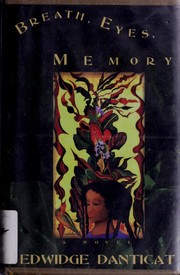
Begin with Breath, Eyes, Memory. It was Danticat's first novel, published in 1994 when she was twenty-five, and it opens onto everything the later work develops: a girl sent from Haiti to join a mother she barely knows in Brooklyn, inherited trauma passed between women who each believe they are protecting the next one, and a prose surface so calm that the violence underneath keeps catching readers off guard.
The obvious alternative starting point is Brother, I'm dying, the memoir, because it is the most awarded book and the one most often assigned. Save it. It is far more powerful once you already recognise the world it documents, and it works as the hinge of a reading order rather than its entrance.
The Haitian foundations
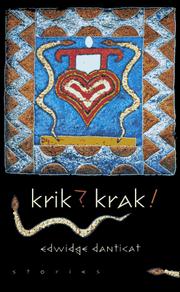
Krik? Krak! (1995) comes next. Nine stories, several linked, ranging from a boat crossing to the Port-au-Prince slums to Brooklyn apartments. It was a National Book Award finalist and it shows the range the novel alone does not — Danticat is at least as strong at story length as at novel length, and arguably stronger.
The farming of bones (1998) is the historical novel and the hardest of the early books. It reconstructs the 1937 massacre of Haitian cane workers on the Dominican side of the border, narrated by a woman who survives it. Nothing else in the catalogue does what it does; if you read only one Danticat novel after the debut, this is a defensible choice.
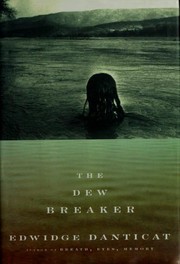
The dew breaker (2004) is where the technique changes. Nine chapters that read as stories gradually reveal themselves as one book, circling a former Duvalier-era torturer now living quietly in New York with a daughter who does not know. The withheld structure is the argument: consequence does not stay where it was created. Many readers consider it the best thing she has written.
The memoir
Brother, I'm dying (2007) belongs here, fifth. It is a family memoir about the author's father and the uncle who raised her in Haiti, and about what happened when that uncle sought asylum in the United States at the age of eighty-one. It won the National Book Critics Circle Award. Read it after The farming of bones and The dew breaker and the documentary weight of both books changes retroactively.
The later fiction
Claire of the sea light (2013) returns to the linked-chapter method in a coastal Haitian town, moving between residents on the night a seven-year-old girl disappears. It is gentler than The dew breaker and more forgiving.
Everything Inside (2019) is the late story collection and won the Story Prize. Eight stories across Haiti, Miami and the diaspora, mostly about adults negotiating obligation. It is the most technically assured book on this list and the least dependent on the others, so it also works as a standalone if a collection appeals to you more than a novel.
Reading these in order, and where to stop
Nothing here is a series and no book requires another, so this is a recommended sequence rather than a mandatory one. The one pairing genuinely worth preserving is The dew breaker followed by Brother, I'm dying: fiction about a perpetrator, then non-fiction about a family caught by the same machinery, read back to back.
If you want a short version of the whole path, read three: Breath, Eyes, Memory, The dew breaker, Brother, I'm dying. Danticat's essays and her children's books are outside our catalogue, and the full stage-by-stage path is below.
Follow the full ordered path here: Edwidge Danticat in Order: Where to Begin with Her Fiction and Memoir.