Edward Rutherfurd books in order: where to start
Edward Rutherfurd writes thousand-year novels about places, following invented families across centuries as history happens around them, and the books share no continuity at all. That means there is no correct starting point, only a best one for you: pick the place you already care about. This path opens with the two strongest entry points, then groups the rest by region, and flags the one genuine pair that must be read in order. Several of these novels were published under different titles in the United Kingdom and the United States, which is worth knowing before you buy.
Where to start
BeginnerRead the two novels that best demonstrate what Rutherfurd does, and decide from there whether the form suits you.
▸ Study plan for this stage
Pace: Ten to twelve weeks, 1,721 pages. Sarum (1987) is 897 pages and New York (2009) is 824, so at 30 pages a day each takes a month. Read one, then decide whether to read the other; the whole point of this stage is to find out whether the form suits you before committing to seven more doorstops. Sarum c
- The Rutherfurd form: one place, invented families followed across centuries, with real history happening around them
- The families as the structural device — each carries an inherited trait or occupation so you can identify a descendant three hundred pages later
- Sarum's five families and the Salisbury and Stonehenge landscape as the fixed point across ten millennia
- New York as the same method compressed into three and a half centuries, which makes the generational links tighter and the history more familiar
- Rutherfurd's debt to James Michener, and what he does differently
- That the books share no continuity whatsoever — there is no correct starting point, only the place you already care about
- The trade-off the form makes: breadth and sweep bought at the cost of depth in any individual character
- What identifying traits does Rutherfurd give each Sarum family, and how does he use them to signal descent across a millennium?
- How does Rutherfurd handle transitions between eras — what does he do at each jump, and how much does he explain?
- Which of these two books gives the individual characters more room, and why does the time span explain it?
- What does Sarum gain from starting in prehistory that New York, beginning in 1664, cannot have?
- Having read one or both, is the form doing something a conventional historical novel cannot, or only doing more of it?
- Keep a family tree as you read Sarum, adding each generation and its trait; by the medieval sections you will need it, and building it is how the book's structure becomes visible
- Pick one Sarum family and read only its chapters straight through, skipping the others — the resulting shape tells you what Rutherfurd is actually tracking
- For New York, mark each historical event Rutherfurd dramatises and note whether his invented family is a participant, a witness or merely nearby; the ratio is his method
- After finishing one book, write down the three characters you actually remember and how many pages each occupied — the answer decides whether you continue
Next up: If the method works for you, the next stage is the two novels that extend Sarum's approach across the rest of England.
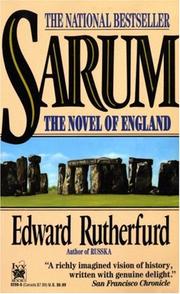
The first and still the best: Salisbury and Stonehenge from the ice age to the twentieth century, following five families. If Rutherfurd is going to work for you, it will work here.

The most accessible of the later books, running from the Dutch settlement to September 2001 through one family. Start with this instead of Sarum if you want a shorter run-up and a more familiar history.
The English books
BeginnerStay in England for the two novels that extend Sarum's method.
▸ Study plan for this stage
Pace: Ten to eleven weeks, 1,617 pages. London (1997) is 853 pages and The Forest (2000) is 764 — closer in length than their reputations suggest, so budget roughly five weeks each rather than expecting The Forest to be a short one. Read London first. London runs from 54 BC to the 1990s and covers the pla
- London as Sarum's method applied to a city rather than a landscape, and what a city's density does to the family device
- The recurring London families — the Duckets, the Silversleeves, the Bulls, the Carpenters — and their physical markers
- The Forest as the deliberate contrast: a smaller place, a shorter span, and a much slower kind of history
- The death of William Rufus in the New Forest as The Forest's opening set piece, and how Rutherfurd treats a genuinely disputed historical event
- How Rutherfurd handles a period a reader already knows well — the Fire, the Blitz — versus one they do not
- Why The Forest is the better book for some readers and the lesser one for others, and what that disagreement is actually about
- What does the London family device gain from the city's size, and what does it lose?
- Which London periods does Rutherfurd give the most pages to, and does that allocation follow the historical importance or the narrative opportunity?
- How does The Forest's smaller compass change the pacing compared with London?
- How does Rutherfurd handle the death of William Rufus, given that the historical account is contested?
- Reading these two after Sarum, has Rutherfurd's technique changed at all across a decade of writing them?
- Track one London family — the Duckets are easiest, given the recurring physical marker — from their first appearance to their last, and write down what Rutherfurd is using them to say about class mobility
- Take a period London and Sarum both cover, such as the Reformation or the Civil War, and read the two treatments side by side; the differences show what the place rather than the period is contributing
- For The Forest, map the geography as Rutherfurd gives it and mark where each era's chapters occur — the physical compression is the book's whole argument
- Count how many pages London gives to the twentieth century relative to the medieval sections, and consider what Rutherfurd's allocation implies about which history he finds most novelisable
Next up: The next stage is the only genuine sequence in the whole body of work, and the one place where reading order actually constrains you.
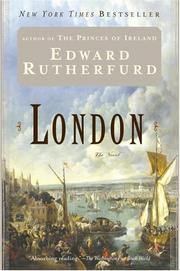
Two thousand years of the city from a Roman settlement to the Blitz. The most eventful of the English novels and the one where the recurring-family device pays off most clearly.
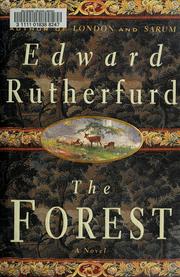
The New Forest from William the Conqueror onward, and the quietest book Rutherfurd has written. Read it after London, when you have the patience for a novel about a landscape rather than a capital.
Ireland, the one pair that must be read in order
IntermediateRead the only genuine two-book sequence in the body of work.
▸ Study plan for this stage
Pace: Ten to eleven weeks, 1,672 pages. The Princes of Ireland (2004) is 776 pages and The Rebels of Ireland (2006) is 896, and unlike everything else in this path they are a continuous two-volume work — the second picks up the same families where the first leaves them, so the order is not optional. Note
- The only true sequence in Rutherfurd's work: shared families, continuous chronology, and a deliberate break at 1534
- The Princes of Ireland from pre-Christian Ireland through Patrick, the Vikings, Strongbow and the Normans, to the eve of the Reformation
- The Rebels of Ireland from the Reformation through Cromwell, the Penal Laws, the Famine and the Rising
- How Rutherfurd handles a history that is still politically contested, and where he does and does not take a position
- The Famine as the point at which the family device is most tested — Rutherfurd has to write mass death through invented individuals
- The publishing complication: two markets, three titles, and what to search for when buying them
- Why does Rutherfurd break the two volumes at the Reformation rather than at any other point?
- Which families carry across both volumes, and what does Rutherfurd use each to represent?
- How does the second volume handle the Famine, and does the family structure hold up under it?
- Where does Rutherfurd's account take a discernible position on contested Irish history, and where does he stay deliberately neutral?
- Does the pair work as a single novel, or as two books sharing a cast?
- Build a single family tree across both volumes rather than one per book — the continuity is the whole point of the pair and only shows up when the tree is unified
- Mark the point in The Rebels of Ireland where each family's fortunes turn on a religious or political allegiance, and see how systematically Rutherfurd has arranged them across the divide
- Compare Rutherfurd's Famine chapters with his plague chapters in London: same problem of mass death, twenty years apart in his career, and the technique is visibly different
- Before buying, check which title you are getting — Ireland: Awakening and The Rebels of Ireland are the same book, and the first volume is sold under two names as well
Next up: With the British Isles covered, the final stage follows the same method to Russia, France and China, where the history is less familiar and the demands on the reader change.
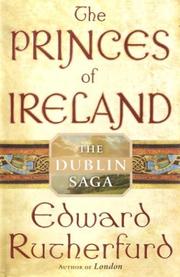
Ireland from pre-Christian times to the Reformation, and the first half of a real duology rather than a standalone. Published in the United Kingdom as Dublin: Foundation, which our catalogue holds as a separate record for the same novel.
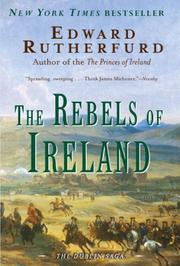
The continuation, from the plantations through the Famine to independence, using the same families. It assumes the first volume, so this is the one place in Rutherfurd where order genuinely matters. Its United Kingdom title is Ireland: Awakening.
Further afield
IntermediateFollow the same method out of the British Isles.
▸ Study plan for this stage
Pace: Sixteen to seventeen weeks, 2,538 pages — the longest stage in the path. Russka (1991) is 945 pages, the longest single book here, and covers Russian history from the ninth century to the late twentieth, including serfdom, the Mongol invasions, the revolution and the Stalin period. Paris (2013) is 8
- The method transposed: the same family device applied where the reader is unlikely to already know the history
- Russka's structure across more than a thousand years, and the extra explanatory load Rutherfurd carries when the reader has no background
- Paris breaking Rutherfurd's own chronological rule by interleaving periods, and what that does to the reading experience
- China narrowing to a single century, which produces more character depth and less sweep — the clearest illustration of the form's trade-off
- The outsider question: an English novelist writing Russian, French and Chinese history, and where that vantage is visible in the text
- Which of the doorstops actually reward their length, which is the practical question this stage settles
- How does Rutherfurd handle exposition in Russka compared with Sarum, given a reader who probably does not know the periods?
- Why does Paris abandon strict chronology, and does the interleaving work?
- What does China gain by covering one century instead of ten, and what does it lose?
- Is Rutherfurd's outsider position visible in any of these three, and if so where specifically?
- Across all nine books in this path, which ones justify their page count, and what is your criterion?
- For Russka, keep a parallel timeline of the invented family history and the real events, and mark every point where Rutherfurd has a fictional character present at a documented one
- Reorder the sections of Paris into strict chronology on paper and ask what the novel would have been like read that way — the exercise shows what the interleaving buys
- Compare a single chapter of China with a single chapter of Sarum for character depth: word count per character, interiority, dialogue — the contrast is measurable
- Write the two-paragraph recommendation you would give someone asking where to start with Rutherfurd, naming which books to read, which to skip, and which title confusions to watch for
Next up: This closes the path: nine place-novels with no shared continuity, an entry point chosen by interest rather than order, the one Irish pair that must be read in sequence, and the title differences flagged before you buy.
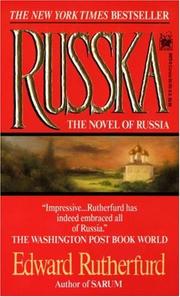
Eighteen hundred years of Russia, and the most ambitious of the early novels. Read it when you want the method applied to a history you know less well, which is where it teaches most.

Paris from the medieval period to the twentieth century, structured non-chronologically, which some readers find a welcome change and others find fussy. The most divisive book in the list.

The most recent, covering the Opium Wars to the Boxer Rebellion, and much narrower in time than the others. Read it last: it is the least characteristic and rewards a reader who already knows what Rutherfurd normally does.