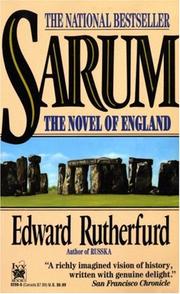
Start with Sarum. It was the first of these books, it is still the best of them, and it demonstrates the whole method at full strength: Salisbury and Stonehenge from the last ice age to the twentieth century, five invented families threaded through ten thousand years, and history happening to them rather than around them. If Edward Rutherfurd is going to work for you, he will work here.
The one good reason to start elsewhere is length. Sarum opens in prehistory and takes a long time to reach anything a modern reader recognises. If that run-up sounds like a chore, begin with New York instead — the Dutch settlement to September 2001, largely through one family, and much the most accessible of the later books. What you should not do is worry about order. These novels share no characters, no continuity and no chronology with each other. The only real question is which place you already care about.
What Rutherfurd actually writes
The form is consistent enough to describe once. A city or a region is chosen; several fictional families are invented; the book proceeds in discrete episodes across centuries, each one a short historical story in its own right, with descendants of the same families appearing in each. Real events supply the crises and real figures pass through, but the point of view stays with the invented people. The obvious comparison is James Michener, who wrote the same shape a generation earlier, and Rutherfurd has never pretended otherwise.
The consequence worth knowing before you commit: characters die at the end of their chapters and are replaced. Readers who want a single protagonist to follow for eight hundred pages consistently bounce off these books. Readers who want a place to be the protagonist tend to read all of them.
The English books
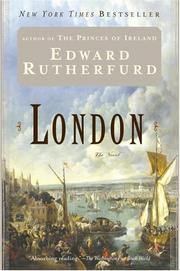
London runs two thousand years from a Roman river settlement to the Blitz, and is the most eventful of the English novels — the one where the recurring-family device pays off most visibly, because London supplies a crisis every century. The Forest is the opposite and the quietest thing he has written: the New Forest from William the Conqueror onward, more interested in landscape, custom and land law than in incident. Read it after London, when you have the patience for it.
Ireland: the one pair that must be read in order
The princes of Ireland and The Rebels of Ireland are a genuine two-book sequence rather than two standalone novels. The first covers pre-Christian Ireland through the Reformation; the second continues with the same families from the plantations through the Famine to independence, and assumes you have read the first. This is the only place in the whole body of work where order genuinely matters.
Further afield
Russka applies the method to eighteen hundred years of Russia and is the most ambitious of the early books; it teaches most precisely because most English-language readers know the history less well. Paris is structured non-chronologically, jumping between eras rather than marching forward, which some readers find a welcome variation and others find fussy — it is the most divisive book in the list. China is the most recent and the least characteristic: the Opium Wars to the Boxer Rebellion, a far narrower span than the others. Read it last, when you know what he normally does.
The buying warning
Several of these novels were published under different titles in the United Kingdom and the United States, and both titles exist as separate records in our catalogue and in most retailers' systems. The princes of Ireland is Dublin: Foundation in the United Kingdom; The Rebels of Ireland is Ireland: Awakening. Check the author, the publication year and the first page before ordering, because buying the same novel twice under two names is the standard Rutherfurd mistake.
Between the two Irish novels, the two English ones and the three set further afield, most readers find three or four of these is the natural dose. The books are long and the method does not vary, so there is no shame in stopping once the pattern stops surprising you. Related historical-fiction reading paths are on Discover.
Follow the full ordered path here: Edward Rutherfurd books in order: where to start.
Ready to learn something deeply?
Build a reading path — free