E.M. Forster in Order: Which of His Six Novels to Read First
Forster is the rare major novelist whose complete fiction fits into a single season of reading: five novels published in his lifetime, one held back until after his death, and a handful of stories. The order that works is not publication order. Start with the two Italian comedies, which are the funniest and least demanding, move through the English novels to A Passage to India, and finish with Maurice, the criticism and the essays, all of which read differently once you know what he spent forty years not saying.
Start Here: The Italian Comedies
BeginnerMeet Forster where he is lightest and most immediately enjoyable, and learn to spot the machinery he uses everywhere: English respectability taken abroad and quietly dismantled.
▸ Study plan for this stage
Pace: Two to three weeks. Both novels are short — around 250 pages each — and both read quickly because the comedy carries you. Read A Room with a View first and Where Angels Fear to Tread second, which inverts publication order deliberately; do not swap them, because the shock of the second book depends
- The Forster situation, established here and reused for the rest of his career: English people of limited imagination are removed from England, and the removal exposes them
- Italy as a moral solvent rather than a setting. Neither book is interested in Italy for its own sake; it is the thing that makes the English legible
- The undeveloped heart — Forster's own phrase for the English failing both novels diagnose, which is not cruelty but an inability to feel proportionately
- Lucy Honeychurch's choice in A Room with a View between Cecil Vyse and George Emerson as a choice between two whole theories of how to live, not between two men
- How fast Forster can turn. The retrieval of the baby in Where Angels Fear to Tread starts as farce and ends somewhere no comedy should go, and the transition happens in a few pages
- The narrator who steps forward to judge — Forster's essayistic intrusions are a permanent feature, and it is worth noticing them now while they are still genial
- What exactly does Cecil offer Lucy, and why is Forster's objection to him aesthetic as well as moral?
- Where in Where Angels Fear to Tread does the comedy stop being comic? Find the page and be able to say what changed.
- Mr Emerson is the only character in either book who says exactly what he means. How does Forster stop him from being merely a mouthpiece?
- Both novels turn on an English party abroad behaving badly. What do Harriet and Charlotte Bartlett have in common, and how do they differ?
- Forster wrote the darker novel first and the charming one second. What does reading them in the reverse order give you that publication order would not?
- Mark every passage in A Room with a View where the narrator addresses you directly rather than reporting the scene. Forster does this constantly; counting the instances in a light book makes them visible in the heavy ones later.
- Write 200 words on what happens to Gino in the last third of Where Angels Fear to Tread, and whether Forster asks you to forgive him. This is the first time the path requires a judgement Forster refuses to make for you.
- Take the moment Lucy sees the murder in the Piazza Signoria and write a paragraph on what the scene is doing in the plot. It has almost no consequences, which is the point.
- List the ways each novel punishes or rewards its characters for caring what other people think. Keep the list; the same scheme runs through Howards End and A Passage to India.
Next up: You now know Forster's basic machinery in its most enjoyable form, which is exactly what you need to survive The Longest Journey, where he turns the same equipment on England and stops being charming about it.
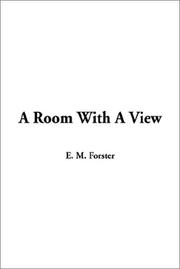
The right first Forster, not Howards End and certainly not A Passage to India. It is short, comic, and its argument — that a life governed by what other people will think is not a life — is the argument of every book he wrote, here in its most charming form.

His first novel, read second because it is the same Italian setup turned cruel: an English family tries to retrieve a baby from Tuscany and the comedy curdles into something genuinely shocking. Shows how early the darker Forster was already there.
The English Novels
BeginnerWatch Forster take the same theme home to England, and see the two houses — Cambridge and Howards End — that carry the weight of his idea of continuity.
▸ Study plan for this stage
Pace: Five to six weeks. The Longest Journey is around 300 pages and is the hardest going in the path so far — its middle section drags on purpose, and readers who quit Forster usually quit here. Howards End is a little longer and much easier. Read them consecutively rather than with a gap; the argument r
- Rickie Elliot's betrayal by degrees in The Longest Journey — nobody makes him marry Agnes, and that is the horror of it
- Cambridge as the book's positive value: a place where people say true things to each other, set against Sawston, where they do not
- Only connect, and what it actually means in Howards End — not sentiment, but the joining of the prose and the passion, the Wilcox competence and the Schlegel inner life
- The house as inheritance. Howards End asks who England belongs to, and answers with a will that the Wilcoxes suppress
- Leonard Bast and the limits of Forster's sympathy. The novel needs a poor character and cannot quite imagine one from the inside — Forster half admits this on the page
- Symbolic machinery: the wych-elm, the hay fever, the bookcase. Forster's symbols do real plot work rather than sitting decoratively
- Forster said The Longest Journey was the book he was gladdest to have written. Having read it, what do you think he valued in it that readers do not?
- What is the argument about reality that Stewart Ansell makes at the start of The Longest Journey, and how does the rest of the novel test it?
- Whose side is Howards End on when Margaret marries Henry Wilcox? Point to the evidence rather than the impression.
- What happens to Leonard Bast, and what does the manner of it say about the novel's confidence in its own sympathies?
- Margaret Schlegel accepts a compromise that her sister Helen refuses. Which of them does the book finally endorse, and how do you know?
- Write a one-page account of Rickie's marriage as it would look to Agnes. Forster gives you almost nothing from her side, and constructing it shows you how tightly the narration is controlled.
- Trace the will in Howards End from the moment it is written to the last page. Note every character who knows about it and when. The plot is a chain of suppressions and it repays being laid out.
- Pick the Beethoven's Fifth chapter in Howards End and write 200 words on why Forster stages his central meeting at a concert rather than anywhere else.
- Compare the endings of the two novels side by side: who inherits, and on what terms. The comparison is the clearest statement of what Forster thought the English novel was for.
Next up: With the English argument settled at Howards End on English soil, you are ready for the book where Forster takes the same question overseas and finds that his liberal solution does not survive the passage.
The one Forster said he was gladdest to have written, and the one readers skip. A Cambridge novel about a man who marries the wrong person and betrays himself by degrees. Read before Howards End because it sets up the argument that Howards End resolves.
The central novel and the source of the phrase everyone quotes without reading — only connect. Two families, one house, and the question of who inherits England. Fourth in the order because it needs the Italian novels' comic touch and The Longest Journey's seriousness behind it.
The Masterpiece
IntermediateRead the novel that ended Forster's career as a novelist, and understand why the Marabar Caves defeat every reading that tries to settle what happened in them.
▸ Study plan for this stage
Pace: Three to four weeks for around 350 pages. Read it slowly and in three sittings matching the novel's own division — Mosque, Caves, Temple — with a pause between each. Do not read a plot summary or an introduction first; the Marabar section only works once.
- The three-part structure, Mosque and Caves and Temple, as three incompatible answers to whether people can meet across the gap the novel describes
- The Marabar Caves and the echo — the novel's refusal to say what happened is structural, not coy, and every reading that settles it makes the book smaller
- Aziz and Fielding's friendship as the real subject: it fails through the arrangement of the world rather than through any fault either man has
- The bridge party and the machinery of colonial sociability — Forster showing exactly how goodwill is made useless by the structure it operates inside
- Mrs Moore's collapse after the caves as the point where Forster's own liberal humanism, the value the earlier novels rest on, stops working
- Nothing embraces the whole of India: the novel's insistence that its own subject is too large for it, stated repeatedly and meant
- The last page, where the horses swerve apart and the earth and the sky say not yet and not there — the most quoted ending in Forster and the one to read carefully rather than fondly
- What does Forster gain by never telling you what happened in the cave, and what does he give up?
- Why does Mrs Moore react to the echo as she does, when Adela reacts to it entirely differently?
- The trial scene is the novel's set piece. What does it reveal about the English community that the earlier chapters had only implied?
- Aziz and Fielding both behave well and their friendship still fails. What exactly prevents it, in the novel's account?
- Compare the ending of A Passage to India with the ending of Howards End. What has Forster stopped believing between the two books?
- The Temple section is the one most readers skim. What is it doing, and does the novel need it?
- After finishing, write 300 words on what you think happened in the cave, then write 100 more on what your answer costs the novel. Both halves matter.
- Read the trial chapter twice — once for plot, once tracking only what each English character says about India rather than about the case.
- Take a scene where Aziz is being generous and rewrite a paragraph of it from an English officer's point of view, using only facts the novel supplies. The gap you have to invent is what the book is about.
- Write down the three section titles and, under each, one sentence on what that section thinks is possible between people. Set the three sentences beside each other.
Next up: Forster published no further novel in the forty-six years he had left, which makes the natural next question what he was writing instead — and the answer is the book he had already written and locked away.

His last published novel and the hardest, which is exactly why it comes fifth rather than first. The friendship between Aziz and Fielding fails not through malice but through the structure of empire, and Forster refuses to tell you what occurred in the cave. He published no further novel in the forty-six years he lived after it.
The Book He Could Not Publish, and the Stories
IntermediateRead Maurice knowing what the earlier novels were circling, and see the short fiction where Forster let himself be stranger than the novels allowed.
▸ Study plan for this stage
Pace: Three to four weeks. Maurice is short, around 250 pages, and reads in a week. The Machine Stops is a single long story that costs an evening. The Celestial Omnibus and other stories can be read a story at a time over a fortnight rather than straight through — the collection is uneven and rewards spa
- Maurice as a deliberate happy ending. Forster's own note on the book says a happy ending was imperative, and that decision — not the love story — is what made it unpublishable in his lifetime
- Maurice Hall as Forster's least intellectual protagonist, chosen precisely because a suburban stockbroker makes the argument harder to dismiss as an aesthete's special case
- Clive's retreat into respectability, which is the same failure of nerve the earlier novels diagnose in Cecil Vyse and Henry Wilcox — the pattern completes here
- Rereading backwards: the evasions in A Room with a View and Howards End stop looking like technique once you know what Forster was not able to write about
- The Machine Stops as an answer to H. G. Wells and an accurate description of a life lived through screens, written in 1909
- The fantastic strain in the stories — gods, panics and transfigurations breaking into English life — which the novels keep almost entirely suppressed
- Forster insisted on a happy ending for Maurice. What does the novel lose in plausibility to get it, and does the trade look worth it?
- Why is Maurice himself made so ordinary, and how would the book change if he were a Cambridge aesthete like Clive?
- What does Clive's change of heart consist of, and does the novel treat it as conviction or as cowardice?
- The Machine Stops predicts a great deal accurately. What is it actually arguing against, beyond the technology?
- The stories let Forster be strange in a way the novels do not. Why do you think the fantastic stayed out of the novels?
- Having read Maurice, which scene in the earlier five novels now reads differently to you, and why?
- Read Forster's terminal note to Maurice only after finishing the novel, then write 200 words on whether it changes your reading.
- Reread the final chapter of Howards End immediately after Maurice, and list what you now notice that you did not the first time.
- Write a one-paragraph summary of The Machine Stops with all the technology removed, describing only the human arrangement. What survives is the actual argument.
- Pick the two strongest and two weakest stories in The Celestial Omnibus and other stories and write a sentence on each explaining the difference. The collection is uneven and saying why is the exercise.
Next up: You have now read all the fiction, which is the right moment to hear Forster explain, in his own unfictional voice, what he thought he had been doing.

Written in 1913 and published in 1971, the year after his death, because it is a gay love story with a happy ending and that was unpublishable in his lifetime. Read it after the five novels and the evasions in those books stop looking like technique.
A 1909 story about a humanity living underground in isolated cells, communicating through screens and served by a machine it has forgotten how to repair. Written as an answer to H. G. Wells and read now as one of the most accurate predictions in English fiction.
His first story collection, and where the fantastic strain that Maurice and the novels suppress comes out openly — Greek gods, transfigurations, sudden intrusions of the unreasonable into English life.
Forster on Writing, India and Belief
IntermediateFinish with the non-fiction, where Forster explains his own method and his politics with a directness the fiction never allows itself.
▸ Study plan for this stage
Pace: Three to four weeks, and this stage can be read in any order or dipped into. Aspects of the novel is around 170 pages of lecture prose and goes down in three or four sittings. The Hill of Devi and Two cheers for democracy are both collections and are better read a chapter or an essay at a time.
- Flat and round characters — the distinction from Aspects of the novel that entered general use, and Forster's own defence of the flat ones, which is usually forgotten
- Story versus plot in Aspects of the novel: the king died and then the queen died, against the king died and then the queen died of grief. The whole book turns on that difference
- Forster describing his own habits under cover of describing the novel in general — read the lectures as unacknowledged self-criticism
- The Hill of Devi as raw material: the Maharajah of Dewas, the ceremonies, the muddle, all of it visible again in transformed shape in A Passage to India
- What I Believe and its famous preference for betraying one's country over betraying one's friend — the plainest statement of the individualism the fiction is built on
- Two cheers rather than three. The precise quantity of Forster's endorsement of democracy is the point of the title and is worth taking literally
- Which of Forster's own characters are flat by his own definition, and does the novel suffer for them?
- Aspects of the novel refuses to organise the English novel by period. What does Forster gain by that refusal and what does he lose?
- Where in The Hill of Devi can you see material that reappears in A Passage to India, and what did Forster change in transferring it?
- What is the argument of What I Believe, and what does it commit you to that a vaguer liberalism would not?
- Why only two cheers? State the reservation in your own words.
- Having finished the whole path, was A Room with a View the right place to have started? Argue it either way.
- Apply Forster's story-versus-plot distinction to Howards End: write the story in three sentences, then the plot in three, and note what moves between them.
- Take the flat-and-round chapter and sort a dozen characters from across the six novels into the two categories. The awkward cases are the useful ones.
- Read one Hill of Devi letter beside the chapter of A Passage to India it feeds, and write 200 words on what fiction did to the material.
- Write your own hundred-word What I Believe in the same plain register as Forster's, then set it beside his. The exercise is in the register as much as the content.
- Draw up the reading order you would now give a friend who has never read Forster, and be able to defend every departure from the one you just followed.
Next up: This is the end of the path: six novels, the stories and the essays, which between them are effectively the complete Forster — and the obvious next move is to reread A Room with a View, which is a different and sadder book once you know everything he was not saying in it.

The Clark Lectures, and still one of the most used books of practical criticism in English — the flat-versus-round character distinction comes from here. Read it after the novels so you can catch him quietly describing his own habits.
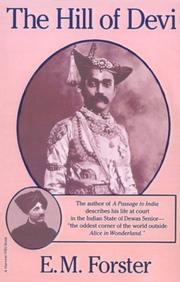
Letters and recollections from his time as private secretary to the Maharajah of Dewas. The raw material behind A Passage to India, and best read after the novel rather than before it.

The essays, including What I Believe, with its famous line about betraying one's country rather than one's friend. The clearest statement of the liberal individualism the whole body of fiction is built on.
Discussion
Keep reading
Paths that share books, cover the same subject, or open a related topic.