Dragon Ball Reading Order: Where to Start and How Dragon Ball, Z and Super Fit Together
Akira Toriyama wrote Dragon Ball as one continuous manga of forty-two volumes; the split into Dragon Ball and Dragon Ball Z exists only in the English editions, which renamed the second half to match the anime. This path reads the Viz single volumes in story order and crosses that seam explicitly, so you can see that Dragon Ball Z volume one picks up directly where the Dragon Ball volumes leave off rather than starting a new series. One practical warning: our book catalogue does not hold a distinct record for every English volume, and several numbers resolve to the Z or Super volume of the same number instead, so each volume here has been pinned individually and the ones with no clean record are simply left out. Read the gaps as catalogue gaps, not as skippable books.
The Dragon Ball hunt
BeginnerStart at the beginning of the manga and meet it as the comedy adventure it originally was.
▸ Study plan for this stage
Pace: One to two weeks, 560 recorded pages. Vol. 5 is 192 pages, which is a standard Viz single volume and an hour or two's reading; Vol. 1 is recorded at 368, roughly double that, so the catalogued edition is almost certainly a collected one rather than a single volume — expect more story than the number
- The original premise: a quest comedy about collecting seven wish-granting orbs, not a fighting series
- Goku as Toriyama drew him first — a child, an oddity, and comic rather than heroic
- Bulma as the driver of the plot; the hunt is her idea and her technology finds the balls
- Toriyama's debt to Journey to the West, and how loosely he uses it
- Toriyama's page craft: clean lines, uncluttered backgrounds, and action staged so the eye never loses the fighters
- The gag register of the early volumes, including the crude humour Toriyama uses constantly at this stage
- What is the Dragon Ball wish and what has to happen to the balls afterwards — the rule that lets the series repeat the quest?
- How much of Volume 1 is comedy and how much is fighting, by page count?
- Which characters introduced in these volumes are still present forty volumes later?
- What does Journey to the West supply — names, structure, or only decoration?
- How does Toriyama establish relative strength between characters without any numbers?
- Count, in Volume 1, how many pages are given to fights versus travel, gags and eating — then repeat the count in Volume 5 and see how far the ratio has already moved
- Pick one two-page fight spread in Volume 5 and trace the reading path panel by panel; Toriyama's staging is the thing every later fight relies on
- Draw the cast list at the end of Volume 5 and mark who Goku has fought, who he has befriended after fighting, and who is both — the pattern is the series' engine
- Track the Dragon Radar's role across both volumes and note the exact points where Toriyama uses it to move the plot rather than the characters
Next up: The quest structure is about to be replaced by a tournament structure, and the next stage is where the series decides what it is really going to be.
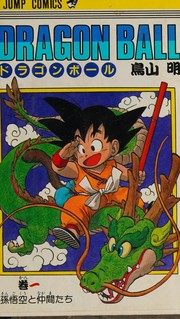
Goku meets Bulma and the search for the seven Dragon Balls begins. Start here: the early volumes are a gag-driven quest comic, and readers who come from the anime are often surprised by the tone.
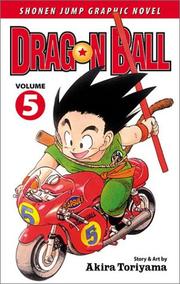
Training under Master Roshi and the run-up to the first World Martial Arts Tournament, which is the structure the whole series reuses. Volumes two to four have no distinct record in our catalogue and resolve to Dragon Ball Z volumes instead.
Tournaments and the Demon King
BeginnerFollow the shift from quest comedy to tournament fighting, and the first genuinely dangerous antagonist.
▸ Study plan for this stage
Pace: Two weeks, 572 pages across three standard single volumes: Vol. 7 at 188 pages, Vol. 10 at 192 and Vol. 11 at 192. Vols. 6, 8 and 9 have no distinct record here — that is a catalogue gap and not a recommendation to skip them, and Vols. 8 and 9 in particular sit in the middle of a continuous fight. T
- The Tenka'ichi Budōkai as a structural invention: a bracket that supplies fights without needing a plot reason for them
- Training arcs as pacing — Kame-Sen'nin's regimen, and the convention of an off-screen gap that raises everyone's power
- Piccolo Daimaō as the first antagonist the series treats as a genuine threat rather than a joke
- Death entering the series, and the Dragon Balls as the mechanism that makes it reversible — a rule that will govern everything afterwards
- The shift in Toriyama's art from gag proportions towards the harder, more angular style the later volumes use
- Krillin, Tenshinhan and Yamcha as the supporting tier the tournaments exist to sort
- How does the tournament format change what a chapter has to do compared with the quest volumes?
- What makes Piccolo Daimaō different in kind from the villains of the first stage?
- What are the stated limits on what the Dragon Balls can restore, and why does the series need limits at all?
- How does Toriyama handle the training that happens between arcs, and what does he choose to show?
- Where in these volumes does the comedy stop being the main register?
- Chart the tournament bracket from Volume 7 and mark, for each bout, what the fight is there to establish about the winner and the loser
- Compare a full-page panel of Goku from Volume 1 with one from Volume 11 and describe exactly what changed in the drawing
- For the Piccolo Daimaō arc, list each death and what is done about it afterwards; the resulting rules are the ones the entire second half runs on
- Note every time a character's strength is described relative to another's, and how Toriyama phrases it — he is still doing this without a number system
Next up: The next stage is the last stretch of the Dragon Ball line, where Toriyama plants almost everything the second half will pay off.
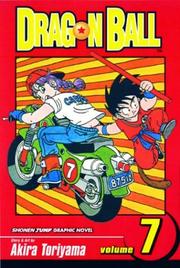
The first tournament arc pays off and the series discovers the format it will run on for two hundred chapters.
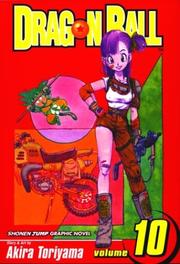
The King Piccolo arc, where Dragon Ball stops being a comedy with fights in it and becomes a fighting manga with jokes in it. The single most important tonal turn in the series.
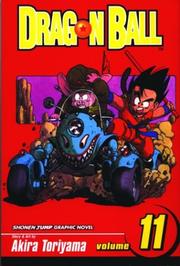
The Piccolo confrontation escalates and the stakes become mortal. Read straight on from volume ten; these two are one story.
The time skip
BeginnerRead the last stretch of the Dragon Ball line, where Toriyama sets up everything the second half will use.
▸ Study plan for this stage
Pace: Two weeks. Only Vol. 13 has a recorded length, at 184 pages; the lengths of Vol. 12 and Vol. 16 are not recorded in our catalogue, so budget them as standard single volumes on the evidence of the rest of the run. Vols. 14 and 15 have no distinct catalogue record at all and sit inside a continuous ar
- The time skip: Toriyama ages his protagonist rather than keeping him a child, which is unusual for the genre and changes everything after it
- Piccolo Jr. as inheritance rather than a new villain, and the beginning of the pattern of enemies becoming allies
- Kami and the origin material that turns Piccolo from a demon into something the later volumes will explain differently
- The setup work here that Dragon Ball Z will spend twenty volumes cashing: Goku's marriage, his son, and the unexplained parts of his own origin
- Volume 16 as the end of an English publishing line and not the end of a story
- Toriyama's art at the point where the shift towards adult proportions and heavier action is complete
- What is left deliberately unexplained about Goku's origins at the end of Volume 16?
- How does the second tournament differ in purpose from the first?
- What does the time skip let Toriyama do that keeping Goku a child would have prevented?
- How is Piccolo positioned at the close of this run, and why does that matter for what follows?
- If Volume 16 is the last Dragon Ball volume, what makes it obvious that the story is not finished?
- List every question Volume 16 leaves open, then keep the list and tick items off as the Z volumes answer them — this is the cleanest demonstration that the two lines are one work
- Compare the two tournament brackets, from Volume 7 and from this run, and note who has moved up, who has dropped out, and what that says about how Toriyama retires characters
- Read the last chapter of Volume 16 and the first chapter of Dragon Ball Z Volume 1 back to back before starting the next stage; the join is the point
- Track the passage of time explicitly stated in these volumes and write down how old Goku is at the end of Volume 16
Next up: The next volume is Dragon Ball Z Volume 1, which is the very next chapter of the same manga under a different English title — the next stage crosses that seam on purpose.

The aftermath of the Piccolo arc and the three-year jump forward. Our catalogue's display title for this record is truncated mid-subtitle; the work is Viz's twelfth Dragon Ball volume.
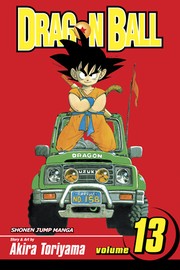
The tournament that reintroduces the cast as adults, and Piccolo repositioned from villain to something more complicated.

The end of the Dragon Ball line in English, immediately before the Saiyan reveal. Volumes fourteen and fifteen resolve to Dragon Ball Super records in our catalogue rather than to Dragon Ball, so they are omitted here.
Dragon Ball Z: the same manga, renamed
IntermediateCross the English-language seam and see that nothing actually restarts.
▸ Study plan for this stage
Pace: Two to three weeks, 908 recorded pages. Z Vol. 3 is 192 pages and Z Vol. 6 is 188, both standard single volumes; Z Vol. 1 is recorded at 528, so as with Dragon Ball Vol. 1 the catalogued edition is almost certainly a collection of several volumes rather than one. Vols. 2, 4 and 5 are missing from th
- The single most important fact about this series' English editions: Toriyama wrote forty-two continuous volumes, and the Dragon Ball / Dragon Ball Z split exists only because Viz renamed the second half to match the anime
- Raditz's arrival as the reveal that recontextualises everything left unexplained in the previous stage
- The genre shift from martial-arts tournament to science fiction, executed inside a single chapter
- Power levels and scouters as an explicit numeric system replacing the implicit comparisons of the early volumes
- Piccolo's move from antagonist to ally, and Gohan as the series' new centre of development
- Death being used seriously here, with the Dragon Ball rules from the second stage now doing structural work
- What does Raditz reveal, and which questions from Volume 16 does it answer?
- Where exactly is the boundary between Dragon Ball and Dragon Ball Z in the original Japanese serialisation — and is there one?
- What do power levels add, and what do they cost the series compared with the earlier way of showing strength?
- How does Toriyama restructure the cast in these volumes, and who is effectively retired?
- Why did Viz split the line at this point rather than at any other?
- Read the final page of Dragon Ball Vol. 16 and the first page of Dragon Ball Z Vol. 1 side by side and write one sentence on what, if anything, marks a new series
- Take the open-questions list from the previous stage and tick off every item Z Vols. 1–6 resolve
- Track every stated power level in these three volumes on a single scale and see how quickly the numbers stop being usable — Toriyama abandons them for a reason
- Compare a fight page from Dragon Ball Vol. 7 with one from Z Vol. 6 and describe what changed in staging, stakes and panel density
Next up: The last stage reads into the arc most readers name as the series' peak — as far as our catalogue reaches, which is not to the end of it.

Raditz arrives and Goku's origin is rewritten. This is chapter one of Dragon Ball Z in English and the direct continuation of the Dragon Ball volumes above, not a new series.
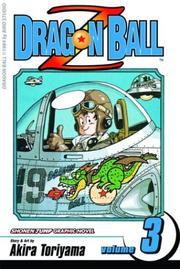
The Vegeta and Nappa invasion, and the first arc where the series kills characters it expects you to care about.
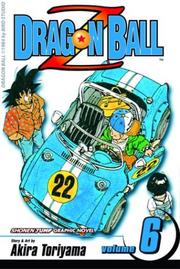
Namek, and the introduction of the antagonist who defines the series' reputation. The point at which the power escalation the franchise is mocked for actually starts.
Deeper into Z
IntermediateRead into the arc most readers think of as the series' peak.
▸ Study plan for this stage
Pace: One to two weeks, 384 pages — Dragon Ball Z Vol. 9 and Vol. 12 at 192 pages each, both standard single volumes, with Vols. 7, 8, 10 and 11 absent from the catalogue and needing to be sourced elsewhere. Read the stop carefully: the Viz Dragon Ball Z line runs to twenty-six volumes and this path ends
- The Namek arc's structure: a deadline, a planet, several factions chasing the same objects, and the quest device from Volume 1 reused at a far larger scale
- Vegeta's turn from antagonist towards uneasy ally, the second run of the pattern established with Piccolo
- Freeza as the series' most-cited villain and the reason this stretch is remembered as the peak
- Toriyama's escalation problem — each opponent must exceed the last — and the devices he uses to manage it
- Gohan and Krillin carrying long sections without Goku, and what that does to the pacing
- Where the arc stands at the end of Volume 12, and what remains unresolved
- What is the deadline structure of the Namek arc, and how does Toriyama use it to keep multiple parties moving at once?
- How does Vegeta's role change across Vols. 9 and 12, and what makes his shift different from Piccolo's?
- Why does escalation become a structural problem in this arc, and what does Toriyama do about it?
- What is unresolved at the end of Volume 12, and how many volumes are left in the Viz line after it?
- Looking back across the whole path, what is the single strongest piece of evidence that Dragon Ball and Dragon Ball Z are one manga?
- Lay out the Namek arc's competing objectives on one page — who wants the Dragon Balls, who wants Namek, who wants whom dead — and see how many separate clocks Toriyama is running
- Compare the Namek Dragon Ball hunt with the original hunt in Vol. 1 and list what has changed about the same plot device
- Write down where Volume 12 leaves each principal character, then check a volume list for the Viz Z line so you know exactly how far the remaining fourteen volumes go
- Read the whole path's opening volume and this stage's closing volume back to back and describe what happened to Toriyama's art across roughly twenty-eight volumes of continuous work
Next up: This is where the path stops rather than where the manga does: Dragon Ball Z continues to Volume 26 and then to Dragon Ball Super, and the remaining volumes are a catalogue gap here rather than a completed reading.
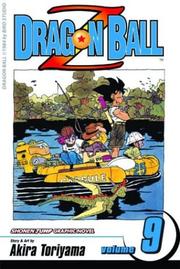
The Freeza fight in full, and the clearest demonstration of Toriyama's control of pace across dozens of chapters.
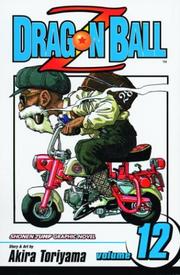
The consequences of Namek and the setup for the Android and Cell material. A reasonable stopping point: later Z volumes have no distinct records in our catalogue, so the path ends here rather than pretending to a complete run.