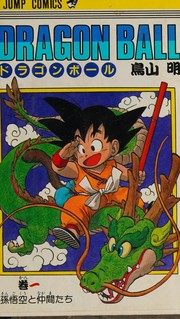
Start with Dragon Ball vol. 1. The question most readers actually arrive with is whether they should begin with Dragon Ball or Dragon Ball Z, and the answer is that this is not a real choice. Akira Toriyama wrote one continuous manga of 42 volumes between 1984 and 1995. The split exists only in the English editions, which renamed the second half to match the anime adaptation so that bookshop shelving would line up with what people had watched on television. Dragon Ball Z volume one picks up directly where the Dragon Ball volumes leave off. Nothing restarts.
The reason to start at the actual beginning rather than at the Z volumes is that the early manga is a different kind of book from the show most people know. It is a gag-driven quest comic — Goku meets Bulma, they go looking for seven wish-granting orbs, and the jokes are broad and frequently crude. Readers who come from the anime are regularly surprised. Skipping to the fighting means skipping the setup that makes the fighting land, and it also means missing the single best stretch of the series, which is the King Piccolo arc.
A note on the editions in this list
Two practical warnings before the sequence. First, the volume-one records in our catalogue for both halves are the VIZBIG collected editions, each of which bundles three of the original single volumes into one 560-page book, rather than the slim singles. That is a fine way to read the series — it is cheaper per chapter — but do not mix the two formats, or you will buy the same chapters twice. Second, our catalogue does not hold a distinct record for every English volume, and several numbers resolve to a Z or Super volume of the same number instead. The volumes below have each been pinned individually and the ambiguous ones left out. Read the numeric gaps as catalogue gaps rather than as skippable books.
The Dragon Ball line
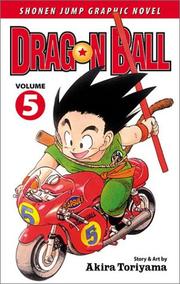
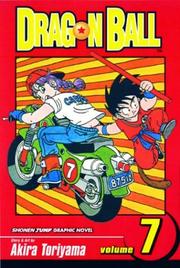
Dragon Ball vol. 1 begins the hunt. Dragon Ball, Vol. 5 covers training under Master Roshi and the approach to the first World Martial Arts Tournament, which is the structure the entire series will reuse. Dragon Ball, Vol. 7 pays off that first tournament and the series discovers the format it will run on for two hundred chapters.
Dragon Ball, Vol. 10 is the turn. The King Piccolo arc is where Dragon Ball stops being a comedy with fights in it and becomes a fighting manga with jokes in it, and it is the most important tonal shift in the run. Dragon Ball, Vol. 11 escalates the confrontation and makes the stakes mortal; read straight on, because these two are one story.
Dragon Ball, Vol. 12 handles the aftermath and the three-year time skip. Dragon Ball vol 13 is the tournament that reintroduces the cast as adults and repositions Piccolo from villain to something considerably more interesting. Dragon Ball, Vol. 16 closes the Dragon Ball line in English, immediately before the Saiyan reveal.
Crossing into Dragon Ball Z
Dragon Ball Z, Vol. 1 is the direct continuation. Raditz arrives, Goku's origin is rewritten, and the series acquires the science-fiction frame it keeps for the rest of its life. Dragon Ball Z, Vol. 3 is the Vegeta and Nappa invasion — the first arc that kills characters the reader is expected to care about. Dragon Ball Z, Vol. 6 opens Namek and introduces the antagonist who defines the series' reputation, and it is where the power escalation the franchise gets mocked for genuinely begins.
Dragon Ball Z, Vol. 9 is the Freeza fight in full and the clearest demonstration of Toriyama's control of pace across dozens of chapters. Dragon Ball Z, Vol. 12 handles the consequences of Namek and sets up the Android and Cell material.
Where to stop, and what about Super
This path ends at Dragon Ball Z, Vol. 12 because the later Z volumes have no distinct records in our catalogue, not because the story ends there. If you are buying rather than borrowing, the Namek arc is a reasonable natural stopping point in any case — many readers find the Cell and Buu arcs repetitive, and the manga's reputation rests largely on everything before them.
Dragon Ball Super is a separate matter: it is a continuation written after Toriyama's original run, drawn by Toyotarou from Toriyama's outlines, and it belongs after the complete 42-volume manga rather than anywhere inside it. Treat it as a sequel series, not part of the sequence above.
Follow the full ordered path here: Dragon Ball Reading Order: Where to Start and How Dragon Ball, Z and Super Fit Together.