Best Books on Dollhouse Miniatures, in Order
This curriculum takes a beginner from the fundamental language of miniature scale and proportion all the way through advanced room-building, realistic finishing, and iconic dollhouse projects. Each stage builds directly on the last — you'll first learn to see and measure in miniature, then construct furniture and rooms, then master surface finishes and lighting, and finally tackle complete classic dollhouse builds.
Foundations: Scale, Proportion & the Miniature Mindset
BeginnerUnderstand the core language of miniature scales (especially 1:12), how to read and apply proportion, and get a broad orientation to the hobby before committing to any single technique.
▸ Study plan for this stage
Pace: 4–5 weeks, ~25–30 pages/day (approximately 700–850 pages total across both books)
- The 1:12 scale as the foundational standard in dollhouse miniatures and how it translates real-world measurements to miniature equivalents
- Proportion and visual balance: how to assess whether a piece 'looks right' in miniature space, independent of exact measurements
- The relationship between scale consistency and believability—why mixing scales breaks the illusion
- Historical context and evolution of dollhouse design from Worrell's perspective, establishing why certain conventions exist
- Material properties in miniature work: how full-size materials behave differently at small scale and when substitution is necessary
- The miniaturist's mindset: observation, patience, and the discipline of working small without losing detail or proportion
- Broad survey of miniature techniques (construction, decoration, furnishing) to identify which align with your interests and skill level
- How to read technical drawings, patterns, and scale diagrams to translate ideas into miniature form
- What is the 1:12 scale, and how do you convert a real-world measurement (e.g., a 36-inch door) into its 1:12 equivalent?
- Why is scale consistency important in a dollhouse, and what happens visually when pieces of different scales are placed together?
- How do you assess proportion in a miniature room or piece of furniture without relying solely on a ruler?
- What are at least three material substitutions or adaptations that miniaturists must make because full-size materials don't work at small scale?
- Based on Worrell's historical overview, what are the origins of the modern dollhouse hobby, and how has it evolved?
- What is the difference between a technique-focused approach and a design-focused approach to miniature work, and which appeals more to you?
- Create a scale conversion reference sheet: pick 10 common household items (table height, chair seat, window width, etc.) and calculate their 1:12 equivalents in inches and centimeters; keep this as a working document
- Photograph or sketch 3–5 rooms in your own home, then analyze the proportions of furniture, doorways, and wall features; note what 'feels right' and why
- Visit a dollhouse museum, shop, or online collection and identify at least two examples of scale consistency and two examples of scale inconsistency; document with photos or notes on what breaks the illusion
- Read Worrell's historical sections and create a simple timeline of dollhouse evolution; note how historical periods influenced design conventions and scale choices
- Gather 5–10 household materials (fabric scraps, paper, wood shavings, wire, etc.) and experiment with how they appear at miniature scale versus full size; note which feel 'right' and which feel wrong
- Study one complete project from Newman's book (a simple piece of furniture or room element) and sketch out the steps, materials, and scale decisions before attempting construction
Next up: This stage equips you with the visual literacy and technical vocabulary to confidently approach specialized techniques—whether furniture-building, room-box construction, or decorative arts—because you now understand the 'why' behind scale and proportion rather than just following instructions.
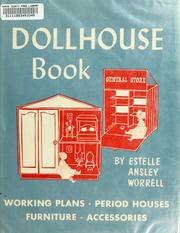
A classic, widely-read introduction to dollhouses and miniatures that orients the complete beginner to the hobby's history, vocabulary, and possibilities — the perfect first read before picking up any tools.
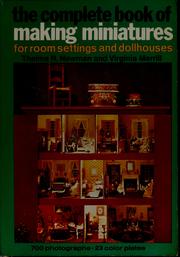
Covers scale conventions, proportion rules, and basic material choices in an accessible way, giving beginners the conceptual framework they need before moving into hands-on construction.
Realistic Finishes: Texture, Paint & Surface Detailing
IntermediateApply realistic surface treatments — aged wood, wallpaper, stone, fabric, and decorative paint effects — so that finished pieces look convincingly real at miniature scale.
▸ Study plan for this stage
Pace: 4–5 weeks, ~20–25 pages/day, with 2–3 days per week dedicated to hands-on embroidery practice
- Scaling embroidery techniques to miniature proportions while maintaining visual impact and realism
- Selecting appropriate threads, fabrics, and stitching methods for Victorian-era dollhouse textiles
- Creating convincing fabric finishes through embroidery that simulate aged, worn, or decorative surfaces at miniature scale
- Understanding how embroidered details (upholstery, curtains, samplers, carpets) contribute to the overall authenticity of a Victorian dollhouse interior
- Adapting historical embroidery patterns and techniques to work within the constraints of miniature needlework
- Using embroidery as a surface treatment to add texture, depth, and period-appropriate ornamentation to miniature furnishings and décor
- How do you scale traditional embroidery stitches and patterns down to miniature proportions without losing detail or visual clarity?
- What types of threads and fabrics does Warner recommend for miniature embroidery, and why are these choices important for achieving realism?
- How can embroidered textiles (such as upholstery, curtains, or samplers) be used to create convincing aged or worn finishes in a Victorian dollhouse?
- What are the key differences between full-scale Victorian embroidery and miniature embroidery techniques, and how do you adapt patterns accordingly?
- How do you select and execute embroidery designs that are historically appropriate for Victorian dollhouse interiors?
- What role does embroidery play in creating realistic surface detailing and texture in miniature room settings?
- Practice basic miniature stitches (backstitch, satin stitch, French knots) on scrap fabric at the scale recommended by Warner, focusing on consistency and control with fine threads
- Embroider a small sampler or decorative panel using a pattern from the book, paying attention to how texture and detail appear at miniature scale
- Create a miniature upholstered piece (cushion, chair seat, or footstool) using embroidered fabric as the surface treatment, experimenting with thread colors and stitch density
- Embroider a set of miniature curtains or a wall hanging with a Victorian-appropriate pattern, then install it in a dollhouse setting to assess realism
- Adapt a full-scale Victorian embroidery pattern from a historical source to miniature scale, documenting your scaling decisions and stitch adjustments
- Complete a textured embroidery project that simulates an aged or worn fabric surface (such as a faded tapestry or worn carpet), using thread color variation and stitch placement to create the illusion of age
Next up: Mastering embroidered textiles as a surface treatment establishes your ability to add convincing fabric finishes and decorative detail to miniatures; the next stage will expand this foundation by introducing additional surface techniques—paint effects, wallpaper application, and other aging methods—that work alongside or independently of embroidery to create fully realized, authentic miniature env
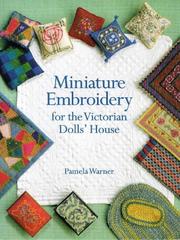
Introduces the discipline of period-accurate soft furnishings and surface detailing; learning to work at this fine scale sharpens the eye for realism across all finish types.
Discussion
Keep reading
Paths that share books, cover the same subject, or open a related topic.