DMZ Reading Order: Where to Start Brian Wood's Second American Civil War Comic
DMZ is Brian Wood and Riccardo Burchielli's war comic about a second American civil war, set in a Manhattan left as the demilitarised zone between the United States government and the secessionist Free States, and told through a photojournalism intern who gets stranded there. The slim trade paperbacks are the reading unit and publication order is story order, so the path simply walks the numbered volumes. Volumes 6 through 10 have no record in our book catalogue under any edition convention we could find, so the path reads the opening run, jumps to the two closing volumes, and says plainly that the middle is missing rather than implying a complete set.
Landing in the DMZ
BeginnerMeet Matty Roth and the premise, and understand how the series uses a war correspondent as its point of view.
▸ Study plan for this stage
Pace: About a week, 294 pages. DMZ Vol. 1 (On the Ground) is 128 pages and Vol. 2 (Body of a Journalist) is 166, both by Brian Wood, so each is a single evening; budget the rest of the week for a second pass through Vol. 1 once you know who Matty Roth becomes. These volumes open with a helicopter crew bei
- The premise: a second American civil war between the United States government and the Free States, with Manhattan left as the demilitarised zone between them
- Matty Roth is an intern with a famous father, not a journalist — the series is about someone acquiring the authority it hands him in issue one
- Wood never explains how the war started, and the refusal is structural rather than an oversight
- The embedded-correspondent point of view, and how Vol. 2 turns Matty from an observer of the war into a piece of it
- Riccardo Burchielli's Manhattan is the real street grid — locations are named and they constrain the plot
- The five-issue trade is the unit of the series; each volume is a complete arc
- How does Matty end up alone in the DMZ, and how much of that is decision rather than accident?
- What does Body of a Journalist argue about the difference between covering a war and being usable by it?
- Which factions are introduced in these two volumes, and what does each of them actually want from Matty?
- What is the effect of Wood never dramatising the outbreak of the war, and what would the series lose if he had?
- Who is Zee, and what does her role in Vol. 1 establish about how the DMZ's population survives?
- Read Vol. 1 with a Manhattan map open and mark every location Wood names — the geography is real, and seeing how tight the ground actually is changes how the later volumes read
- Go through Vol. 1 marking each panel that is framed as though shot through Matty's camera versus drawn omnisciently, then note where Wood switches and what the switch is doing
- After finishing Vol. 2, reread issue one of Vol. 1 and list everything Matty says about journalism that the second volume has already falsified
- Compare a page of Burchielli's crowd scenes against a page of his quiet two-hander conversation — the line quality changes, and it is worth naming how
Next up: Once you accept the DMZ as a place people live in rather than a battlefield people fight over, the next stage's volumes about its politics, utilities and economy stop looking like digressions.
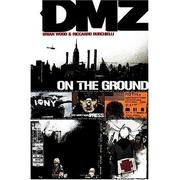
The first collection drops Matty Roth into Manhattan with a press pass and no idea what he is doing, which is exactly the reader's position. Start here and nowhere else; the premise is delivered entirely through his disorientation.
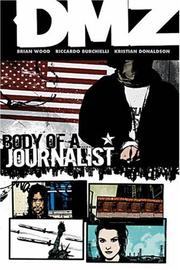
Matty stops being a tourist and starts filing stories, and the series shows what reporting from inside a siege does to the reporter. Read second because it establishes the journalistic ethics the rest of the run keeps testing.
The city as its own country
IntermediateSee how the DMZ stops being a battlefield and becomes a functioning society with its own factions, economy and politics.
▸ Study plan for this stage
Pace: Two weeks, 400 pages across three trades — Vol. 3 (Public Works) at 128 pages, Vol. 4 (Friendly Fire) at 128 and Vol. 5 (The Hidden War) at 144. Read Vols. 3 and 4 back to back because they are both about institutions; give Vol. 5 its own sitting, because it is not an arc at all but a set of standal
- The distinction between an arc volume that advances the war and a character volume that widens the world — Vols. 3 and 4 are the first, Vol. 5 the second
- Public Works: reconstruction contracting as a war economy, and who profits from a city that stays broken
- Friendly Fire: an atrocity, the two incompatible accounts of it, and what a military tribunal is for
- Matty's drift from reporting on factions to being sponsored by them
- The DMZ's internal order — militias, the Ghosts, neighbourhood arrangements, trade — as a functioning if brutal society
- How Wood uses the one-shot format in The Hidden War to say things the arcs structurally cannot
- In Public Works, who is actually being served by the reconstruction contracts, and how does the volume show it rather than state it?
- Friendly Fire gives you competing accounts of the same event — what does the volume conclude, and does it conclude anything?
- What does The Hidden War's one-issue format let Wood show about ordinary life in the DMZ that a five-issue arc cannot?
- By the end of Vol. 5, which of Matty's professional lines has he already crossed?
- How has the series' idea of who the enemy is changed since Vol. 1?
- For each of the standalone issues in The Hidden War, write one sentence on what that character wants — then check how many of those wants have anything to do with the war
- Take the massacre in Friendly Fire and lay out both versions of the event in two columns, noting exactly which panels support each; the volume is built so this can be done
- Track how often Matty is paid, fed, housed or transported by someone in these three volumes, and by whom — the list is the argument about his independence
- Reread the last page of Vol. 5 and identify which thread it picks up from Vol. 4; the character volume is not as disconnected as it looks
Next up: Volumes 6 through 10 have no record in our catalogue, so the next stage jumps straight to the endgame and you need this stage's picture of the DMZ's factions to make sense of who is fighting whom at the finish.
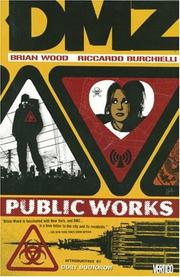
The volume that widens the lens from Matty to the people who actually live in the zone, and the point where the series' real subject arrives: civilians under occupation.

A set of standalone character issues rather than a war arc, and the best argument for the series' quality. Read it here because the standalone portraits only land once you know the geography.
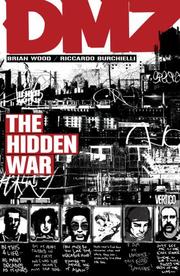
The volume where the two armies stop being background and the political machinery around the ceasefire comes forward, setting up everything the later books escalate.
How it ends
IntermediateRead the endgame of the war and the series' final judgement on its protagonist, knowing that the volumes immediately before these are not available here.
▸ Study plan for this stage
Pace: Two weeks, but read the gap notice first. Free States Rising is Vol. 11 and The Five Nations of New York is Vol. 12, the final volume; DMZ Vols. 6 through 10 are not available here under any edition convention, so you are stepping over five trades of plot. Expect to be lost about specific alliances
- Free States Rising as backfill: the volume that goes back and tells you how the Free States movement began, told largely away from Matty
- The Five Nations of New York as verdict — the series' final judgement on its protagonist rather than on its war
- What the missing Vols. 6–10 contain in outline, and why Matty's position at the start of Vol. 11 will not follow from where you left him in Vol. 5
- The parallel between the Free States' origin story and Matty's own self-justification
- How a war comic ends when the author has decided the war was never the subject
- What does Free States Rising claim the secession actually was, and how does that revise the earlier volumes' picture of it?
- What is Matty finally held responsible for, and is the series' judgement of him the same as yours?
- How does the ending treat the city itself — as a casualty, a survivor, or something else?
- Having skipped five volumes, which specific developments do you find you cannot reconstruct from the two closing books alone?
- Does the series' refusal to explain the war's origin survive Free States Rising, or does that volume break the rule?
- Before opening Vol. 11, write down where you expect Matty to be after five missing volumes; after finishing Vol. 12, check the prediction against what actually happened and note what the gap cost you
- Read Free States Rising against Vol. 1's opening and mark every point at which the origin volume contradicts an impression the first volume gave you
- List, from The Five Nations of New York alone, everyone who survives — and then compare that list against the cast introduced in Vols. 1–5
- Find the panel in Vol. 12 you would call the series' thesis statement, and be able to defend why it rather than any of the obvious candidates
Next up: With the series finished, the last stage sets DMZ beside the book Wood wrote before it and the one he wrote after, which is the only way to see which of its ideas were the series' and which were the author's.

The eleventh collection, catalogued under its bare volume title rather than a DMZ volume number. It turns the Free States from an offstage abstraction into a movement with a history, and it is the setup for the finale.

The final collection, again catalogued under its bare volume title. It resolves Matty's story and the war together, and it is worth reading even after the gap at volumes six to ten because it is written as a summation.
The rest of Brian Wood's war writing
IntermediatePlace DMZ inside its author's work: the book that prefigured it and the one that returned to the same questions in a different century.
▸ Study plan for this stage
Pace: About two weeks, 308 pages. Channel Zero is Wood's own early work, written and drawn by him in stark black and white, and at 108 pages it is the shortest book in this path; it reads in a sitting but rewards a slow one, because the design and text-page collage are half the point. Rebels is nearly twi
- Channel Zero (1997) as the prototype: a near-future censored America and a media-guerrilla protagonist, published a decade before DMZ
- The formal difference — Wood drawing and designing Channel Zero himself versus Wood scripting for Burchielli on DMZ
- Rebels as the same question moved to the 1770s: what an insurgency looks like from inside a household
- Wood's recurring interest in the person who documents or narrates a conflict rather than the person who wins it
- How a war story changes when the war is one the reader already knows the outcome of
- What does Channel Zero already contain that DMZ would later build a whole series on, and what did Wood drop?
- Rebels is about a war America won — how does that certainty change the storytelling compared with DMZ's unresolved one?
- Is Jennie 2.5 in Channel Zero a version of Matty Roth, an opposite of him, or neither?
- What does Wood's own art in Channel Zero do that Burchielli's does not, and vice versa?
- Across all three works, what does Wood appear to believe about whether documenting a war changes it?
- Put a Channel Zero text-collage page next to a Matty dispatch page from DMZ Vol. 2 and describe, concretely, what the ten years between them did to Wood's page design
- Take the domestic scenes in Rebels — the ones away from the fighting — and count what proportion of the book they occupy, then compare that proportion with DMZ Vol. 5
- Write a paragraph arguing that DMZ is a remake of Channel Zero, then a paragraph arguing it is a refutation of it; the useful part is finding which one you can support from the pages
- Reread Rebels' opening story after finishing the collection, watching for how much of the ending it already contains
Next up: This closes the path: you have read DMZ as far as our catalogue allows, plus the work on either side of it that shows which of its preoccupations belonged to the series and which to Brian Wood.

Wood's late-1990s comic about a media activist in an authoritarian New York, and visibly the seedbed DMZ grew from. Read it after DMZ rather than before, so you can see the ideas in their rougher first form.

An American Revolution series about ordinary people conscripted into a war of secession, which is DMZ's question asked two and a half centuries earlier. The natural next book if DMZ's civilian focus was what held you.