Dirk Pitt Reading Order: Where to Start with Clive Cussler
Clive Cussler's Dirk Pitt adventures have one genuine order problem: Pacific Vortex was written first but held back and published seventh, so publication order and the character's own chronology disagree at the start. This path settles it in favour of publication order, beginning with The Mediterranean Caper, and saves Pacific Vortex for late — it is early apprentice work and a poor introduction. After that the sequence is straightforward, and the honest shape of the series is a strong first fifteen years, a long plateau, and a late run co-written with Dirk Cussler in which the formula runs on without much conviction.
Start Here: The First Three Published
BeginnerMeet Pitt, Al Giordino and NUMA, and learn the formula — a maritime mystery, a historical hook, and an ocean-going salvage problem solved by force.
▸ Study plan for this stage
Pace: 3 to 4 weeks. The Mediterranean Caper is short — around 220 pages — and reads in two evenings. Iceberg is about 250 and is similarly quick. Raise the Titanic! is the first of the long ones at roughly 400 pages and is slower going, because a third of it is salvage logistics; a fortnight. This is the
- The formula, established across these three: a prologue set decades or centuries in the past, a present-day maritime mystery that turns out to be its consequence, a salvage or recovery problem, and a conspiracy that scales up as the book goes on.
- NUMA — the National Underwater and Marine Agency — is the fictional agency Pitt works for, and Cussler later founded a real organisation of the same name that searched for shipwrecks, which is why the books' salvage detail is more careful than the plotting.
- Dirk Pitt and Al Giordino are a fixed double act: Pitt improvises and Giordino makes it survivable, and the relationship never develops across twenty-odd books because it is not meant to.
- Admiral James Sandecker, the NUMA director, is the third fixture, and his function is to authorise things and then object to them afterwards.
- The Mediterranean Caper is closer to a straight adventure thriller than to the treasure hunts that follow; the historical-hook machinery is not fully assembled yet.
- Iceberg is where the actual shape appears — a ship frozen inside an iceberg, and a conspiracy far larger than the salvage job that found it.
- Raise the Titanic! was written before the wreck was located in 1985 and before anyone knew it had broken in two, so its central premise was falsified by history. That is now part of what makes it worth reading: it is a period document about what the Titanic meant before anybody had seen it.
- Pitt's antique car collection, housed in an aircraft hangar, is introduced early and becomes the series' most reliable running detail; a car from it usually solves something.
- What are the fixed components of the Cussler formula, and which of the three books has all of them?
- What is the salvage problem in Raise the Titanic!, and what specifically about it is now known to be impossible?
- What does Giordino do that Pitt cannot, and how many times in three books does it matter?
- Where does Iceberg's plot stop being about the ship and start being about something else? Name the chapter.
- Why is Pacific Vortex, which comes first in Pitt's own chronology, a poor place to start?
- Chart the prologue of each of the three books: date, event, and the page on which the present-day plot first connects to it. The gap between those two points is the engine of every book in the series, and the measurement is worth having.
- Read a short factual account of the 1985 discovery of the Titanic wreck after finishing Raise the Titanic!, then list what the novel gets wrong and what it could not have known. The distinction is the whole interest of the book now.
- Keep a one-line note per book of what Pitt's car collection contributes. By the end of the path you will have a list that is a fair summary of how Cussler solves plot problems.
- Time yourself on The Mediterranean Caper and on Raise the Titanic! per hundred pages. The series' inflation is the single most important thing to know before committing to it, and these two books mark its beginning.
Next up: The formula is now assembled; the next stage is the stretch where it works best, before the page counts start climbing.
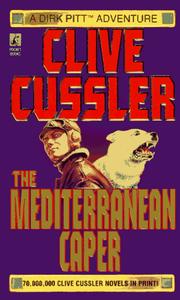
The first Pitt novel published, and the correct entry point. Short, tight, and closer to a straight thriller than the treasure hunts that follow. Ignore the internal chronology that puts Pacific Vortex ahead of it.
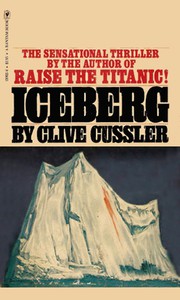
Second, and the book where the series' actual shape appears — a ship frozen inside an iceberg, and a conspiracy that runs much larger than the salvage job. Read in place.
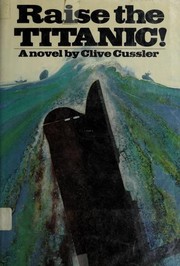
Third, and the one that made Cussler's name: raising the wreck to recover a mineral cargo, written before the wreck's real condition was known. Its premise was overtaken by history in 1985, which is part of why it is worth reading as a period piece. Catalogued with and without the exclamation mark; it is the same novel.
The Peak Years
BeginnerRead the late-seventies and early-eighties run, generally considered the strongest stretch in the series.
▸ Study plan for this stage
Pace: 6 weeks. Vixen 03 is about 350 pages and is the tightest thing here; ten days. Night Probe! is a similar length and moves faster than any book on the path; a week. Deep Six is the first genuinely long one at around 430 pages and is where the series begins to sprawl; two weeks. Vixen 03 turns on a ca
- This is the stretch most readers rate highest, and the reason is compression: the historical hook and the present-day plot are locked together tightly enough that neither can be removed.
- Vixen 03 is the first book where the past-and-present structure carries real weight — a lost military transport, a biological weapon it was carrying, and the people who find it decades later for their own purposes.
- It is also nastier than the books around it, and the villains are given motives rather than merely nationalities, which is not true of most of the series.
- Night Probe! turns on an archival puzzle — a missing treaty between Britain and the United States — and is the best balance the series achieves between research and action; the document hunt is genuinely a plot rather than a pretext.
- Deep Six is the hinge: a hijacked presidential yacht, a mind-control plot, and a page count that starts reaching for scale. The tight early novel ends here.
- St Julien Perlmutter, the marine historian, and the widening supporting cast at NUMA appear in this period and change how the books are structured — more chapters that are research rather than action.
- Cussler's own attitude to plausibility shifts across these three: Vixen 03 is broadly possible, Deep Six is not, and the series never goes back.
- What is the cargo in Vixen 03, and how does the novel connect it to the present-day plot?
- In Night Probe!, what is the treaty and what would its recovery actually change? State the stakes precisely.
- What does the archival research in Night Probe! contribute that an action sequence could not?
- At what point in Deep Six does the plot stop being physically plausible, and does the book lose anything by it?
- Which of these three has the best-motivated villain, and what makes the difference?
- Write down the historical hook of each of these three books in one sentence, then rank them by how load-bearing the history is. Night Probe! and Vixen 03 will separate from Deep Six, and that separation is the series' quality line.
- Take Night Probe!'s central document search and follow it as a research procedure — who is consulted, what archive, what the obstacle is at each stage. Cussler is describing a real method and it is the most transferable thing in the series.
- Count the point-of-view characters in Vixen 03 and in Deep Six. The inflation of the series is visible in that number before it is visible in the page count.
- Set the opening chapter of The Mediterranean Caper beside the opening of Deep Six, eleven years apart, and note what has been added to the machinery.
Next up: The next stage is the mode Cussler settled into for twenty years — bigger canvases, longer books, and a formula running at full stretch.
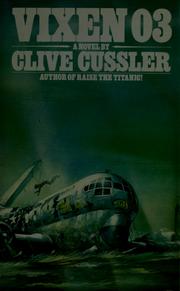
A lost transport aircraft carrying biological weapons, recovered decades later by the wrong people. Tighter and nastier than the books around it, and the first where the historical hook and the present-day plot lock together properly.
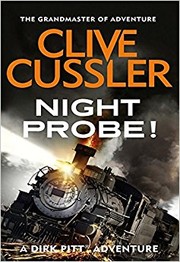
A missing treaty between Britain and the United States, and two sunken wrecks. The most purely enjoyable of the early books, and the one that best balances the archival puzzle against the action.

A hijacked presidential yacht and a mind-control plot, and the point where the series starts reaching for scale. Read it as the hinge between the tight early novels and the very large ones that follow.
The Big Adventures
BeginnerRead the late-eighties and nineties books, where the plots get global and the page counts get long.
▸ Study plan for this stage
Pace: 10 to 12 weeks, and be honest about the commitment. Treasure is around 530 pages, Dragon around 600, and Sahara around 600 — these are three long books in a row and they are not dense, but they are long. Three to four weeks each at a steady pace, or read one and move on if the mode is not holding yo
- The premise inflation is the defining feature of this stage: the library of Alexandria relocated, a nuclear blackmail campaign, a Confederate ironclad in the Sahara. The historical hook is now the selling point rather than the frame.
- Treasure is the most enjoyable of the three and the best demonstration of the mode — a genuinely appealing historical premise, worked out at length, with the action arranged around it rather than the reverse.
- Dragon is the point at which the books become clearly formulaic. It is also the point at which the formula is at its most efficient, so the two things arrive together.
- Cussler begins inserting himself as a character in this period — a white-bearded stranger who turns up, helps Pitt, and is named Clive Cussler — which is either the series' best joke or its most self-indulgent tic, and readers do not agree.
- The geopolitics of these books is of their moment: Dragon's Japan is a 1990 anxiety, and Sahara's Africa is written from a considerable distance. Reading them now means reading the period as much as the plot.
- Sahara is the best known because of the 2005 film, which changed the plot substantially and did not do well; the novel is a fair representative of the series at full stretch.
- Nothing in this stage requires anything else in it. These are interchangeable in a way the first two stages are not, which is itself the most useful fact about them.
- What is the historical premise of each of the three, and which one is the least absurd?
- How does Cussler get from the historical hook to the present-day threat in Treasure? Trace the connective steps.
- What does Cussler's appearance as a character do to the reading experience, and is he in on the joke?
- In Dragon, what is the formula doing that it was not doing in Vixen 03, and what has it stopped doing?
- If you read only one of these three, which and why?
- Before reading Sahara, write down the four formula components identified in stage one, then check them off as they appear and note the page. In a 600-page book you should have all four inside the first hundred.
- Mark Cussler's cameo in each book and note what he does. He is functionally a deus ex machina and cataloguing his interventions is the fastest way to see the plotting under strain.
- Compare the page count devoted to the historical prologue in Vixen 03 with the equivalent in Treasure. The proportion tells you what the series became.
- Read the film synopsis of Sahara after finishing the novel and list what was cut. What a Hollywood adaptation thinks is removable is a fair diagnosis of what the books have too much of.
Next up: The next stage takes the last books Cussler wrote alone, up to the point where Pitt's own story is finally settled.

The library of Alexandria, relocated. The most enjoyable of the historical-premise books and a good demonstration of the mode Cussler settled into for twenty years.
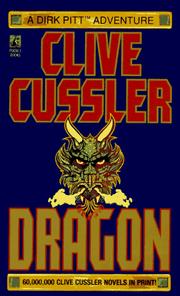
A Japanese nuclear-blackmail plot on a very large canvas. Longer and more geopolitical than what came before; the point at which the books become clearly formulaic, though the formula is still working here.
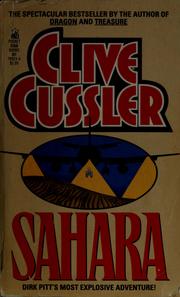
A Confederate ironclad in the Sahara, a toxic-waste plot, and Lincoln. The best-known of the later novels because of the 2005 film, and a fair representative of the series at full stretch.
The Later Solo Novels
IntermediateSample the last books written by Cussler alone, and reach the point where Pitt's personal story is finally resolved.
▸ Study plan for this stage
Pace: 8 to 10 weeks. Inca Gold is around 550 pages, Atlantis Found around 530, and Trojan Odyssey about 500 — three weeks each, and there is no penalty for spacing them out. Read Trojan Odyssey last of the three regardless of what else you skip: it is the pivot on which the rest of the series turns.
- Inca Gold is one of the stronger nineties entries and is the same mode as Sahara — a submerged treasure, an artefact-smuggling operation, a long recovery sequence — done with more control.
- Atlantis Found marks a boundary honestly: a prehistoric-civilisation premise wired to a neo-Nazi conspiracy is roughly where the series' plausibility budget is exhausted, and after this the books stop pretending.
- Trojan Odyssey is the last Pitt novel Cussler wrote alone, and it does the one thing the series had refused for thirty years — it resolves Pitt's personal life and gives him two grown children, Dirk junior and Summer.
- That resolution is structural rather than sentimental: it converts a solo hero into a family franchise, which is exactly what the co-written books that follow need in order to exist.
- The historical premise of Trojan Odyssey — a relocation of the Odyssey itself — is the most strained in the series, and most readers regard the book as weak apart from the character business it exists to transact.
- Pitt's promotion out of the field, and Sandecker's move, change the series' basic situation: the man who dived on things is now the man who authorises diving on things.
- Read as a group these three are a writer handing a series over, and the handover is more interesting than any of the plots.
- What happens to Pitt personally in Trojan Odyssey, and what does the series gain by it?
- Where does Atlantis Found stop being a thriller and become something else? Is the shift deliberate?
- How does Inca Gold differ from Sahara, given that they are the same kind of book?
- What does the introduction of Dirk junior and Summer make possible that Pitt alone did not?
- Is Trojan Odyssey a good novel? Separate that question from whether it is a necessary one.
- Read Trojan Odyssey's final chapters and write down every change to the series' standing situation — Pitt's job, his family, Sandecker's post, the composition of NUMA. That list is the specification for every book after it.
- Compare the treasure-recovery sequence in Inca Gold with the equivalent in Raise the Titanic!, twenty years apart. The technical detail is the one thing in the series that improved.
- In Atlantis Found, mark the point at which you stopped believing the premise and note what specifically broke it. Where the plausibility budget runs out varies by reader and locating your own is useful before the next stage.
- Write a one-paragraph summary of Pitt as a character based on the first stage, then rewrite it after Trojan Odyssey. The two paragraphs should differ in more than age.
Next up: The last stage is the decision about whether to carry on into the co-written run, and the one book that has been waiting since the beginning.
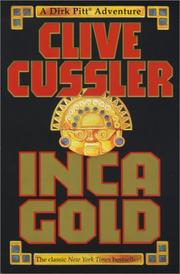
A submerged Andean treasure and an artefact-smuggling ring. One of the stronger nineties entries, and worth reading if you want more of the mode Sahara represents.
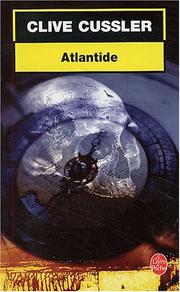
A prehistoric-civilisation premise and a neo-Nazi conspiracy, which is roughly where the series' plausibility budget runs out. Included because it marks the boundary honestly: after this the plots stop pretending.

The last Cussler-only Pitt novel, and the one that resolves Pitt's personal life and introduces his grown children. Read it before the co-written books — it is the pivot the rest of the series turns on.
The Co-Written Run, and the Outlier
IntermediateDecide whether to continue into the Dirk Cussler collaborations, and pick up the one book that sits outside the sequence.
▸ Study plan for this stage
Pace: 4 weeks. Black Wind is around 530 pages and reads much like the late solo novels with a different rhythm in the prose; two to three weeks. Pacific Vortex! is under 200 pages and takes two evenings — it is by some distance the shortest book on this path and the earliest written, and it is deliberatel
- Black Wind is the first Dirk Pitt novel co-written with Dirk Cussler, and the arrangement continued for the rest of the series through Celtic Empire in 2019 — the later entries carry two names on the cover as a matter of fact, not of rumour.
- The volumes published after Clive Cussler's death in February 2020 are written by Dirk Cussler alone, with his father's name carried in the title as a brand. They are continuations rather than his work, and readers should know which they are buying.
- The change in the co-written books is structural before it is stylistic: Pitt's son and daughter carry most of the physical action, and Pitt himself increasingly directs from a desk.
- Black Wind is the test case. Read it to find out whether the changed voice works for you, because the answer determines whether the remaining dozen books are worth your time.
- Pacific Vortex! was written first, before The Mediterranean Caper, and published seventh, which is the entire reason this series has an order argument at all.
- It is apprentice work and shows it: thin plotting, a much broader and less controlled Pitt, and a premise — a vanishing zone in the Pacific — the later books would have handled in fifty pages.
- Read late, as a curiosity, it is interesting for exactly that reason: it shows what Pitt was before Cussler worked out what to do with him. Read first, as its internal chronology invites, it is a poor introduction that puts most readers off.
- Cussler's own preface to the eventual publication is worth reading, because he says plainly what the book is and why it sat in a drawer.
- What actually changes in Black Wind — prose, structure, or who does what — and can you locate the difference in a specific chapter?
- How does the series' centre of gravity move once Dirk junior and Summer are in the field?
- What is different about the Pitt of Pacific Vortex! compared with the Pitt of The Mediterranean Caper, written immediately afterwards?
- Does Pacific Vortex! belong in the series at all, or is it a first novel with a familiar name attached?
- Having read the whole path: is publication order the right choice, and would you now defend it against the chronological alternative?
- Read fifty pages of Black Wind and fifty of Trojan Odyssey back to back and mark the sentence-level differences — paragraph length, dialogue attribution, how action is staged. The co-writing is detectable and finding it is the point of reading this book at all.
- Read Pacific Vortex! immediately after The Mediterranean Caper's opening chapters, which is the closest you can get to the order in which Cussler actually wrote them. The improvement between the two is the clearest measure of what a first novel teaches a writer.
- Write a two-column list: what Pacific Vortex! establishes about Pitt that later books keep, and what they quietly drop.
- Decide, in writing, whether you are continuing into the co-written run, and say what in Black Wind decided it. That is the practical output of this stage.
Next up: That is the sequence settled and the decision made; from here the co-written Pitt novels run to Celtic Empire in publication order with nothing further to untangle, and Cussler's other series — the NUMA Files, the Oregon Files, the Isaac Bell historical novels — are separate continuities that can be entered anywhere.

The first novel co-written with Dirk Cussler, and the start of the run in which Pitt's son and daughter carry most of the action. Read this one to see whether the changed voice works for you; the series continues through Celtic Empire from here.
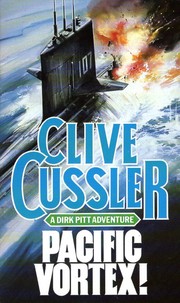
Written first, published seventh, and the reason this series has an order argument at all. It is apprentice work — thin plotting, a much broader Pitt — and it is best read late, as a curiosity, rather than as the beginning it chronologically is.
Discussion
Keep reading
Paths that share books, cover the same subject, or open a related topic.