Dirk Pitt books in order: where to start with Clive Cussler
Cussler wrote more than eighty books across five series, and the shelf is genuinely confusing: the first Dirk Pitt novel he wrote was not the first one published, most of the later books carry a second name on the cover, and the series have continued since his death in 2020 under other authors. This path reads Pitt in publication order because the character develops that way, marks the peak clearly, and ends by mapping the co-written spin-offs so you can decide whether to follow them.
Where to Actually Start
BeginnerRead the three early Dirk Pitt novels and understand why the shelf order misleads.
▸ Study plan for this stage
Pace: About three weeks for roughly 925 pages. Take Raise the Titanic! first (373 pp, 8-10 days), then The Mediterranean Caper (256 pp, 4-5 days - the shortest and thinnest Pitt novel), then Iceberg (296 pp, 5-6 days). Publication order is actually Caper (1973), Iceberg (1975), Raise the Titanic! (1976);
- The publication-order trap: The Mediterranean Caper came out first, but Raise the Titanic! is the book that made Pitt, so reading the shelf left to right sends a new reader to the weakest entry
- The Cussler premise: a genuine historical loose end - a ship on the seabed, a cargo never accounted for - plus a present-day recovery operation with unlimited resources
- NUMA as a plot engine: a fictional government agency with salvage capability sufficient to make any wreck reachable, which is what lets the premises escalate
- Dirk Pitt as a fixed quantity rather than a developing character - the variable across books is the wreck and the antagonist, not the hero
- The Cold War frame of Raise the Titanic!, where the stakes are a strategic mineral, dating the book to its decade precisely
- The set-piece rhythm: an underwater sequence roughly a third in, a reversal near the two-thirds mark, an extended surface chase at the end
- The gap between the Cussler of 1973 and the Cussler of 1976 - three years in which the prose, the pacing and the research all change measurably
- Why is Raise the Titanic! the recommended entry point when two Pitt novels were published before it?
- What is the historical hook in each of these three books, and how much of each one is real?
- What is materially different about The Mediterranean Caper - in length, plot mechanics and characterisation - from the two novels that follow it?
- At what point in Iceberg does the formula that governs the rest of the series first appear complete?
- What does Raise the Titanic! assume about the physical condition of the Titanic on the seabed, and what happened to that assumption in 1985?
- Write a one-page beat outline of Raise the Titanic! - inciting wreck, first dive, betrayal, surface climax - then read Iceberg against it and mark every beat that lands in the same place and every one that does not.
- Read the opening chapter of The Mediterranean Caper and the opening chapter of Raise the Titanic! back to back, and note in a paragraph how differently Pitt is introduced in each and what Cussler had learned in between.
- List the real facts Raise the Titanic! depends on - the ship's condition, the depth, the salvage technology available in the mid-1970s - and mark which ones the novel gets wrong. The discovery of the wreck in 1985 contradicts the book's central image; note what that does to the plot.
- Start a running inventory of the recurring furniture across these three books - the antique car, the villain's private industrial empire, the woman introduced as an antagonist - and carry the list forward. You will use it to date how early the formula hardened.
Next up: With the formula assembled and dated, the next stage follows it through the run of lean Cold War novels where Cussler was working at his most consistent.
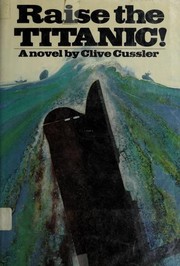
The book that made him, and the correct starting point for most readers: a salvage operation on the Titanic wrapped around a Cold War mineral race. It is the third Pitt novel published but the first fully realised one, and the catalogue files it with its exclamation mark.
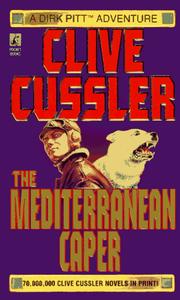
The first Dirk Pitt novel published, in 1973, and much slighter than what follows — a thin plot, a very seventies hero, and roughly half the page count. Read it second, as background, not first.
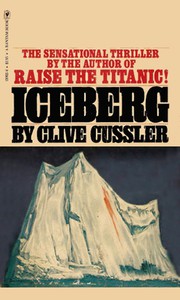
The second published, and the point where the formula settles: a lost ship, a buried conspiracy, an underwater set piece. Worth reading before the peak books because it shows the machinery being assembled.
The Cold War Pitt Novels, in Order
BeginnerFollow the sequence through its most straightforwardly enjoyable stretch, and get used to Cussler's habit of hanging a thriller on a real historical loose end.
▸ Study plan for this stage
Pace: Three to four weeks for about 1,215 pages. Vixen 03 (362 pp) and Night Probe! (384 pp) go at roughly a week each; Deep Six (470 pp) needs closer to ten days. Read them in this order - it is publication order, and the historical-hook technique visibly improves across the three. Vixen 03 turns on a ca
- The historical-hook method at full strength: Vixen 03 hangs on a lost military transport, Night Probe! on a treaty document lost in two 1914 disasters, and both invent freely from a real gap in the record
- Escalation as a structural rule - each book raises the scale of the threat rather than the complexity of the plot
- The dual-timeline opening Cussler settles into here: a prologue set decades earlier, then the present-day recovery, with the reader knowing what Pitt does not
- Antagonist design: a private empire with more capability than the state, which is what keeps NUMA from simply calling in the military
- Where Night Probe! handles its historical half better than Vixen 03 despite sharing its structure - a useful demonstration that the hook and the thriller are separable
- Deep Six as the last of the lean books: 470 pages is still short by the standard of what comes after
- The point at which the plots stop being defensible as plausible and start being enjoyable as machinery
- What real historical gap does each of these three novels build on, and where exactly does the invention begin in each?
- Vixen 03 and Night Probe! share a structure. What does Night Probe! do better with it?
- How does Cussler use the prologue to create suspense that does not depend on withholding information from the reader?
- Why does the antagonist in each book have to be a private actor rather than a hostile state?
- What changes in Deep Six that marks it as the end of the early phase rather than the middle of it?
- Chart the two timelines of Vixen 03 on a single sheet - prologue events on one line, present-day recovery on the other - and mark every point where the reader knows something Pitt does not. Then do the same for Night Probe! and compare how much of the tension in each comes from that gap.
- Take the historical premise of Night Probe! and separate it into what is documented and what is invented. Cussler builds the whole plot on a document that does not exist; identify the real 1914 events he attaches it to.
- Add to the recurring-furniture list you started in stage one, and note the first book in which each element appears for the second time. By Deep Six most of the list should be repeating.
- Time yourself across Deep Six and note where the pace sags. At 470 pages it is the first Pitt novel long enough to have slack in it; identify which subplot could be cut without loss.
Next up: These three establish the machinery at its most efficient, which is what makes the next stage's longer, better-researched novels legible as the peak rather than as more of the same.
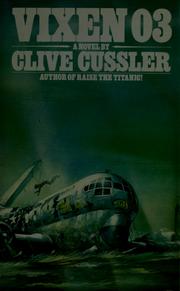
A lost transport plane carrying biological weapons, recovered decades later. The template for everything after: a genuine historical hook, then an escalation nobody would defend as plausible. Note that the Open Library record credits a Spanish translator alongside Cussler; the book is his alone.
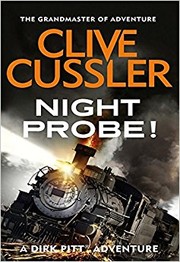
A treaty document lost in two simultaneous 1914 disasters, hunted in the present. Read it after Vixen 03; the two share a structure and this one handles the historical half better.

A poisoned river, a hijacked presidential party and a Korean shipping empire. The last of the lean early books before the novels get longer and more elaborate.
The Peak
BeginnerRead the three novels most Cussler readers would name as his best, and see the historical-mystery framing at full strength.
▸ Study plan for this stage
Pace: About five weeks for roughly 1,735 pages - these are substantially longer books than the early ones. Treasure (608 pp) and Sahara (576 pp) run about twelve days each; Dragon (550 pp) is denser and darker than either, and worth ten to twelve. Read Treasure, then Dragon, then Sahara, which is the full
- The archaeological premise at its most ambitious - the contents of the Library of Alexandria relocated to the Americas is the largest single invention in the series
- Research-to-action balance: Treasure is the book where the historical material earns its page count instead of being a pretext
- Villain weighting in Dragon, where the antagonists are given motive and interiority the earlier books do not bother with
- Sahara's triple plot - a Confederate ironclad, a lost aviator, a toxic-waste operation - and how three unrelated hooks are braided into one book
- The screen adaptation problem: Sahara was filmed in 2005 and the film discards most of the structure, which makes the two useful to compare
- Length as a signal - at 550 to 610 pages these books can carry subplots the 1970s novels could not
- The point of diminishing returns: everything after this stage is longer without being fuller
- What makes Treasure the best-balanced of the Pitt novels in the specific sense of research against action?
- Dragon gives its villains more weight than any earlier book. What does that buy the novel, and what does it cost in pace?
- How does Sahara keep three separate historical hooks from competing with each other?
- Which of these three would you hand to someone who will read exactly one Cussler novel, and on what grounds?
- What can these books afford at 600 pages that Deep Six could not at 470?
- Track the Library of Alexandria thread through Treasure and write down every claim the novel makes about the library's fate. Then check which of them correspond to anything in the historical record - the answer will tell you what Cussler treats as load-bearing and what he treats as decoration.
- Read the sequence in Dragon where the antagonist's motive is laid out, and rewrite it in two hundred words as a flat summary. Compare it against the equivalent villain in Deep Six from the previous stage; the difference in how much the book is willing to explain is the difference between the phases.
- Diagram Sahara's three plot strands and mark the chapters where they touch. Count how many chapters serve two strands at once - that ratio is the technical achievement of the book.
- Watch the 2005 film of Sahara after finishing the novel and list what was cut. The cuts identify which parts of the formula a screenplay cannot use, which is a sharper way of seeing the formula than reading alone.
Next up: Having read the series at its strongest, the next stage samples the later solo novels so you can see the decline for yourself and decide where to stop.

The Library of Alexandria's contents, hidden in the Americas. The most enjoyable of the archaeological premises and the book where the research and the action are best balanced. The record carries a co-author credit from a later series; this one is Cussler's alone.
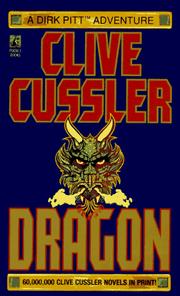
A Japanese nuclear-blackmail plot built around a genuinely lost Second World War bomber. Longer and darker than Treasure, and the one where the villains are given the most weight.
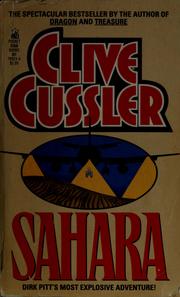
The best-known Pitt novel after Raise the Titanic!, later filmed: a Confederate ironclad in the Sahara, a lost aviator, and a toxic-waste plot that ends up in the Sahel. Read it last in this stage — it is the fullest version of the formula. The catalogue's year on this record is wrong; the novel is from 1992.
Later Pitt
BeginnerSample the later solo novels and learn where most readers choose to stop.
▸ Study plan for this stage
Pace: About three weeks for roughly 1,115 pages. Shock Wave (572 pp) and Atlantis Found (544 pp) are twelve days each at an unhurried pace, and neither rewards hurrying. These are the last two solo Pitt novels this path covers; Inca Gold and Flood Tide fall between them if you want the sequence complete,
- Padding as a measurable phenomenon - the mid-1990s books are longer than the peak books without carrying more plot
- The plausibility threshold: Shock Wave still argues for its premise, Atlantis Found stops trying, and the reading experience changes accordingly
- The convict-ship frame in Shock Wave as the last well-executed historical prologue in the solo run
- Atlantis Found's stacking of a comet impact, a lost seafaring civilisation and a neo-Nazi conspiracy in one book - three premises where the peak novels used one apiece
- Reader tolerance as the actual variable: whether these books work depends on a decision you make, not on their construction
- Why most readers who stop, stop here - and why the path names that rather than pretending the series holds its level
- Where specifically does Shock Wave slacken relative to Sahara, given they are nearly the same length?
- At what page in Atlantis Found does the novel stop asking to be believed, and does it improve or worsen after that?
- What does the convict-ship frame in Shock Wave accomplish that a straightforward present-day opening would not?
- Is Atlantis Found badly built, or built to a different standard? Argue both.
- If you were advising a new reader where to stop, which book would you name and why?
- Count chapters and scenes in Shock Wave and in Sahara. They are within thirty pages of each other; whichever has fewer scenes per hundred pages is the more padded, and the number will settle an impression you can otherwise only assert.
- Mark the exact paragraph in Atlantis Found where you stop believing the premise. Write down what pushed you over. This is the most useful single note you can take about your own tolerance for the late series.
- Take your recurring-furniture list from stages one and two and score these two books against it. Anything still present after twenty years is the actual formula; anything dropped was incidental.
- Write a hundred-word case for reading Atlantis Found and a hundred-word case for skipping it, then decide which you believe. The next stage asks you to make the same kind of judgement about four whole series.
Next up: Having found your own stopping point in the solo novels, the last stage maps the co-written series so you can judge what the second name on the cover changes.
Diamond mining, acoustic weapons and a nineteenth-century convict-ship frame story. Representative of the mid-nineties books: bigger, more padded, still fun.
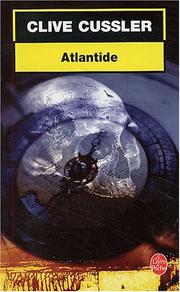
A comet impact, an ancient seafaring civilisation and a neo-Nazi conspiracy. The point at which the premises stop pretending to plausibility; enjoyable if you have accepted that, tiresome if you have not. Inca Gold and Flood Tide sit between these two if you want the sequence complete.
The Co-Written Spin-Offs, and What Happened After 2020
BeginnerMap the four other series, understand what the second name on the cover means, and decide whether to continue.
▸ Study plan for this stage
Pace: About four weeks for roughly 1,380 pages, one book per series: Serpent (480 pp), The Golden Buddha (484 pp), The Chase (416 pp), around ten days each. Read this stage as reconnaissance rather than as a run - the point is to sample four series and decide which, if any, to follow. State the situation
- What a co-author credit on a Cussler cover actually denotes: the structure and the premises are his, the sentences generally are not
- The four spin-off series and their distinguishing device - NUMA Files (a second salvage team), Oregon Files (a covert ship disguised as a derelict freighter), Isaac Bell (a 1900s Van Dorn detective), Fargo (a treasure-hunting married couple)
- Serpent as the fairest test case for hearing the difference in prose, because Kemprecos is writing Cussler's own house style directly
- The Oregon Files as the most-handled series - Dirgo, then Du Brul, then others - and what that does to consistency
- The Chase as a genuine departure: a period detective novel rather than a salvage adventure, and the last series Cussler launched himself
- The posthumous continuations: books published under Cussler's name since 2020 are written by other authors, which is a fact about the shelf, not a judgement about their quality
- How to read a Cussler cover - byline order, series label and publication year together tell you who actually wrote the book in your hand
- What does the second name on a Cussler cover mean in practice, and how does the arrangement differ between the NUMA Files, the Oregon Files and the Isaac Bell books?
- Reading Serpent immediately after Atlantis Found, what changes at sentence level, and what stays identical at structural level?
- Why has the Oregon Files series had the most authors, and what does that show in The Golden Buddha's construction?
- How does The Chase depart from the Pitt template, and what does the 1906 setting let Cussler do that the present-day books cannot?
- Which of the four spin-off series, if any, would you continue with - and what in this stage's reading decided it?
- Read fifty pages of Serpent and fifty pages of Shock Wave in one sitting and mark the differences you can point at - sentence length, dialogue attribution, how action is paced. This is the concrete version of the claim that these books are Cussler in structure but not in prose.
- Build a one-page map of the five series: name, first book, launch year, the co-author on book one, and who is writing it now. Keep it beside you in a bookshop - it is the single most useful thing to come out of this path.
- Take the opening chapter of The Chase and identify what has to change because it is set in 1906 - the technology, the pace of travel, the investigative method. Then note which parts of the Cussler formula survived the transplant unaltered.
- Pick up any Dirk Pitt novel published after 2020 in a shop, read the copyright page and the first two pages, and confirm for yourself who wrote it. The exercise is deliberately trivial; doing it once fixes the habit.
Next up: This closes the path: you now know which Cussler books are his, which are collaborations, which are neither, and where on that map to stop.
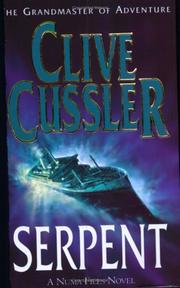
The first NUMA Files novel, written with Paul Kemprecos, whose name is on the cover of the first eight. These books are structurally Cussler but not written by him line by line, and the difference in prose is noticeable; this is the fairest one to test that on.

The first Oregon Files novel, written with Craig Dirgo — a covert ship disguised as a derelict freighter. The Oregon books later passed to Jack Du Brul and then others, so this series has had the most hands on it.
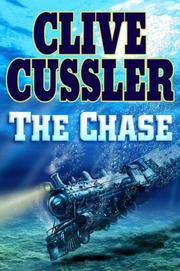
The first Isaac Bell novel, a 1906 Van Dorn detective story, and the last series Cussler launched. The subsequent Bell books were written with Justin Scott. Cussler died in 2020 and every series has continued without him — Dirk Pitt under his son Dirk Cussler, the others under Graham Brown, Boyd Morrison, Mike Maden and Jack Du Brul. Those books are marketed under Cussler's name; they are not his work, and this path stops here.
Discussion
Keep reading
Paths that share books, cover the same subject, or open a related topic.