Death Note Reading Order: Where to Start
Death Note is one of the easiest manga in the world to read in order: twelve numbered volumes, start at one, stop at twelve, no side stories woven into the plot and no alternate order anyone seriously argues for. The only way to get it wrong is at the shop rather than on the page — the Black Edition reprints collect two volumes each and renumber them one to six, and the light novel Another Note is a separate book by a different writer, so mixing either into the count is how readers end up skipping or repeating material. This path follows the twelve numbered single volumes, grouped into the four movements the story actually falls into.
Start Here: The Notebook
BeginnerMeet Light, Ryuk and L, and understand the rules of the notebook well enough that the later chapters read as a game rather than a series of surprises.
▸ Study plan for this stage
Pace: About a week for roughly 600 pages across Vols. 1 to 3, which is a comfortable pace and faster than most manga because the panels are dialogue-heavy rather than action-heavy — Obata's layouts hold long exchanges without ever repeating a shot. Two practical notes before you start. First, edition: the
- The rules pages between chapters are not flavour text. Ohba introduces the notebook's constraints incrementally and every late-series reversal is built from a rule that was printed pages earlier, so read them as you would a contract
- The core rules established here: a name and a face are both required, forty seconds to write a cause of death, six minutes forty seconds to write details, and a default heart attack otherwise
- Ryuk as an observer rather than an ally — he explains the notebook's mechanics and is explicit that he has no stake in Light's success, which is why he can be trusted on rules and on nothing else
- Light's stated justification and the series' refusal to endorse it: the story presents his reasoning at full strength and then shows what he does with it, and the gap between those two things is the whole book
- L's method of inference from public information — the Lind L. Tailor broadcast in Vol. 1 is the cleanest single demonstration of how the series' deductions work, and it teaches you to read the rest
- The narrowing: Kanto, then the police families, then a single household — each step a deduction with a stated premise, which is what makes the series a puzzle rather than a chase
- Obata's visual grammar for thinking — the shadowed close-up, the fingers-to-face pose, the panel that holds on a face while narration runs — which is how a manga about two people reasoning stays readable
- The Vol. 3 shift from manhunt to proximity: once Light and L are in the same room, every scene is two people performing innocence for each other while the reader watches both
- State the notebook's rules as established by the end of Vol. 3, from memory. If you cannot list at least eight, go back to the rules pages.
- How does L deduce that Kira is in the Kanto region, and what does the Lind L. Tailor broadcast actually establish?
- What does Ryuk want, and why does that make him a reliable source on the notebook and an unreliable one on everything else?
- What is Light's argument for what he is doing, stated as he would state it? And what has the story shown you that complicates it by the end of Vol. 3?
- Once Light and L meet, what has changed about the kind of story this is?
- Start a running rules list on a single sheet, adding each rule as it appears with the volume and page. Do this from Vol. 1 — reconstructing it later is much harder, and the list is the tool the endgame is designed to be solved with.
- Write out L's Kanto deduction as numbered premises and a conclusion. Doing it once shows you what the series expects you to be doing as you read.
- Note every instance where Light exploits a rule's precise wording rather than its obvious use. There are several before Vol. 3 ends, and they are the model for everything later.
- Pick one page where Obata draws a character thinking rather than doing, and describe how the panelling conveys it. This is the technical achievement that makes the series work.
- Write down, at the end of Vol. 3, your own prediction of how L will try to prove his case. Sealing a prediction here makes the middle of the series much more engaging.
Next up: You now hold the rules and have seen both minds work, which is exactly the equipment the next three volumes need — because a second notebook user is about to break the neat duel you have just learned to follow.
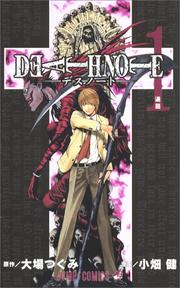
The only place to begin. A bored honours student finds a shinigami's notebook, and within forty pages the series has established both its premise and the detective who will spend eleven volumes trying to prove it. Read the rules pages between chapters — they are load-bearing later.
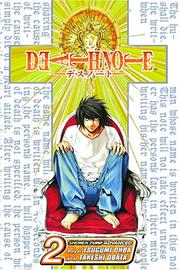
L closes the net to Kanto and then to a single household, and Light starts using the notebook's fine print rather than just its power. Second because the whole series depends on you seeing how the rules can be gamed before anyone games them.
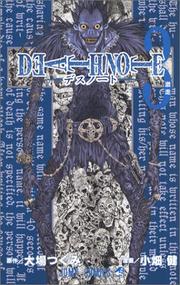
Light and L finally meet face to face, and a second notebook enters the story. Third and not later — this is where the series stops being a manhunt and becomes two people sitting in the same room lying to each other.
The Second Kira
BeginnerFollow the middle game, where a second notebook user forces Light to improvise and the series widens from a duel into a conspiracy.
▸ Study plan for this stage
Pace: A week to ten days for about 630 pages across Vols. 4 to 6. This is the fastest-reading stretch of the series and it is worth reading in a compressed run rather than spread out, because the plotting is tightly interlocked across all three volumes. Keep the spoiler discipline strict here in particula
- The shinigami eye deal — halved lifespan for the ability to see names — as a new rule that changes the shape of every subsequent problem, and as the series' clearest statement about what its characters will trade
- Misa as a destabilising force rather than a love interest: she is reckless, she has capabilities Light does not, and she cannot be reasoned with, which is exactly what the plot needs
- The two-notebook problem: with more than one user, L can no longer treat Kira as a single consistent agent, and every inference he has made becomes provisional
- Ownership and memory as mechanics rather than metaphors — who owns a notebook, what happens when ownership is relinquished, and what a person retains or loses
- Surveillance as the mode of the middle game: cameras, confinement and constant observation, so the story is conducted almost entirely through what people allow to be seen
- The reader's changed position in Vol. 6 — Ohba repeatedly gives the reader information one character has and another lacks, and the tension comes from that asymmetry rather than from mystery
- Ohba's technique of committing to a gambit fully rather than reversing it quickly, which is why the middle of this series is structurally unusual for a shonen serial
- Escalation by constraint: each volume takes an option away from Light rather than giving him a new power, which is the opposite of how most serialised manga generates tension
- What is the shinigami eye deal, what does it cost, and who takes it?
- How does the existence of a second Kira damage L's earlier reasoning? Name a specific inference from stage one that no longer holds.
- What are the rules governing notebook ownership and memory as established by the end of Vol. 6? Add them to your list precisely.
- How does constant surveillance change what a character can do, and how does Ohba turn that restriction into plot rather than stasis?
- By the end of Vol. 6, what does each of the main players know about the others, and what does each only suspect?
- Update your rules list with every new mechanic in these three volumes, especially the ownership and memory rules. Mark the ones you think could be exploited later — you will want to check that prediction at Vol. 12.
- Draw a knowledge grid: characters down the side, facts across the top, and mark who knows what by the end of Vol. 6. Death Note is largely a story about the state of that grid.
- Take the prediction you sealed at the end of stage one and check it. Write a paragraph on what you got wrong and what the series did instead.
- Track Misa's decisions across Vol. 4 and 5 and note which of them Light could have prevented. The answer is fewer than it feels, and that is why she works as a plot device.
- Pick one long dialogue scene under surveillance and note how Obata varies the framing across a conversation between people who cannot move. It is the hardest thing to draw in the series.
Next up: The middle game has stripped Light of most of his advantages and put a second notebook in play; the next stage resolves it, and then does something almost no serialised story attempts.

Misa Amane arrives with shinigami eyes and no patience, and Light has to absorb a partner he cannot control. Read fourth: her recklessness is the pressure that makes the next three volumes move.
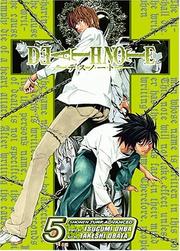
The task force closes in, and the series plays its biggest structural card — a gambit that resets what the reader knows about the protagonist. Do not read a summary of this volume before you read it.
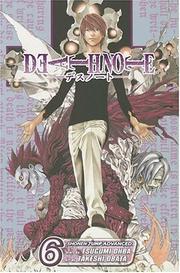
The consequences of that gambit, played out under constant surveillance. Sixth because the tension here is entirely built on rules established in volumes one to five; it is unreadable out of sequence.
Yotsuba, and the Cost
BeginnerReach the series' hinge — the corporate Kira arc and the confrontation that ends the first half — and understand why the story does not simply stop there.
▸ Study plan for this stage
Pace: Ten days to two weeks for about 610 pages across Vols. 7 to 9. Vol. 7 should be read in a single uninterrupted sitting if you can manage it — it is the hinge of the series and its final chapters are paced as one movement. Then a deliberate pause is fair, and Vol. 7 is the only good stopping point in
- The Yotsuba arc as a genre shift: Kira operating through a corporate group turns the story briefly into a boardroom procedural, with killings chosen for commercial advantage
- Kira as an idea with users rather than a person, which is the thematic groundwork for everything after the time skip
- The Vol. 7 climax and why it is the moment the series is remembered for — read it cold, and note how much of it is set up by rules you wrote down in stage one
- The structural risk Ohba takes at the end of Vol. 7, and the honest observation that opinion divides here: a substantial body of readers thinks the series peaks at Vol. 7, and a substantial body thinks the endgame is the better puzzle. Both readings are defensible and you now have to form your own
- The four-year jump: a world that has adapted to Kira, with public opinion, media and policy all shifted, which is a different kind of stakes from a manhunt
- Near and Mello as a deliberate split of the previous antagonist's qualities — analysis on one side, aggression on the other — and what the story gains by not simply providing a replacement
- The SPK and the Japanese task force as competing institutions, so the second half is played across organisations rather than between two individuals
- Vol. 9's kidnapping plot as the moment the story stops being covert: Light must manoeuvre in the open, with political rather than forensic consequences
- How does the Yotsuba group choose its targets, and what does the commercial logic of those killings say about the idea of Kira?
- Which rules from your list are load-bearing in the Vol. 7 climax? Name them specifically.
- What does the four-year jump change about the world, and what has the public come to believe?
- How are Near and Mello different from each other, and what does each have that the other lacks?
- Do you think the series is stronger before or after Vol. 7? Argue it with evidence rather than impression — this is the central critical question about Death Note.
- After Vol. 7, write 300 words on the ending of that volume immediately, before reading anything anyone else has written about it. This is the single most spoiled moment in the series and your unmediated reaction is worth preserving.
- Go back through your rules list and mark every rule that turns out to have been set up for the Vol. 7 climax. The density of the setup is the argument for Ohba's plotting.
- Write one paragraph describing the world after the time skip as a news report from that world would describe it. It clarifies how much has changed.
- Redraw your knowledge grid for the post-jump cast. The old one no longer applies, and rebuilding it is how you re-enter the story.
- List what the second half must do to be as good as the first. Keep the list; you will check it against Vol. 12.
Next up: The pieces of the endgame are now all on the board — two successors, two institutions and a Light who has to operate in public — and the last three volumes are a fair-play puzzle you have every rule needed to solve.
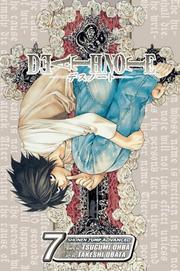
The Yotsuba investigation resolves and the volume ends on the moment most readers remember the series for. Seventh, and the natural place to pause if you want to feel the shape of the thing before continuing.

A four-year jump and two new antagonists. Eighth is where a lot of readers wobble, so go in expecting a deliberate change of cast rather than a continuation of the same duel.
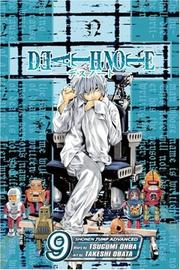
Mello's kidnapping plot forces Light into open political manoeuvring for the first time. Ninth because it re-establishes the stakes that the time skip deliberately let go slack.
Near and Mello
IntermediateFinish the series and see the endgame's logic — the second half is a fair-play puzzle, and by now you have every rule you need to solve it before the characters do.
▸ Study plan for this stage
Pace: About ten days for roughly 610 pages across Vols. 10 to 12, and read them as one unit. The one place not to stop is between Vols. 11 and 12: Vol. 11 ends mid-manoeuvre and Vol. 12 opens directly into the warehouse. If you have been keeping the rules list, this is the stage it pays off — the final re
- Fair play as a formal commitment: by Vol. 10 every rule needed for the ending has been printed, which puts Death Note in the tradition of the classical detective puzzle rather than the thriller
- Near's method of proof versus L's — Near needs a demonstration that will convince other people, not merely certainty, and that requirement shapes the entire endgame
- Mello's function as the variable neither of the careful players can model, and the argument that the endgame requires exactly one actor who will not calculate
- The distinction between knowing and proving, which is the second half's real subject and the reason the ending takes the form it does
- Notebook forgery, substitution and the rules governing what a piece of a notebook can do — the most obscure mechanics in the series become decisive here
- The final trap's structure: work out who had to know what, and when, for it to have been laid at all. This is the deduction the series is asking you to make
- The endgame's verdict on Light's argument from Vol. 1, delivered by events rather than by a speech — the story lets his reasoning stand and shows the outcome, which is a more demanding form of judgement than a moral
- The final chapter's epilogue and what it says about whether Kira was ever really about one person
- What does Near need in order to act, and how does that differ from what L needed?
- Which specific rules make the ending possible? List them from your own sheet before you check.
- Reconstruct the final trap: who knew what, when did they know it, and what did each party have to believe for it to work?
- What does Mello contribute that Near could not have, and does the story make that case convincingly?
- How does the ending answer Light's original argument, and does it answer it fairly?
- Having finished: check your stage-three list of what the second half needed to do. How much of it did the series deliver?
- Before reading Vol. 12, stop at the end of Vol. 11 and write your own solution — how you think the trap will spring — using only your rules list. Almost nobody gets it entirely right, and almost everybody gets part of it, which is the sign of a well-made puzzle.
- After finishing, reread the last twenty pages of Vol. 1 and write 200 words on how the opening reads with the ending known. Ohba plants a great deal there.
- Take your complete rules list and mark each rule with the volume where it was introduced and the volume where it mattered. The distance between those two numbers, averaged, is the best single measure of how far ahead this series was plotted.
- Write 300 words on whether the second half earns its place, addressing the strongest argument on the other side. This is the conversation every Death Note reader eventually has and it is better had with your own evidence.
- Now, and only now, go and read what other people have written about the ending. Having formed your own view first is the entire reason for the spoiler discipline this path has been asking for.
Next up: This is the end of the path — twelve volumes, read in the only order the series supports — and the natural next step is a reread of Vol. 1 through 3, which is a completely different experience once you can see which of Light's early moves were already mistakes.
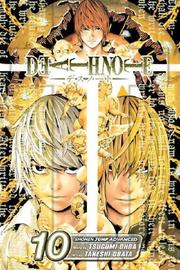
Near and Mello work the same case from opposite directions while Light holds both. Tenth: the endgame's moving parts are all placed here, and the finale is only satisfying if you noticed them.
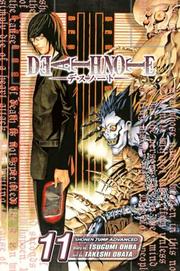
The last of the misdirection, and the volume where the notebook's most obscure rules suddenly matter. Eleventh, immediately before the finish — the gap between these two volumes is the worst place to stop.

The warehouse, and the end. Twelfth and last; the extra chapter tucked in at the back is a genuine epilogue rather than a bonus, so read it as part of the volume.
Discussion
Keep reading
Paths that share books, cover the same subject, or open a related topic.