Dean Koontz books in order: where to start
Dean Koontz has published well over a hundred books and almost all of them stand alone, so "what order" is really "which ones, and in what sequence do they make sense." Two complications are worth knowing before you start: he wrote for years under pen names including Leigh Nichols, Brian Coffey, K.R. Dwyer and Owen West, and several of his early novels were substantially rewritten and reissued decades later, so the version you buy today may not be the one first published under that title. This path starts with the three books most readers should try first, works back through the eighties run that made his name, takes the one long series he wrote in order, and ends with the early material.
Start Here: The Three to Try First
BeginnerFind out quickly whether Koontz is for you, using the books that best represent his three modes — sentimental, apocalyptic and relentless.
▸ Study plan for this stage
Pace: 3-4 weeks, one novel a week: Watchers (469 pp), Phantoms (442 pp) and Intensity (384 pp). Read them in that order - they are chosen to sample three different modes, not because they connect. Intensity is the shortest and fastest, effectively a single sustained chase over about a day. Phantoms is str
- The three modes Koontz works in - sentimental, apocalyptic-horror, and relentless chase - and that most readers only want one or two of them
- The warmth-and-menace mix: an animal or a child supplying the tenderness while the threat escalates
- A scientific rather than supernatural cause as the standard Koontz resolution, and the exceptions
- The implacable pursuer as a structural device, and the antagonist as pure appetite
- Escalation pacing: how quickly the threat is introduced and how the intervals shorten
- Where the sentiment does load-bearing work and where it clogs the machinery
- Which of the three modes do you actually want more of - that answer determines the rest of this path?
- How does Koontz keep Einstein in Watchers from collapsing into whimsy, and does he always succeed?
- What does Intensity strip out that the other two keep, and what does the book gain?
- What is the standard shape of a Koontz antagonist across all three books?
- Where does the explanation arrive in each novel, and how much of the tension does it spend?
- Read the three in the order given and write one sentence after each on whether you want more of that mode - use those three sentences to decide which later stages to take
- Note the page on which the threat is first present in each of the three, and the page on which it first acts
- Reduce Intensity to a beat sheet across its roughly one-day span, then lay Watchers' timeline beside it and compare the intervals
- List the sentimental beats in Watchers and mark which ones the plot would survive without
Next up: These three sample the range; the next stage goes back to the run of eighties bestsellers where the formula behind all of them was worked out.
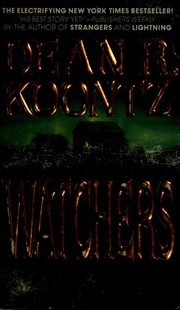
The book Koontz himself and most of his readers name as his best: an escaped laboratory dog of enhanced intelligence, the thing that escaped with it, and a couple on the run. Start here — it is the purest version of his mix of warmth and menace.

A whole Sierra town found empty, and the explanation is far stranger than the setup suggests. Read second for the horror end of his range, which Watchers only hints at.

A short, brutal chase novel that takes place over roughly a day and never lets up. Read third: it is the least characteristic of the three and the best demonstration of how hard he can drive a plot when he strips out the sentiment.
The Eighties, When He Found His Register
BeginnerRead the run of big commercial thrillers that established the formula — ordinary people, an implacable pursuer, a scientific rather than supernatural cause.
▸ Study plan for this stage
Pace: 5-6 weeks. Whispers (502 pp) over a week and a half, Strangers (685 pp) over two weeks - it is the longest and has the largest cast - and Lightning (400 pp) over a week. Read Whispers first: it is the first major bestseller published under his own name after years of pen names, and the structure eve
- The formula in full: ordinary competent people, an implacable pursuer, and a rational explanation arriving late
- The psychological rather than supernatural resolution, which Whispers commits to hardest
- Ensemble convergence structure - unconnected strangers drawn to one location, with the point of view rotating
- The midpoint twist as a structural position, used most effectively in Lightning
- The move from pen names to his own name, and what changed commercially at that point
- Length inflation across the decade, and whether the longer books earn it
- Can you state the eighties formula in five beats after Whispers, and does Strangers follow it?
- How many points of view does Strangers rotate through, and how long before the cast converges?
- What does Lightning's midpoint reveal do to everything you assumed in the first half?
- Why does the psychological explanation in Whispers land differently from the explanation in Phantoms?
- Which of the three has aged best, and what specifically has aged badly in the other two?
- After Whispers, write the formula in five beats, then test it against Strangers and mark every deviation
- Track each converging point of view in Strangers and record how many pages pass before the cast is in one place
- Stop at the exact midpoint of Lightning, write down what you believe is happening, then finish and compare
- Put the ending of Whispers beside the ending of Phantoms - one resolves psychologically, one does not - and describe what each ending asks the reader to accept
Next up: The eighties standalones share a structure but no continuity; the one Koontz series where order genuinely matters comes next.

His first major bestseller and the first book he published under his own name after years of pseudonyms. A stalker novel with a psychological explanation; read it first here because everything after builds on its structure.

Unconnected people across America develop the same inexplicable symptoms and converge on one Nevada motel. His most ambitious book of the decade, and the one with the largest cast — read after Whispers, when you are used to the pacing.
A time-travel thriller with a genuinely surprising midpoint reveal, and the eighties book that has aged best. Placed last in this stage because the twist works better once you think you know his formula.
Odd Thomas, In Order
BeginnerRead the one Koontz series where the order genuinely matters, and where the sequence carries a single continuous arc to a fixed ending.
▸ Study plan for this stage
Pace: 5-6 weeks, one book a week: Odd Thomas (399 pp), Forever Odd (400 pp), Brother Odd (418 pp), Odd Hours (374 pp). This is the only sequence on the path where reading order is not optional - Forever Odd depends entirely on the ending of the first book. The first novel is self-contained and worth readi
- The first-person voice - plain, comic, elegiac - and how far it is from the third-person thrillers in the earlier stages
- The lingering-dead premise and the rules Koontz sets for it in book one
- Stormy Llewellyn and the way the first book's ending becomes the engine of everything after
- Self-contained episodes shifting into a single continuous arc at Odd Hours
- The planned destination Koontz wrote toward, and what that does to the middle volumes
- A series voice sustained across many books, and the point at which sustaining it becomes the main work
- What exactly are the rules of Odd's ability as stated in the first book, and are they kept?
- How much of Forever Odd is unreadable without the first book's ending?
- How does Odd's narration differ from the narration of Watchers, page for page?
- At what point does the series stop being episodic, and what replaces the case-of-the-book structure?
- After Brother Odd, is the voice enough to carry you through several more volumes?
- Write down the rules of Odd's ability as book one states them, then check each sequel for consistency and note every quiet amendment
- Mark the passages in Forever Odd that depend directly on the first book's ending and count how much of the novel they carry
- Compare a page of Odd Thomas's narration with a page of Watchers and describe what the first person changes
- After Brother Odd, decide whether to continue past this path and write down the reason - the remaining volumes ask for more of the same
Next up: Odd Thomas is where the metaphysical and sentimental strain becomes explicit, and the later standalones show that same shift happening in the non-series books.
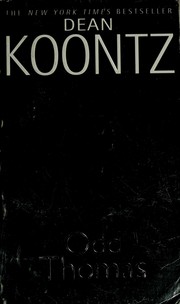
A short-order cook in a desert town who sees the dead. The best-written thing Koontz has done and a self-contained novel in its own right — read it even if you skip the rest of this stage.

Second, and it depends entirely on what happens at the end of the first book. Do not start here.

Third, set in a monastery, and the most self-contained of the sequels. A good indication of whether the series' voice can carry you through the remaining books.
Fourth, and the point where the series shifts from episodic cases toward the larger destination Koontz had planned. Read it if the first three worked; the sequence continues past it for several more volumes.
The Nineties and After
IntermediateSample the later standalones, where the prose is more mannered and the sentiment more explicit than in the eighties books.
▸ Study plan for this stage
Pace: 5-6 weeks. Cold Fire (408 pp) over a week, From the Corner of His Eye (729 pp) over two to three - it is the longest book on the path and the most divisive thing he has written, and some readers abandon it - and Life Expectancy (476 pp) over a week and a half. The prose in these is more mannered and
- The metaphysical turn: providence, quantum possibility and moral design replacing the scientific explanation
- Mannered prose and explicit sentiment as a deliberate late style rather than a decline in control
- The villain as pure malignity, with less psychological accounting than in Whispers
- The comic register of Life Expectancy, and Koontz playing a grim premise light
- Where the transition happens - Cold Fire sits on the seam between the two periods
- How to tell whether the later work is for you, and where your own boundary falls
- At what point in Cold Fire does the explanation stop being scientific?
- What specifically changed in the sentence-level prose between Watchers and From the Corner of His Eye?
- Why is From the Corner of His Eye the most divisive book he has written - what is the case for it?
- How does Life Expectancy keep a comic tone over a premise about five predicted brushes with death?
- Is the metaphysical turn a change of belief, a change of market, or a change of craft?
- Mark the page in Cold Fire where the explanation ceases to be scientific and note what replaces it
- Sample twenty pages of From the Corner of His Eye and twenty of Watchers, and count adjectives, similes and sentence fragments in each
- If From the Corner of His Eye loses you, note the page - that page is your boundary for the later work and worth knowing
- Chart Life Expectancy's five predicted dates as they are announced against the pages on which each arrives, and see how Koontz spaces them
Next up: The last stage goes backward instead of forward, to the pen names and the rewritten early novels - which is a bibliographic problem more than a reading one.

A man compelled to save strangers' lives without knowing why, and a reporter trying to find out. The transitional book between the eighties thriller machinery and the more metaphysical later work.
A sprawling, deliberately sentimental novel about a blind boy, a killer and quantum possibility — the most divisive book he has written. Read it after Cold Fire to see the shift completed.
A baker's grandson told at birth the five dates on which his life will be in danger, played much lighter than the premise suggests. The most purely enjoyable of the later standalones and a good place to stop.
The Early and Rewritten Work
IntermediateUnderstand the pen-name years and the rewriting problem well enough to buy the right editions.
▸ Study plan for this stage
Pace: 3-4 weeks. Demon Seed (252 pp) in a few evenings, and the Frankenstein volume over two to three weeks - note that the widely catalogued edition is a three-in-one omnibus containing Prodigal Son, City of Night and Dead and Alive, so buying it gets you the first three novels rather than one. Demon See
- The pen names - Leigh Nichols, Brian Coffey, K. R. Dwyer, Owen West and others - and why a Koontz bibliography is longer than his acknowledged one
- The rewriting problem: early novels substantially rewritten and reissued decades later under the same title
- How to identify which text you have from the copyright page, the length and the opening paragraph
- The omnibus problem: a catalogue entry that looks like one novel and is actually three
- The seventies genre-fiction market Koontz was writing for, and the constraints it imposed
- What thirty years of practice changed in his prose, visible by reading the early and late texts together
- How do you tell which Demon Seed you are holding?
- Which pen names does Koontz acknowledge, and which titles belong to each?
- What changed between the 1973 and 1997 texts of Demon Seed beyond the prose?
- What are you actually buying when the Frankenstein edition is listed as a single book?
- Is the early work worth reading on its own terms, or only as bibliography?
- Check the copyright page, page count and opening paragraph of your Demon Seed against the other edition's published opening and establish which text you own
- Build a bibliography table of Koontz's pen names against their titles, then mark which have since been reissued under his own name
- Read the first Frankenstein novel inside the omnibus and stop at the volume break, so you can see where book one actually ends and what the omnibus obscures
- Put a page of the 1973 Demon Seed beside a page of Life Expectancy and write down what thirty years changed
Next up: That covers the entry points, the eighties run, the one true series, the later standalones and the bibliographic traps; from here the remaining hundred-odd books are navigable on your own, and the Odd Thomas and Frankenstein sequences both continue past where this path stops.
First published in 1973 and then rewritten from scratch by Koontz in 1997, which makes it the clearest case of the reissue problem — two substantially different novels share this title. Read it last, and check which text you have.

The opening of his multi-volume Frankenstein sequence, set in modern New Orleans. Note that the widely catalogued edition is a three-in-one omnibus that also contains City of Night and Dead and Alive, so buying it gets you the first three books rather than one.