Damon Galgut Reading Order: What to Read After The Promise
Most readers arrive after the 2021 Booker and find a back catalogue that was out of print for years and is written in three fairly different manners. This path starts where they arrived, moves back through the two spare South African novels that are his most characteristic work, and ends with the travel book and the outlier.
Start here
BeginnerBegin with the Booker winner, which is also the best demonstration of his roving narrator.
▸ Study plan for this stage
Pace: 1-2 weeks for about 290 pages. It reads faster than it should - roughly 30 pages a day is comfortable - and the difficulty is attention rather than length, so read it when you can stay alert to who is narrating from sentence to sentence.
- The four-funeral structure: four sections spread across roughly four decades of the Swarts family and of South Africa
- The roving narrator, which drifts between characters mid-paragraph and sometimes mid-sentence, and occasionally leaves the family entirely
- The promise itself - the house pledged to Salome, the family's Black domestic worker - and the fact that it is never kept
- How little page space Salome is given, which is the technique being used as an argument about who gets attended to
- Each section anchored to a moment in the national timeline, so private failures track public ones
- The narrator's habit of addressing the reader, moving to a passing stranger, or commenting on its own choices
- Galgut's decision to make an inheritance dispute carry the whole post-apartheid settlement
- The roving narration sounds like a trick. What does it actually do that a fixed point of view could not?
- How many pages does Salome get, and where do they fall in the book? What is Galgut arguing by that distribution?
- Why four funerals rather than any other structure - what does a funeral let a family novel show?
- Each section is set at a distinct moment in South African history. Which moment does each one land on, and does the private plot rhyme with it?
- Is the promise broken by individuals or by a system? Does the novel let anyone off?
- Mark ten places where the narration changes head mid-paragraph and write one line each on what the switch buys. After ten you will see the pattern - it moves toward whoever is being ignored.
- Count the pages Salome actually occupies and note where they sit relative to the four funerals. Write two sentences on what the count means.
- Date each of the four sections against South African political events and write the four dates on one line. The private and public timelines are the same timeline.
- Take one paragraph with a mid-sentence point-of-view shift and rewrite it in a single fixed third person. Reading the two aloud shows exactly what the technique is for.
Next up: Having read the loudest and most technically visible book, you are ready for the two quiet novels most Galgut readers actually rate highest.

Four funerals across four decades of South African history, told by a narrator who drifts between heads mid-paragraph. The technique sounds like a trick and turns out to be the whole argument about who gets attended to.
The spare South African novels
IntermediateGo back to the quieter books that most Galgut readers rate highest.
▸ Study plan for this stage
Pace: 3 weeks for two novels of about 220 and 250 pages. One every ten days. These are slower reads than their length suggests - very little happens, and the tension is entirely in withheld information, so short daily sessions work better than long ones.
- The Good Doctor: Frank Eloff in a nearly empty hospital in a former homeland, where the patients never come
- Laurence Waters as the idealistic arrival whose energy is a threat rather than a promise
- Tehogo, the Brigadier, and the past that the hospital's staff have all agreed not to mention
- Complicity as Galgut's real subject - Frank does nothing, and the novel is about what nothing costs
- The Impostor: Adam Napier retreating to a country house to write poetry, and being drawn into Canning's development scheme
- Canning, Baby, and post-apartheid corruption written as a social occasion rather than as a crime
- That both protagonists are passive men who narrate their own drift, and that Galgut refuses to make passivity innocent
- The deliberately stripped prose: flat, unmetaphorical, and unbearably tense as a result
- How many patients actually appear in The Good Doctor, and what is the empty hospital standing for?
- Where is Frank's complicity stated outright, and where is it only implied? Does the novel ever accuse him?
- Laurence wants to do good. Why does the novel treat that as dangerous?
- What does Adam do across The Impostor? Write it down - the shortness of the list is the book.
- Both novels put a passive man in a landscape being remade. Are they the same book, and if not, what separates them?
- Why does Galgut set both in places emptied out by the political transition rather than in cities?
- Keep a count of patients treated in The Good Doctor. It is a small number and writing it down changes how you read every hospital scene.
- Mark each moment Frank could act and does not, with the page number. Read the list at the end as a single accusation.
- Write down everything Adam actively chooses to do in The Impostor, in order. Compare the length of that list with the length of the novel.
- Set a page of The Good Doctor beside a page of The Promise and list the concrete differences: sentence length, adjectives, point of view, how much the narrator knows. Two very different instruments, one writer.
- Write half a page in Galgut's spare register - a man watching something happen that he should stop. No metaphor, no interiority beyond what he admits.
Next up: Both novels are told by men who will not fully claim their own actions, which is the exact problem the next book turns into a formal device.
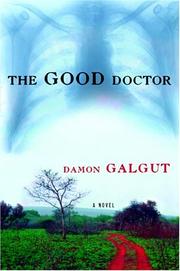
Two doctors in a near-empty hospital in a former homeland. Almost nothing happens and it is unbearably tense — Booker-shortlisted in 2003.

A man retreats to a country house to write poetry and is drawn into a school friend's development scheme. The most direct of his books about post-apartheid corruption.
The travel book
IntermediateRead the formally strangest thing he has written.
▸ Study plan for this stage
Pace: About a week for 180 pages in three parts. One part every two evenings is the natural rhythm, and each part is self-contained enough to stop between - though the pronoun effect builds across all three, so do not leave long gaps.
- Three journeys - 'The Follower', 'The Lover' and 'The Guardian' - each about the same man in a different role
- The narrator is named Damon, and the book was drawn from Galgut's own travels but published as a novel
- The oscillation between 'I' and 'he' about the same person, sometimes inside a single sentence
- Memory as the justification for the pronoun switch: the remembering self and the remembered self are not the same person
- Travel as avoidance - each journey is a way of not being somewhere else
- 'The Guardian' and Anna in India as the section where the stakes stop being personal drift and become responsibility
- Whether the book is fiction, memoir or neither, and Galgut's refusal to resolve the question
- Where does the pronoun switch happen most often - in scenes of action, or in scenes of feeling? Do the switches cluster?
- What does calling the narrator Damon commit the book to, and what does the third person then protect?
- Each part names the narrator's role - follower, lover, guardian. Is he any of the three?
- In 'The Guardian', is the narrator reporting his memory or reconstructing it? Does the section tell you?
- Published as a novel, drawn from a life. Does the label change how you read it, and should it?
- In one part, highlight every sentence that switches pronoun and note where in the section they fall. The distribution is the argument about memory.
- Read the opening page of each of the three parts consecutively, before reading the book properly. The three openings state the whole design.
- After 'The Guardian', write a paragraph about something you did badly, switching between 'I' and 'he'. It is uncomfortable in exactly the way the book intends.
- Set the passivity of this narrator beside Frank in The Good Doctor and Adam in The Impostor. Write three sentences on why the same failing is more forgivable in first person.
Next up: With the three main manners in place - the roving narrator, the spare novel and the pronoun experiment - the outliers show where each of them came from and where they went.

Three journeys, narrated in first and third person about the same man, sometimes in the same sentence. Published as a novel and drawn from his own travels; Booker-shortlisted in 2010.
The outliers
IntermediateThe early novel and the biographical one, for readers who want the whole shape.
▸ Study plan for this stage
Pace: 3 weeks. The Quarry is about 200 pages and can be read in two evenings; Arctic Summer is 375 pages and is the slowest thing on this path, so give it two weeks at roughly 25 pages a day.
- The Quarry as an early, tight thriller: a nameless man kills a minister on the road and takes his identity and his parish
- The absence of names and explanation in The Quarry, and how much tension that absence generates
- The small town and the police captain, and a crime novel in which the interest is entirely in who is believed
- That the stripped prose of The Good Doctor is already fully formed here, years earlier
- Arctic Summer as the biographical outlier: E. M. Forster's voyages to India in 1912-13 and 1921, and the long writing of A Passage to India
- Syed Ross Masood and Mohammed el Adl, and Forster's inability to write the book until his own life had caught up with it
- The title taken from Forster's own unfinished novel, and the risk of writing a novel about a novelist's silence
- Why it is the least essential book here, and why it is still worth reading last rather than not at all
- Why does The Quarry withhold names, and what would be lost if the man had one?
- How does an early thriller already contain the moral machinery of The Good Doctor? Point to a specific passage.
- In Arctic Summer, where does Galgut let you inside Forster and where does he keep you outside? Is the reticence Forster's or Galgut's?
- A novel about a man not writing a novel is a hard thing to sustain. Does Arctic Summer solve that problem or live with it?
- Having read all seven books, is there one Galgut or three? What holds The Promise, The Good Doctor and Arctic Summer together?
- Read The Quarry in two sittings and afterwards write down how many characters you could name. The number is the technique.
- Set the opening page of The Quarry beside the opening page of The Good Doctor - five years apart, the same instrument - and mark three sentences that could have come from either.
- In Arctic Summer, mark the passages where the narration gives you Forster's interior directly. There are fewer than you expect; write two sentences on why.
- Read a chapter of Arctic Summer alongside a few pages of A Passage to India if you have it, and note what Galgut is doing with the material Forster made famous.
- Rank all seven books by how much the narration knows about its characters, from The Quarry to The Promise. The ranking is roughly a career, and it is the argument this path was built on.
Next up: You now have the full shape of the career, so the remaining early novels and the later work can be read in any order - you know which Galgut you are walking into.
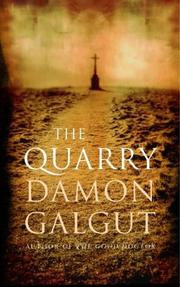
An early, tight thriller — a man kills a priest and takes his identity.

E. M. Forster in India, and the writing of A Passage to India. Unlike everything else here, and the least essential.