Start with The Promise. It won the Booker Prize in 2021, it is the book nearly everyone arrives from, and it is the clearest demonstration of what Galgut actually does: four funerals spread across four decades of one white South African family, narrated by a voice that slides between characters mid-paragraph, occasionally addresses the reader, and refuses to settle anywhere. Nothing else in his work introduces the technique as well.
If you have already read it, go to The good doctor next rather than working backwards to the debut. That is the question this page exists to answer, and the reason is simple: Galgut wrote three novels in the 1980s and early 1990s that he has since largely disowned, and the recognisable writer begins in 2003.
After The Promise
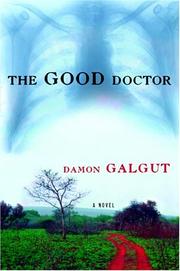
The good doctor (2003) is the one to read second. Two doctors share a nearly empty hospital in a former homeland, one of them a newcomer who believes things can be fixed. It is quieter than The Promise and much tighter, and it was shortlisted for the Booker eighteen years before he won it. Most readers find it the most controlled thing he has written.
In a Strange Room (2010) should be third, and it is the one to be warned about. It is three linked travel narratives, published separately in journals before being collected, and the narrator is called Damon. He is referred to as both "I" and "he", sometimes in the same sentence, which is the whole point rather than a tic. It reads as autofiction and was still shortlisted for the Booker as a novel. If you want plot, this is not the book; if you want to see the prose at its most exposed, it is the best of them.
The impostor (2008) is the weakest of the mature novels and the easiest to skip. A failed poet retreats to a house in the Karoo, an old schoolmate resurfaces with money and no clear source for it, and the moral trap closes slowly. It works, but it works in a register the other books do better.
The early novel and the outlier
The Quarry (1995) is worth reading only if you like your fiction stripped to bone. A fugitive kills a priest on an empty road and assumes his identity. It is short, hard, almost wordless in places, and it has been filmed twice. It shows where the later restraint came from, but it is not where anyone should start.
Arctic summer (2014) is the outlier and the most divisive. It is a novel about E. M. Forster in India and the twelve years he spent failing to finish A Passage to India. Readers who love Forster tend to love it; readers who came for South Africa tend to stall. Read it last, or not at all.
Galgut's first three books — A Sinless Season, Small Circle of Beings and The Beautiful Screaming of Pigs — are not in our catalogue, and their absence is not much of a loss for a new reader.
Where to stop
Three books give you the whole writer: The Promise, The good doctor and In a Strange Room. That is roughly 700 pages and covers the technical range, the political material and the autobiographical mode. Everything else is for people who want more of a voice they already like. If you want the full ordered sequence with a stage-by-stage plan, follow the reading path below; if you would rather browse sideways, Discover has more literary paths.
Follow the full ordered path here: Damon Galgut Reading Order: What to Read After The Promise.
Ready to learn something deeply?
Build a reading path — free