D.H. Lawrence Reading Order: Where to Begin with His Novels
Lady Chatterley's Lover is the Lawrence everybody has heard of and the worst possible introduction: a late, thin, argumentative novel famous for a trial rather than for its prose. The path starts instead with Sons and Lovers, the most conventionally novelistic thing he wrote, moves to the two Brangwen books that are his real achievement, then out into the novellas and travel writing where the sentences do the work. The criticism and the late novels come last, when you can see what he was arguing with.
Start Here: Sons and Lovers
BeginnerRead the one Lawrence novel that behaves like a normal novel, and get the biography — mining village, adored mother, escape through writing — that every later book is reacting against.
▸ Study plan for this stage
Pace: 2-3 weeks, ~35 pages/day across roughly 490 pages
- The Nottinghamshire coalfield as a class landscape, not a backdrop: Walter Morel's pit work and his wife's respectability are two different social positions inside one house
- Gertrude Morel's redirected ambition — the mother who transfers everything she cannot have onto her sons
- Paul Morel as a self-portrait Lawrence declines to flatter, and what the novel gains from that refusal
- The Miriam/Clara split: spiritual versus physical attachment as a structure the later novels will abandon
- Conventional realist form — chronological, third-person, psychologically stable characters — which is exactly what Lawrence stops doing after this
- Dialect and free indirect style: how the Morel family's speech carries class information the narration never states
- How does Sons and Lovers apportion sympathy between Walter and Gertrude Morel, and does the novel's judgement of Walter feel earned or inherited from Paul's point of view?
- Why does Paul's relationship with Miriam fail on the novel's own terms, and does Lawrence give Miriam a fair hearing?
- What does the ending — Paul walking toward the town's lights after his mother's death — settle, and what does it leave open?
- Where can you see Lawrence writing about his own life without protecting himself, and where does self-protection creep back in?
- What is conventional about the novel's construction, and why might a writer with Lawrence's later ambitions have needed to write a conventional book first?
- Write 200 words on the scene of Mrs Morel locked out in the garden among the lilies, arguing for what it establishes about the marriage that the surrounding chapters state directly.
- Track Paul's paid work — the surgical appliance factory, the wages, the designs — through the novel and list what the money does at each stage; the economic thread is easy to read past.
- Take one page of Morel's dialect speech and one page of Paul's, and annotate every point where vocabulary alone signals class position.
- Note the chapter where you first feel the narration siding with Paul against another character; write a paragraph on whether that side-taking is the author's or the character's.
Next up: Having seen Lawrence handle a family saga in stable realist form, you can register how violently The Rainbow breaks with that form on its opening pages.
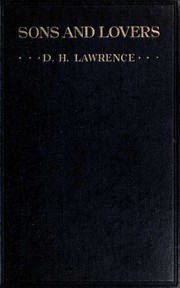
The right entry point by a distance. Nottinghamshire coal country, a marriage souring in real time, and a mother-son bond that Lawrence renders without a shred of self-protection. Conventional in structure in a way nothing after it is, which is exactly why it works as a door.
The Brangwen Novels
IntermediateTake on the two-novel sequence most critics consider his major work, and adjust to the prose that abandons realist psychology for something more incantatory.
▸ Study plan for this stage
Pace: 6-7 weeks, ~25 pages/day — roughly 1,030 pages, and both books resist being read quickly
- The Brangwen generations as a scheme: Tom and Lydia, Will and Anna, then Ursula — each pairing further from the farm and further into self-consciousness
- The abandonment of stable character; Lawrence's claim that he was after something deeper than 'the old stable ego' and what that costs a reader used to psychology
- Incantatory prose: repetition, insistent rhythm and abstract nouns doing work that scene and dialogue did in Sons and Lovers
- Ursula Brangwen's education and teaching chapters as the point where the sequence turns outward into institutions
- The 1915 obscenity prosecution and pulping of The Rainbow, and how that history shapes which book is read first today
- Women in Love's four-cornered structure — Ursula and Birkin, Gudrun and Gerald — as an argument conducted through two contrasted relationships
- Gerald Crich's industrial reorganisation of the mines: the one strand that connects the sequence back to Sons and Lovers' coal country
- The Rainbow and Women in Love began as one manuscript. Reading them in sequence, what does the second book assume you already accept from the first?
- Birkin's speeches are frequently taken as Lawrence speaking directly. Does the novel endorse him, undercut him, or leave it genuinely unsettled?
- What is Gudrun and Gerald's relationship for, structurally — a contrast to Ursula and Birkin, a warning, or something the novel refuses to resolve?
- Where does the incantatory prose earn its intensity, and where does it read as insistence standing in for argument?
- How does Ursula in Women in Love differ from Ursula at the end of The Rainbow, and is the continuity convincing?
- What does the Alpine ending do to the book's ideas about will, coldness and dissolution?
- Take the opening pages of The Rainbow and one page of Sons and Lovers and write 300 words on the differences in sentence length, verb choice and repetition — this is the stylistic break the whole path turns on.
- Chart the three Brangwen generations on one sheet: marriage, occupation, relationship to the farm, degree of self-consciousness. Use it to state the sequence's argument in a sentence.
- Summarise Birkin's position in the 'Mino' and 'Excurse' chapters in 200 words of neutral paraphrase, then write 100 words on where Ursula's objections land.
- Find two passages where Gerald's management of the mines is described in the same vocabulary Lawrence uses for the human relationships, and note what the overlap implies.
- Read the 'Water-Party' chapter twice and write a short account of what changes on the second reading once you know the outcome.
Next up: After a thousand pages of Lawrence at maximum intensity, the novellas and travel books show the same sensibility under tight formal control — the clearest way to see what the prose can do when it has less room.
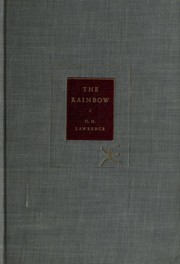
Three generations of one Midlands family, and the book where Lawrence stops writing characters as stable personalities. Prosecuted for obscenity and pulped in 1915. Read it second: it is where his real style begins.

The direct sequel, following Ursula and Gudrun Brangwen, and by common agreement the best thing he wrote. Read straight after The Rainbow — the two were drafted as one book and the second assumes the first.
The Novellas and the Travel Writing
IntermediateMeet the Lawrence who is easiest to admire — a short-form writer and a describer of places — and see the prose at its most controlled.
▸ Study plan for this stage
Pace: 3-4 weeks, ~30 pages/day across roughly 660 pages of much shorter, faster books
- Compression as a discipline: what St. Mawr achieves in 250 pages that the long novels take 500 to attempt
- The stallion in St. Mawr as an animal that resists being read as a symbol even while the book invites symbolic reading
- The flight to New Mexico and Lawrence's recurring pattern of escape from England into a landscape imagined as uncorrupted
- The Virgin and the Gipsy as a compressed rehearsal of Lady Chatterley's Lover — same collision of class and desire, published posthumously, far more restrained
- Travel writing as immediate composition: Sea and Sardinia written up straight after nine days in 1921, with the speed visible in the prose
- Lawrence the describer versus Lawrence the theorist — the travel books are where readers hostile to his ideas often concede the writing
- What does St. Mawr gain from being a novella rather than a novel, and what does it give up?
- The Virgin and the Gipsy handles class and desire with more restraint than Lady Chatterley's Lover. Which choices produce that restraint?
- In Sea and Sardinia, how much of what you are reading is Sardinia and how much is Lawrence's temper on a given morning — and does the book acknowledge the difference?
- Where do the shorter forms make Lawrence's ideas more persuasive, and where do they simply give him less room to overstate them?
- Do these three books share a subject, or only a sensibility?
- Write 200 words comparing the departure for America at the end of St. Mawr with any of the escapes attempted in Women in Love.
- Read The Virgin and the Gipsy first, then return to it after finishing the final stage's Lady Chatterley's Lover, and list five things the shorter book does more economically.
- Pick the single most vivid page of description in Sea and Sardinia and write out what makes it work — verbs, colour words, rate of movement — in a short annotated breakdown.
- Take one paragraph of travel description and rewrite it flatly, stripping the intensifiers; compare the two and note what is lost and what is gained.
Next up: You now have a working sense of Lawrence's prose at several scales, which is what makes the criticism legible as a statement of method rather than opinions about other writers.
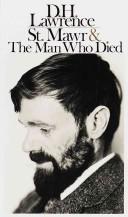
A novella about a woman, a stallion and a flight to New Mexico, and one of the most concentrated things in the whole body of work. Catalogued as St. Mawr. A good place to go after the two long novels.

Written late, published after his death, and effectively a compressed rehearsal for Lady Chatterley's Lover — the same collision of class and desire, at a fifth of the length and with far more restraint.
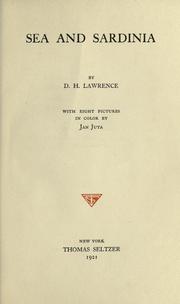
Nine days in Sardinia in 1921, written up immediately and at speed. The travel books are where readers who cannot stand Lawrence's theories often discover they like his writing.
Lawrence the Critic
IntermediateRead the criticism that reframes everything before it, and learn the reading method — never trust the teller, trust the tale — that Lawrence applied to others and invited on himself.
▸ Study plan for this stage
Pace: 1-2 weeks, ~20 pages/day across roughly 190 pages read essay by essay
- 'Never trust the artist, trust the tale' — the reading method the book proposes, and the invitation to apply it to Lawrence himself
- Studies in Classic American Literature as a founding text for American literature as a field of academic study
- The jabbing spoken voice: exclamations, direct address, sentence fragments — criticism written as performance rather than argument
- The readings of Poe, Hawthorne, Melville and Whitman, and what each is being recruited to demonstrate
- Criticism as indirect self-description: the essays state Lawrence's own aesthetic more plainly than any of the novels do
- The essays' theory of American consciousness — repression, the 'inner diabolism' Lawrence claims to find under a sunny surface — as a claim you can test rather than accept
- How would 'never trust the teller, trust the tale' change your reading of Women in Love or The Plumed Serpent?
- Which of these essays is most convincing as criticism of its subject, and which tells you most about Lawrence?
- What does the spoken, hectoring style do that measured academic prose could not — and where does it substitute for evidence?
- Lawrence claims American literature conceals something under its surface. What evidence does he actually offer, and how much rests on assertion?
- Having read the novels first, do you find the aesthetic described here matches the aesthetic practised there?
- Summarise the Melville essays in 200 words, then write 100 more on whether Lawrence's Moby-Dick is recognisable as the book you know of.
- Apply 'trust the tale' to Sons and Lovers: write a paragraph on what the tale shows about Mrs Morel that Paul-as-teller does not concede.
- Mark every place in one essay where Lawrence addresses the reader directly, and write a short note on what the device is doing at each point.
- Draft a one-page statement of Lawrence's aesthetic assembled only from sentences in this book, then check it against The Rainbow's opening chapter.
Next up: With Lawrence's own critical standard in hand, you can judge the first and last novels by it — including the famous one — instead of by their reputations.
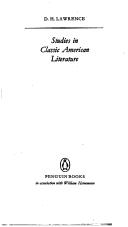
Essays on Poe, Melville, Hawthorne and Whitman that essentially invented American literature as a field of study, written in a jabbing, spoken voice unlike any other criticism. Placed here because it is also the best statement of his own aesthetic.
The Early and Late Novels, Including the Notorious One
IntermediateClose the loop on the full novel sequence, including the leadership novels and the book the trial made famous, with enough context to judge them fairly.
▸ Study plan for this stage
Pace: 6-7 weeks, ~30 pages/day across roughly 1,150 pages, with The Plumed Serpent the slowest
- The White Peacock as apprentice work: pastoral, overwritten, and already carrying the mature preoccupations in undeveloped form
- The 'leadership novels' as a phase — Aaron's Rod and The Plumed Serpent — and the politics that make them the hardest part of the body of work
- Aaron Sisson walking out on his family with a flute: abandonment as a plot Lawrence returns to and never fully judges
- The Plumed Serpent's revived Aztec religion, and the difference between reading a book as an argument you must adjudicate and reading it as evidence about its author
- Lady Chatterley's Lover placed last on purpose: after the Brangwen novels and The Virgin and the Gipsy it reads as a late reworking of material handled better twice before
- Reputation versus text — the obscenity trial made the book famous and made it almost impossible to read as one novel among many
- Where an author's convictions become a problem the reader has to work around rather than resolve
- The White Peacock and Lady Chatterley's Lover sit at opposite ends of the career. What is continuous between them, and what has hardened?
- Aaron's Rod and The Plumed Serpent are both leadership novels. Do they make the same argument, and does either novel test it?
- Readers disagree sharply over whether The Plumed Serpent can be read for its prose while setting its politics aside. What is the strongest case on each side, and which passages would each side cite?
- Does reading Lady Chatterley's Lover last make it better or worse than its reputation, and which specific comparisons drive your answer?
- Applying 'trust the tale, not the teller' from the previous stage — what do these four novels show that Lawrence's stated intentions do not?
- Where in this stage does Lawrence's own critical standard convict him?
- Read the opening chapter of The White Peacock immediately after the opening of The Rainbow and write 200 words on what fifteen years of practice changed.
- Write a 300-word summary of the argument The Plumed Serpent appears to be making, in the book's own terms and without endorsing it; then write 150 words on where the novel's own events undercut it.
- Place The Virgin and the Gipsy and Lady Chatterley's Lover side by side and list, scene by scene, what the longer book adds — then judge whether each addition is a gain.
- Find the passage in Aaron's Rod where Aaron leaves his family and write a paragraph on how much narrative approval the prose extends to him.
- Write a final one-page reading order of your own for someone starting Lawrence tomorrow, justifying every departure from the order you just followed.
Next up: This closes the novel sequence, leaving you able to argue a case about Lawrence from the whole body of work rather than from the one book the trial made famous.
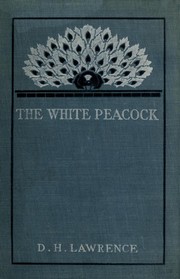
His first novel, from 1911, and best read late rather than early — it is pastoral, overwritten and clearly apprentice work, but it shows how much of the mature vision was already present.

The first of the so-called leadership novels: a man walks out on his family with a flute and drifts to Italy. Uneven, and the place where Lawrence's politics start to become a problem you have to read around.
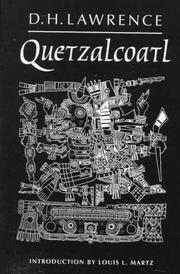
The Mexican novel, and his most compromised — a revived Aztec religion presented with an enthusiasm that is hard to defend. Read it because you cannot understand the argument about Lawrence without it, not because it is good.

Last, deliberately. Read after the Brangwen novels and The Virgin and the Gipsy, it is recognisably a late, tired reworking of ideas he had handled better twice before — which is a fairer verdict than either the obscenity trial or its reputation allows.