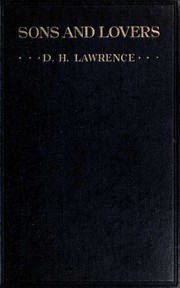
Start with Sons and Lovers. It is the third novel he wrote and the first great one: a miner's family in Nottinghamshire, a son bound too tightly to his mother, and a portrait of working-class England from the inside that almost no other English novelist of the period could have written. It is largely autobiographical, it is conventionally constructed, and it will tell you within fifty pages whether Lawrence's intensity works on you.
The obvious alternative is Lady Chatterley's Lover, and it is the wrong place to begin. It is famous because of an obscenity trial rather than because it is his best book; it is late, it is preachy, and its reputation carries so much baggage that you will spend the whole novel reading the scandal instead of the prose. Read it last, when you can see what it is doing.
The essential three
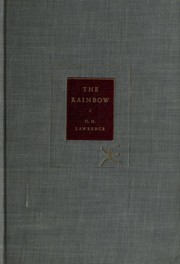
Sons and Lovers, then The Rainbow, then Women in Love. The second and third are directly linked — Women in Love follows two of the Brangwen sisters from The Rainbow — and while each stands alone, reading them out of order costs you most of the point. The Rainbow traces three generations of a farming family through industrialisation; it was prosecuted and destroyed on publication. Women in Love is the harder and stranger book, largely plotless, four people talking and colliding, and it is the one his admirers usually name as the masterpiece.
Be warned that Women in Love is where readers most often give up. The dialogue is not naturalistic and was never meant to be, and characters make speeches about the cosmos in the middle of a tea party. If that reads as thrilling, you are a Lawrence reader. If it reads as absurd, that reaction is also common and you can stop here with a clear conscience.
The short fiction and the travel writing
St. Mawr is a novella about a woman, a horse and a flight from English society, and it is the best short thing he wrote. The virgin and the gipsy is shorter still, posthumously published, and is the most efficient way to meet his recurring theme of respectability broken open from outside.
Sea and Sardinia is travel writing and contains some of the finest prose in this entire path — sharp, immediate, funny about hotels. It also carries the casual national and racial generalisations of a British writer of the 1920s, undisguised.
Studies in classic American literature is criticism, and it is genuinely startling. Short chapters on Poe, Melville, Whitman and Cooper, written in a jabbing, colloquial style that reads as though it were published this decade. Even readers who dislike the novels tend to admire this book.
The weaker and the contested
The white peacock is his first novel and it shows: overwritten, structurally loose, interesting mainly as a starting point. Aaron's Rod is the drifting post-war novel that most critics regard as a misfire. The plumed serpent is the real problem — a novel set in Mexico that endorses a revived blood-religion and a strongman cult, and its politics are as ugly as they sound. It is included because it is a major work of his middle period and because pretending it is not there would be dishonest. Read it critically or not at all.
This is the right point to note that Lawrence's standing has been argued over for sixty years. Kate Millett's attack on his sexual politics in the early seventies changed how he is taught, and the counter-arguments — including from critics broadly sympathetic to that critique — have never stopped. The disagreement is real and neither side has retired.
Then Lady Chatterley's Lover, last, where it belongs.
Where to stop
Sons and Lovers, The Rainbow, Women in Love and St. Mawr are a complete Lawrence. Add Studies in classic American literature if you like arguing with critics, and Sea and Sardinia if you like prose. More English fiction sequences are on Discover.
Follow the full ordered path here: D.H. Lawrence Reading Order: Where to Begin with His Novels.