Clive Barker books in order: where to start
Barker is two writers who happen to share a name: the splatterpunk of the early short stories, and the vast cosmological fantasies that followed. Starting with the wrong one is the usual reason people bounce off him, so this path opens with the short fiction that made his reputation, moves through the novellas and the first novels, and only then commits to the long books. It also says plainly where the later series were left unfinished.
Start With the Short Fiction
BeginnerMeet Barker at the length he is most reliably good at, and see what actually caused the fuss in 1984.
▸ Study plan for this stage
Pace: Three to four weeks. Each of these is a story collection of around 200 to 250 pages and none needs to be read continuously — a story a night suits them better than a sitting. Start with Books of Blood Volume One; our catalogue record is for the first volume and the sequence ran to six. Then The Inhu
- The founding conceit of the sequence — that the dead have highways, and a body can be written on — established in the frame story that opens volume one
- Barker's central and consistent idea: the monstrous as a form of transcendence rather than an intrusion, so that transformation is frequently offered as an escape rather than a punishment
- Body horror as a positive programme. The flesh is the site of meaning in these stories, and its alteration is the plot rather than the shock
- Range within the same collection: the industrial nastiness of the underground stories, outright black comedy in the domestic ones, and the grotesque sublime of the crowd-bodies in the Balkan story
- Sexuality made explicit and structural rather than sublimated, which is the specific break with the English ghost-story tradition Barker was writing against
- The tightening across volumes: the later collections are better made, with endings that resolve rather than merely detonate
- The Forbidden and its afterlife as a film, and the general fact that Barker's short work has been adapted more than his long work — worth noticing as a comment on what the stories are
- Why short is his most reliable length: the ideas are dense enough that a single conceit carries thirty pages easily and 700 pages with much more difficulty
- Take three stories from volume one. In each, is the monstrous punished, escaped, or joined? Barker's answer is unusual and consistent.
- What does the frame story of the sequence claim about the relationship between bodies and stories, and how does it license everything that follows?
- Compare an early volume-one story with one from The Inhuman Condition. What specifically is better constructed — the endings, the pacing, or the imagery?
- Identify a story that is straightforwardly funny. What does the comedy do to the horror around it?
- Barker's transgression was deliberate and programmatic. What was he transgressing against — name the tradition and the specific conventions.
- Keep a one-line log for each story: the conceit, the transformation, and whether the transformed character is better or worse off at the end. By the third collection the pattern in that last column is the clearest statement of Barker's worldview you will find.
- Pick the story whose central image stayed with you and write 200 words on the image alone, without plot. Barker works image-first and the exercise makes that visible.
- Read The Forbidden and then watch or read a synopsis of its film adaptation, noting what was moved from an English housing estate to an American one and what that relocation changed about the story's argument.
- Take the most graphic passage you find and identify what it is doing structurally — is the detail carrying information, characterisation, or simply intensity? Being able to answer that is the difference between reading Barker and enduring him.
Next up: You know what Barker does with a single conceit at thirty pages, which is the right preparation for watching him stretch one to a hundred and fifty, and then to seven hundred.

The debut collection that made his name and drew Stephen King's much-quoted endorsement. Start here because the stories are short, complete, and show the whole range — body horror, black comedy, and the recurring idea that the monstrous is a form of transcendence rather than an intrusion. The catalogue record is for the first volume; the collection ran to six.

The stories from the fourth Books of Blood volume, published under this title in the United States. Read it second: the writing is tighter than the first volume and the endings are less reliant on shock.
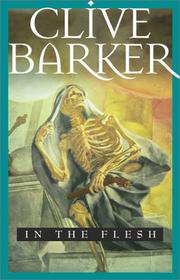
The American companion volume to the above, collecting the fifth Books of Blood. Together these two give you the back half of the sequence under the titles most English-language editions actually use, which is worth knowing before you go looking for volumes four and five by number.
The Novellas and the First Novels
IntermediateSee Barker at novella and short-novel length, including the book behind Hellraiser, and watch him start to reach past horror.
▸ Study plan for this stage
Pace: Four to five weeks. The Hellbound Heart is under 200 pages and reads in an evening or two; it is the novella Barker adapted and directed as Hellraiser. Cabal is similarly short, another evening or two, and is the Nightbreed novella. The Damnation Game is a full-length first novel of around 400 pages
- The Hellbound Heart's central conceit — pleasure and pain as one continuum administered by beings who are neither evil nor benevolent but simply further along it than anyone can survive
- The Cenobites as an invention that has almost entirely escaped its book: what the novella actually says about them is much stranger and less iconographic than the films made them
- The puzzle box as a device: a physical object that grants access to an ontology, which is Barker's recurring plot machinery from here on
- Cabal's inversion of the same machinery — in Midian the monsters are the persecuted community and the human is the predator, which flips the moral polarity while keeping the transcendence-through-transformation idea intact
- The outsider-as-congregation theme, and why Cabal has been read as Barker's most directly allegorical book
- The Damnation Game as a Faustian gambling story with an extraordinarily physical antagonist, and the way its horror is located in decay and appetite rather than in the sublime
- First-novel problems worth noticing: a structure that sags in the middle and a thematic reach that outruns the plot, both of which he solves by Weaveworld
- The move visible across the three: from horror as terminal outcome toward horror as a threshold into another order of reality
- What do the Cenobites actually offer, in the novella's own terms, and why is calling them demons a misreading?
- Cabal and The Hellbound Heart use the same machinery to opposite ends. Set out the inversion precisely — who is monstrous, who is victim, and what is being transcended in each?
- Where does The Damnation Game fail structurally? Name the section and say what a later Barker would have done with it.
- Breer is a physical creation of a kind Barker returns to. What is he for, beyond the imagery?
- Across the three, track the treatment of the body: is it a prison, a medium, or a destination?
- Read The Hellbound Heart and then watch the film Barker made of it. List every element the film added or hardened, particularly around the Cenobites' visual identity. The gap between the two is the clearest available case study in how an adaptation can overwrite its source.
- Write the Cabal story from a Midian resident's viewpoint in 400 words. The exercise forces you to notice how carefully Barker has already loaded the sympathies.
- Chart The Damnation Game's structure by chapter — where the tension rises and where it stalls. Compare that shape to a Books of Blood story you liked. The comparison is the argument for reading the novel third.
- List every physical object in these three books that functions as a gateway. Barker's plots run on such objects and cataloguing them here makes the long novels much easier to navigate.
Next up: You have seen him reach past horror into something larger without quite getting there, which is exactly the reach the three long fantasies finally complete.
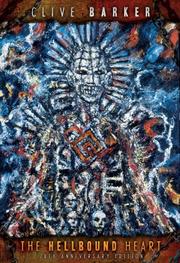
The novella he adapted and directed as Hellraiser. It is under two hundred pages and is the single best demonstration of his central conceit: pleasure and pain as a single continuum administered by beings who are not evil so much as indifferent.
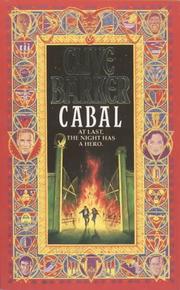
The Nightbreed novella — a man wrongly convinced he is a killer finds a city of monsters beneath a cemetery. Read it after The Hellbound Heart because it inverts the same machinery: here the monsters are the persecuted and the human is the horror.
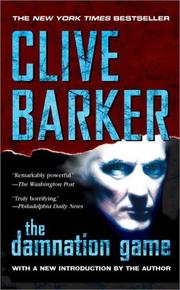
His first novel, a Faustian gambling story with an extraordinarily physical villain. Read it third rather than first: it is his weakest long book and works best once you already know what he does well at shorter length.
The Great Dark Fantasies
IntermediateRead the three long books that carry his reputation, and understand the move from horror into metaphysics.
▸ Study plan for this stage
Pace: Three to four months, and this is the stage that requires commitment. Weaveworld runs to around 700 pages, The Great and Secret Show to about 550, and Imajica to more than 800 in most editions — call it a month each, and do not attempt them back to back without a break. Read them in the order given.
- Weaveworld's premise as the hinge of the whole career: an entire magical world woven into a carpet, so that wonder rather than transgression organises the book while the capacity to frighten remains intact
- The Fugue and the Scourge — the paired ideas of a hidden refuge and an implacable purging force, which recur in various forms through everything after
- Loss as the emotional engine. Weaveworld is about the recovery and re-loss of a world, and the elegiac register is new in Barker at this length
- The Art, Quiddity and the dream-sea in The Great and Secret Show: a cosmology in which the imagination is a real place with a geography, and access to it is what everyone is fighting over
- Imajica's five Dominions, the severance of Earth from the other four, and the Reconciliation as a plot built entirely from an invented theology
- Pie'oh'pah and Imajica's treatment of gender and desire as ontological rather than social questions, which is the book's most discussed and least summarisable feature
- Barker's constructed religion — a god of his own devising with his own motives — and the fact that Imajica is finally a theological argument rather than a fantasy adventure
- Scale as a craft problem: what he gains at 800 pages and what he loses, particularly in pacing and in the number of viewpoint characters he can keep alive on the page
- How does Weaveworld's carpet work as a device, and what does the physical vulnerability of the object do for the plot that a hidden country could not?
- What is Quiddity, and what does each faction in The Great and Secret Show want from it? The answers differ more than the plot makes obvious.
- Set out the geography of the five Dominions and explain what the severance of the Fifth means theologically as well as practically.
- What is Pie'oh'pah, and what argument is Barker making through the relationship at the novel's centre?
- Imajica's god has motives. State them. Is the book's ending a triumph, a catastrophe, or deliberately undecidable?
- Which of the three is the best novel, and which is the most ambitious? They are probably not the same answer.
- Draw the map of the five Dominions from Imajica's own descriptions as you read, marking the severance. The book gives you enough to do it and the geography is genuinely hard to hold without a diagram.
- Keep a viewpoint-character log for The Great and Secret Show with a one-line status for each. Barker's casts expand faster than his page count can support and the log is the difference between following the book and losing it in the middle third.
- Take the ending of Weaveworld and the ending of Imajica and write 400 words comparing what each does with loss. The first is elegiac, the second is something else, and naming the difference is the point of reading them in this order.
- Find the passage in each novel where the cosmology is explained most directly and copy the key sentences into one document. Reading the three side by side shows how consistently Barker is building one system across separate books.
- After finishing, rank the three for a friend and write the one-sentence pitch for each. Being able to say which is the entry point is the practical use of this stage.
Next up: You have read him at his most ambitious, which is the only honest position from which to assess a later career that includes both his most controlled novel and two sequences he left unfinished.

An entire magical world woven into a carpet. This is where the transition happens: still frightening, but now organised around wonder and loss rather than transgression. The right first long Barker for almost everyone.
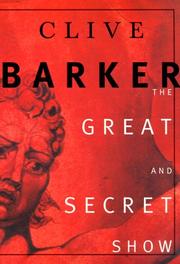
Book one of The Art, and the beginning of his most ambitious cosmology — a war fought through dreams over access to a sea beyond reality. Read it after Weaveworld, which teaches you to accept his scale.
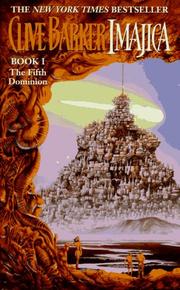
The one his devoted readers name first: five interconnected Dominions, a reconciliation attempt across them, and a theology of his own construction. It is long, strange and structurally demanding, which is why it comes at the end of this stage rather than the start of the path.
Late Barker, and the Books He Did Not Finish
IntermediateFollow the later career honestly, including the sequels that arrived and the ones that did not.
▸ Study plan for this stage
Pace: Six to eight weeks. Everville is long — around 700 pages — and is the second book of The Art; read it only if The Great and Secret Show worked for you, and know before you start that the trilogy's third volume has never been published, so the sequence stops here unresolved. Coldheart Canyon is aroun
- Everville's expansion of the Quiddity cosmology and its bringing of the dream-sea's shore into the waking world — the middle volume doing middle-volume work
- Unfinished sequences as a real fact about Barker's bibliography, and the practical reading decision that follows: whether to begin a series whose author has not concluded it
- Coldheart Canyon's mechanism: a room of decorated tiles that is also a place, hidden in a Hollywood canyon, which is the puzzle-box conceit relocated to old-Hollywood decadence
- Illness, mortality and physical decay as the late work's preoccupation, and the way Coldheart Canyon's smaller scope produces a tighter book than the fantasies
- Celebrity and vanity as subject matter, which is closer to satire than anything else in the catalogue
- The Scarlet Gospels' problem: a character defined by mystery for three decades given a full explanation, and whether the explanation was worth having
- Harry D'Amour as Barker's recurring occult detective, appearing across short stories, novels and film, and the difficulty of finally putting him at the centre
- How to read a divided reception honestly: the book is much shorter than its long gestation suggested, and readers who wanted the Hell Priest left mysterious and readers who wanted a resolution both got what they asked for
- What does Everville add to the cosmology of The Great and Secret Show, and what does it set up that the unpublished third volume was to have paid off?
- Given that The Art is unfinished, would you recommend starting it? Argue both ways.
- What is the Devil's Country and how does it work as a device? Compare it with the puzzle box and with Weaveworld's carpet.
- Coldheart Canyon is smaller in scope than the fantasies. What does it gain from that, specifically?
- Does The Scarlet Gospels damage The Hellbound Heart retrospectively? Take a position and defend it from the text of both.
- Add Everville and the Devil's Country to the gateway-object catalogue you began in stage two. The list should now span the whole career and it is the most economical summary of how Barker plots.
- Write out, from Everville alone, what you think the third volume of The Art was going to do. There is enough setup to make a real attempt and the exercise is the best way to feel what is missing.
- Compare a Cenobite scene in The Hellbound Heart with the corresponding material in The Scarlet Gospels, sentence by sentence. What changed in the prose, the explanation and the register across thirty years?
- Track Coldheart Canyon's chapter lengths and viewpoint switches against Imajica's. The late book is measurably tighter and the numbers show it.
- Write 500 words on Barker's late career as a whole, taking a position on whether the unfinished sequences are a failure of discipline or a consequence of the scale he chose.
Next up: One stage remains, and it covers the two books most readers do not associate with him at all — including the one you can hand to a child.

The Art, book two. Worth reading if The Great and Secret Show worked for you — but know before you start that the trilogy's third volume has never been published, so the sequence stops here unresolved.

A Hollywood ghost story and his most controlled late novel, written after a serious illness. It is smaller in scope than the fantasies and better for it.

The long-promised confrontation between Harry D'Amour and the Hell priest of The Hellbound Heart, published nearly thirty years after it was first trailed. Reception was divided and the book is much shorter than its long gestation suggested; read it as the closing of a loop rather than as major work.
For Younger Readers, and the Unfinished Quartet
IntermediateRead the two books aimed at younger audiences, and understand where the Abarat sequence stands.
▸ Study plan for this stage
Pace: Three to four weeks. The Thief of Always is short — around 220 pages — illustrated by Barker himself, and reads in two evenings; it is genuinely suitable for children, with nothing explicit in it, and its menace is the fairy-tale kind. Abarat is around 400 pages, heavily illustrated with Barker's ow
- The Thief of Always as proof that the transgression was never the point: strip out the explicit content entirely and the central Barker idea — a bargain that offers everything and quietly consumes the buyer — survives intact
- The Holiday House conceit, in which a day contains all four seasons and time is being stolen rather than given, which is one of the cleanest fantasy premises in his work
- Fairy-tale structure used straight: the tempted child, the false paradise, the discovered price, the return — Barker executing a traditional form rather than subverting one
- Barker as illustrator, and the difference between his line drawings for The Thief of Always and the saturated oil paintings that accompany Abarat
- The Abarat's architecture: twenty-five islands, one for each hour of the day plus one standing outside time, so the geography and the clock are the same object
- Image-led composition — many of the Abarat paintings existed before the text they illustrate, which explains the book's episodic, procession-of-wonders structure
- Candy Quackenbush as an ordinary-world protagonist crossing into an invented one, the most conventional structure Barker has ever used, and what he does with it
- The practical question of an incomplete quartet: three books published, a fourth promised, and a reader's decision to make with that information rather than without it
- What is the actual bargain in The Thief of Always, and how does Barker make the cost legible to a child reader without stating it?
- Compare the Holiday House with Midian in Cabal. Both are enclosed worlds that take people in — what is the difference in what each one wants?
- How does the twenty-five-hour island structure of the Abarat work as a device? What does it let Barker do that a conventional map would not?
- Where can you tell that an Abarat scene was written to accompany a painting rather than the other way round?
- Knowing the quartet is unfinished, would you start it? Answer for yourself and then for a ten-year-old.
- Looking back over the whole path: what is the single idea that connects Books of Blood to The Thief of Always?
- Read The Thief of Always in one sitting and then write down the Barker conceit at its centre in one sentence. Compare that sentence with the one-line log entries you wrote for the Books of Blood stories in stage one. They should match, and that match is the finding of the whole path.
- Go through Abarat looking only at the paintings first, in order, and write down the story you infer. Then read the text. The difference tells you how much of the book is image-driven.
- Map the twenty-five islands against the hours as they are introduced. The system is consistent and holding it makes the later books navigable.
- Hand The Thief of Always to a child or a non-horror reader and ask what they thought it was about. Their answer is usually a better summary of Barker's actual subject than any of the criticism.
- Write a 600-word career assessment naming the three books you would keep and the one you would drop, with reasons drawn from the whole path rather than from taste.
Next up: You have read Barker across every register he works in — splatterpunk, novella, cosmological fantasy, late elegy and children's fable — and can say which of the two writers sharing his name you actually came for.
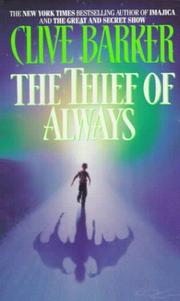
A short illustrated fable about a boy in a house that gives him everything and quietly eats his years. Often the best Barker for a reader who does not want horror at all, and genuinely suitable for children.
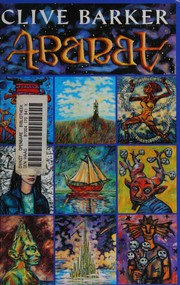
The first of a planned quartet, illustrated with Barker's own oil paintings — twenty-five islands, one for each hour of the day plus one outside time. The second volume, Days of Magic, Nights of War, followed in 2004 and a third in 2011, but the quartet has not been completed; start it knowing that.