Start with Books of Blood Volume One. The stories are short, they are complete, and between them they contain the whole range: body horror, black comedy, and the idea Barker returns to for the rest of his career, that the monstrous is a form of transcendence rather than an intrusion. If the first volume works on you, everything else will. If it does not, you have lost an evening rather than six hundred pages.
The obvious alternative is to begin with Imajica or Weaveworld, because those are the books his devoted readers name first. Do not. Barker is effectively two writers who share a name — the splatterpunk of the early stories and the vast cosmological fantasist of the long books — and starting on the wrong one is the usual reason people bounce off him. The stories tell you which writer you came for in under an hour.
What the books actually contain
This is a body of work built out of explicit content, and it is more useful to say which books than to gesture at it. The stories in Books of Blood Volume One include graphic dismemberment and sexual violence; the collections that follow, The Inhuman Condition and In the flesh, are tighter and slightly less reliant on shock but not milder in subject. The Hellbound Heart is built entirely on sadomasochistic imagery — pleasure and pain administered as a single continuum by beings who are indifferent rather than evil. Imajica and Coldheart Canyon both contain extended, explicit sexual sequences that are load-bearing rather than incidental. None of this is a warning about how you will feel; it is a description of the books, and readers regularly arrive at the long fantasies expecting Tolkien with teeth and find something else.
The short fiction, in order
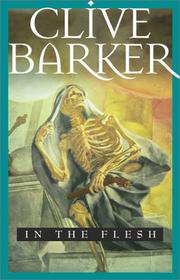
Books of Blood Volume One first. Then The Inhuman Condition and In the flesh, which is a piece of publishing trivia worth knowing before you go hunting: the six Books of Blood volumes were repackaged for the American market, and those two titles are volumes four and five. Looking for them by number will waste your time.
The novellas and the first novels
The Hellbound Heart is under two hundred pages and is the purest demonstration of the central conceit; Barker adapted and directed it himself as Hellraiser. Read Cabal next, the novella filmed as Nightbreed, because it inverts the same machinery — here the monsters are the persecuted and the humans are the horror. The damnation game, his first novel, comes third rather than first. It is a Faustian gambling story with an extraordinarily physical villain and it is his weakest long book; it works far better once you already know what he does well at shorter length.
The long dark fantasies
Weaveworld is where the transition happens: an entire magical world woven into a carpet, still frightening but now organised around wonder and loss. It is the right first long Barker for almost everyone. The great and secret show opens his most ambitious cosmology, a war fought through dreams over access to a sea beyond reality. Imajica — five interconnected Dominions and a theology of Barker's own construction — is long, strange and structurally demanding, which is why it belongs at the end of this stage rather than the start of the path.
The books he did not finish
Two sequences stop mid-flight, and you should know before you commit. The great and secret show and Everville are books one and two of a planned trilogy called the Art; the third volume has never been published, and Everville ends unresolved. Abarat, illustrated with Barker's own oil paintings, was announced as a quartet; a second volume followed in 2004 and a third in 2011, and the quartet has not been completed. Neither is a reason to avoid them — both are among his best work — but start them as open sequences.
Late Barker, and the one for younger readers
Coldheart Canyon is a Hollywood ghost story and his most controlled late novel, smaller in scope than the fantasies and better for it. The Scarlet Gospels delivers a confrontation trailed for nearly thirty years; reception was divided, and it reads as the closing of a loop rather than as major work. The Thief of Always is the outlier: a short illustrated fable about a house that gives a boy everything and quietly eats his years, genuinely suitable for children and often the best Barker for a reader who does not want horror at all.
More reading orders for horror and fantasy writers are on Discover.
Follow the full ordered path here: Clive Barker books in order: where to start.
Ready to learn something deeply?
Build a reading path — free