Cleopatra and Ptolemaic Egypt: books to read, in order
Cleopatra VII was the last ruler of a Macedonian Greek dynasty that governed Egypt for nearly three hundred years, and almost everything popularly known about her comes from the propaganda of the men who defeated her. This path opens with three modern biographies that disagree about how much can be known, then steps back to the kingdom and the city she inherited, then to what Egyptology and the coins and papyri actually show. The final stage is genuine scholarship on the Hellenistic world and assumes you now care about the difference between a source and a story.
The last queen, told three ways
BeginnerKnow the events of Cleopatra's reign and be able to say which parts of the familiar image are evidence and which are Augustan propaganda.
▸ Study plan for this stage
Pace: Six to eight weeks. Schiff's Cleopatra is around 350 pages and reads fast; Roller's Cleopatra A Biography is shorter and much slower going because it stops constantly to say what the evidence will and will not support; Antony and Cleopatra is the longest at roughly 450 pages. Read them in this order
- Almost every source for Cleopatra's life was written by the side that defeated her, so the standard image descends from the propaganda of Octavian's victory rather than from Egyptian record
- The Macedonian Greek dynasty: Cleopatra VII was the last of a Greek-speaking line that had ruled Egypt for nearly three centuries, and was not ethnically Egyptian in the way popular retellings assume
- The difference between reconstruction and evidence. Schiff fills gaps vividly and tells you she is doing it; Roller refuses to fill them at all. Both choices are defensible and the contrast is the lesson of this stage
- The documentary base is coins, inscriptions, dated papyri and a small number of hostile literary sources — Roller's method is to work only from these and it produces a thinner, firmer picture
- Egyptian money and Roman civil war: the relationships with Caesar and with Antony were also arrangements about grain, treasure and legions, which Goldsworthy foregrounds
- Antony as a politician with a career of his own rather than as the romantic half of a pair, which changes what the alliance with Cleopatra was for
- Perspective as a variable. The same events narrated from Alexandria and from Rome produce two different stories, and by the end of this stage you should be able to say which framing you are inside
- Which specific elements of the popular Cleopatra — the beauty, the seductions, the asp — are attested, and which come from writers with an interest in the answer?
- Where does Schiff reconstruct rather than report? Find two passages and say what evidence, if any, sits underneath them.
- What does Roller refuse to say that Schiff says freely? Is the refusal a gain or a loss for a reader new to the subject?
- Goldsworthy treats the pair as two politicians in a Roman civil war. What does that framing explain well, and what does it leave out?
- What did Cleopatra actually want from Caesar, and later from Antony, on the evidence rather than on the story?
- Having read three accounts, which single fact about her reign do you now hold most confidently, and what is it based on?
- Pick one episode covered by all three books — the meeting with Caesar, the Donations of Alexandria, or the deaths — and write a page setting the three accounts side by side, noting exactly where they differ and why.
- Make a two-column list as you read Schiff: attested on the left, plausibly reconstructed on the right. Check your list against Roller afterwards and correct it.
- Write 200 words on the death of Cleopatra stating only what is documented. It is a much shorter passage than you expect, and writing it is the whole point.
- Track the money in Goldsworthy: where Egyptian wealth enters the Roman civil wars and what it buys. The romance reads differently once the accounts are visible.
Next up: You have the reign and you have learned to ask what a claim rests on, which is exactly the equipment needed to look past the queen at the state she was actually running.
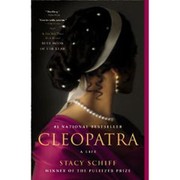
A Pulitzer-winning popular biography that is very good on how Roman writers manufactured the Cleopatra most people picture. It reconstructs vividly where the evidence is thin, which is a strength as an opening book and a weakness you should carry into the next one.
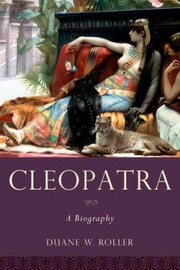
The deliberate corrective: a classicist working strictly from coins, inscriptions, papyri and dated sources, refusing to novelise the gaps. Drier than Schiff and much more reliable on what is actually documented.

Treats the pair as two politicians in a Roman civil war rather than as a romance, and gives Antony a career of his own. Read third, once you have the Egyptian-centred accounts, so the Roman framing registers as one perspective among several.
The kingdom and the city
BeginnerUnderstand the Ptolemaic state Cleopatra actually ran — a Greek-speaking administration over an Egyptian population — and what Alexandria was as a capital and an intellectual centre.
▸ Study plan for this stage
Pace: Five to six weeks. Egypt in the age of Cleopatra is short — under 200 pages — but dense with documentary detail and worth reading slowly and twice. The rise and fall of Alexandria is a popular history of about 300 pages and goes quickly. The Library of Alexandria is an edited scholarly volume, so re
- A Greek-speaking administration governing an Egyptian-speaking population, which is the basic structure of the Ptolemaic state and the source of most of its problems
- What papyri actually preserve: tax receipts, land registers, petitions, contracts and complaints — the ordinary machinery of a country, which is the level Egypt in the age of Cleopatra works at
- Two legal and religious systems running in parallel, Greek and Egyptian, with the temples retaining real economic power throughout
- Alexandria as a deliberate intellectual project — the Museum and the Library were state-funded institutions with a political purpose, not spontaneous flowerings
- The Library myths, which are extensive and durable. The scholarly volume dismantles several of them, including the tidy destruction stories that assign the loss to a single culprit and a single fire
- Confident storytelling as a warning sign. Applying to The rise and fall of Alexandria the same scepticism you learned to apply to Schiff is the intended exercise of this stage
- The gap between the court and the country. The dynastic politics of stage one happens almost entirely in one city, and this stage is the rest of Egypt
- How did the Ptolemaic state extract revenue from the Egyptian countryside, and what does that tell you about who the dynasty depended on?
- What can a tax receipt or a petition tell a historian that a literary source cannot, and what can it never tell them?
- What is the strongest documented claim about the Library of Alexandria, and what is the most popular claim that the evidence does not support?
- Where does The rise and fall of Alexandria assert more than it can show? Name a specific passage and say how you decided.
- Why did the Ptolemies fund scholarship at that scale? Give a political answer rather than a sentimental one.
- After this stage, what would you now say Cleopatra inherited — describe the state in five sentences without mentioning Rome.
- As you read Egypt in the age of Cleopatra, keep a list of the document types cited — receipts, petitions, leases — and note what each one made visible. This is a working portrait of how the period is known.
- Write 200 words on daily life for an Egyptian farmer under the late Ptolemies using only material from the papyri-based account. Resist importing anything from the popular history.
- Take three specific claims about the Library from the popular book and check each against the scholarly volume, writing one line on the verdict for each.
- Draw a rough map of Alexandria from the descriptions — harbour, palace quarter, Museum, lighthouse — and mark which locations have been physically identified and which are known only from texts.
Next up: With the state and the city in place, you can look at what Egyptology itself has to say about the queen — the coins, the reliefs and the portraits, which are the only evidence she had any hand in producing.
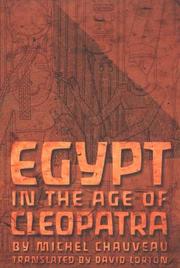
Short and built from documentary papyri, this reconstructs ordinary life, taxation and law under the late Ptolemies rather than court politics. The single most useful book here for seeing the country underneath the dynasty.

A popular history of the city as a scientific and scholarly capital, from its founding to its decline. Accessible and entertaining; treat its confident storytelling about the Library the way you learned to treat Schiff's.
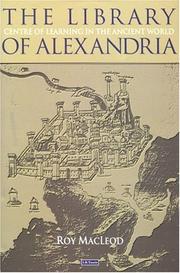
An edited scholarly volume that repeatedly punctures the popular Library myths — including the destruction stories. Placed straight after Pollard as the check on it.
Egyptology and the image
IntermediateSee Cleopatra from the Egyptian side, and understand how her portraits, coins and afterlife in art built a figure that has little to do with the queen.
▸ Study plan for this stage
Pace: Four to five weeks. Tyldesley's Cleopatra is around 250 pages and reads easily; Cleopatra and Egypt is shorter and heavily illustrated, so budget time for looking rather than reading. Read the Egyptological biography first and the material-culture study second, and if either has a plate section, wor
- The Egyptological perspective as a genuine change of angle: an Egyptologist asks what role Cleopatra performed as a pharaoh, where a classicist asks how she fits Roman politics
- The pharaonic role — temple building, ritual duty, identification with Isis — which the Greek and Roman sources largely ignore because it did not interest them
- Coin portraits as the closest thing to authorised self-presentation we have, and the fact that they show a woman who looks nothing like the popular image and was evidently content to
- The distinction between an image made under her authority and an image made about her afterwards, which is the organising question of Cleopatra and Egypt
- Two millennia of reinvention — Renaissance painting, opera, stage and screen — each remaking her for its own purposes, with almost no reference to the evidence
- Physical evidence as a constraint. Statues, reliefs, inscriptions and coins cannot be argued away, and they are the check on every narrative you have read so far
- How thin the material record is. Very little survives that is certainly her, which is precisely why the imagined Cleopatra has had so much room
- What did being pharaoh require of Cleopatra in practice, and how much of it did the Greek and Roman writers record?
- What do her coin portraits show, and why would a ruler present herself that way rather than flatteringly?
- Which surviving objects can be securely identified as hers, and how is that identification made?
- How did she use the identification with Isis, and who was that address aimed at — Egyptians, Greeks, or Romans?
- Pick one later artistic depiction discussed in Cleopatra and Egypt and say what its period wanted from her.
- Set the Egyptological account against the three biographies in stage one. Where do they disagree about what mattered in her reign?
- Find images of Cleopatra's coin portraits and of a famous painted or filmed Cleopatra, put them side by side, and write 200 words on the distance between them.
- List everything Tyldesley's Cleopatra treats as significant that the classicist biographies barely mention. The list is the case for reading an Egyptologist.
- Take one temple relief discussed in the books and write down what it shows, who commissioned it and who was meant to see it. Reliefs are political documents and reading one that way is the exercise.
- Write a short account of Cleopatra's religious role for someone who has only seen her in films, using nothing from the Roman sources.
Next up: You now know the reign, the kingdom and the physical record, which means the final stage can stop being about one queen and place the whole dynasty inside the three centuries of Greek rule it belonged to.
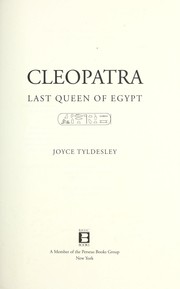
Written by an Egyptologist rather than a classicist, so it is stronger on Egyptian religion, the pharaonic role Cleopatra performed and the physical evidence. Its catalogue record displays simply as Cleopatra, which is the Tyldesley book.
A museum curator's study of the surviving portraits, statues and material culture, and of how later centuries reimagined her. Read last in this stage: it is where the image and the evidence are set directly against each other.
The Hellenistic world, properly
BeginnerPlace the Ptolemies inside the three centuries of Greek rule after Alexander, and read scholarship written for other scholars.
▸ Study plan for this stage
Pace: Ten to twelve weeks, and this stage should be paced as scholarship rather than as reading. Alexander to Actium is very long and openly argumentative — take it in sections over a month or more rather than straight through, and use its index rather than reading every chapter in order if a section does
- Ptolemaic Egypt as one successor kingdom among several. Once Alexander's empire fragments into competing Macedonian dynasties, the Ptolemies stop looking exceptional and start looking typical
- Three centuries as the real unit. Cleopatra is the end of a long process, and stage one's dramatic reign is the last twenty years of it
- Scholarship written for other scholars: Alexander to Actium argues with named opponents and expects you to know the debate, which is a different reading experience from any popular history and worth adjusting to deliberately
- The legal and economic position of women in Ptolemaic Egypt, documented in contracts and petitions, which is the context that makes a reigning queen far less anomalous than the Roman sources imply
- Greek and Egyptian legal traditions coexisting, with different rights available depending on which system a marriage or a property arrangement was made under
- Lives reconstructed from documents — soldiers, farmers, officials and their families — which is the Greek-Egyptian settlement seen from the ground rather than from the palace
- Evidence without narrative. The closing book supplies no story at all, and being able to read it with interest is the measure of how far this path has taken you
- How do the Ptolemies compare with the other successor kingdoms in how they governed a conquered population?
- What legal and economic powers did women hold in Ptolemaic Egypt, and how does that change how you read Cleopatra's rule?
- Where does Alexander to Actium argue with other scholars, and what is at stake in one of those disputes?
- From the papyrological evidence, how much did Greek settlers and Egyptians actually mix — in marriage, in law, in language?
- Which of the popular books you read earlier now looks least reliable, and on what specific point?
- If you had to explain to someone why Cleopatra's reign ended the way it did, what would you now say the causes were, in order of weight?
- Take one argument in Alexander to Actium where the author disagrees with other scholars and write a page laying out both positions and the evidence each rests on.
- From Women in Hellenistic Egypt, extract three documented cases of women exercising legal or economic power and write a paragraph on each.
- Choose one individual reconstructed in Greeks in Ptolemaic Egypt and write a 300-word life of them, citing only what the documents support. It is a small exercise that teaches the whole method.
- Revisit the two-column attested-versus-reconstructed list you started in stage one and revise it in the light of everything since. What moved columns, and why?
- Write 500 words on Cleopatra for a reader who has only seen the films, drawing on all four stages and stating clearly where the evidence stops.
Next up: This is the end of the path — from three competing biographies to the documentary scholarship underneath them — and the natural next step is a hostile Roman source such as the relevant books of Plutarch or Dio read in translation, which you can now handle as evidence rather than as story.
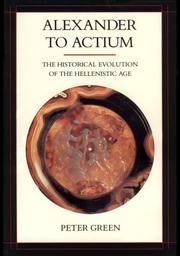
A large, opinionated scholarly history of the whole Hellenistic age, and the book that makes the Ptolemaic dynasty legible as one successor kingdom among several. Long and argumentative; take it in sections rather than straight through.
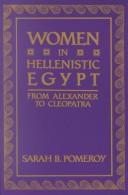
Uses papyri and inscriptions to show what legal and economic power Greek and Egyptian women actually held, which is the context that makes a reigning queen less anomalous. A foundational work of ancient social history.

Reconstructs individual lives from documentary papyri — soldiers, farmers, officials — showing the Greek-Egyptian settlement from the ground up. The right closing book because it is entirely evidence and no narrative.