Chew Reading Order: Where to Start and What Order to Read It In
Chew is a closed, finished, sixty-issue story with a planned ending, which makes it one of the easiest long comics to recommend and one of the easiest to read in order: volumes one through twelve, no gaps, no side series you need. Settle the format question before you buy anything — the twelve slim trades collect five issues each and are what this path uses, while the five Omnivore Edition hardcovers collect ten issues each and cover the same material. Pick one format and stay in it, because mixing them means either buying issues twice or skipping a chunk. The stages below mark where the series changes what it is doing.
The Premise
BeginnerMeet Tony Chu, understand cibopathy, and get used to a comic that treats an absurd gimmick with total procedural seriousness.
▸ Study plan for this stage
Pace: About a week for volumes 1-3. Each trade collects five issues and runs a little over 120 pages, and because Rob Guillory packs the backgrounds you should read them slower than the page count suggests — roughly 45 minutes a volume if you are actually looking at the signage. Settle the edition questio
- Cibopathy: Tony Chu gets a psychic impression from anything he eats, which makes him a superb detective and means every meal is an intrusion — the power is a disability the FDA finds useful
- The premise's straight face. A bird-flu poultry ban has made the FDA the most powerful law-enforcement agency in America, and volume 1 never winks at this; the seriousness is the joke
- The food-power taxonomy. Every ability is a coined Greco-Latin term (cibopath, saboscrivner, cibovoyant) with a bureaucratic case file behind it, and volume 2 exists largely to widen that catalogue
- Guillory's margins as a second text: shop names, poster slogans, background graffiti and reaction-shot animals carry gags and, later, information
- The case-of-the-month chassis and the serial plot running underneath it — volume 1 and 2 look episodic, volume 3 reveals they were not
- Mason Savoy as the series' other cibopath: a mentor figure whose methods and ethics are set up early as the counterweight to Tony's
- The rule that Chew is willing to hurt its cast. Volume 3 establishes this early enough that you should stop assuming the comedy protects anyone
- What are the exact limits of Tony's power — what can he not read, and what does the series establish in volume 1 about what happens when he eats something that was once alive and human?
- Why does the poultry ban matter to the plot rather than just to the premise? What does prohibition create that the FDA then has to police?
- By the end of volume 2, how many distinct food powers have been named, and what does the fact that they are all catalogued tell you about the world's institutions?
- What changes structurally in volume 3 — how does the ratio of self-contained case to ongoing plot shift?
- What is Mason Savoy's stated goal, and what has he done by the end of volume 3 that Tony would not do?
- Keep a running list of every food power as it is named, with the character who has it — cibopath, saboscrivner, cibovoyant and the rest. Layman spends fifty issues expanding this roster and cashes the whole thing in during volume 10, so the list is not busywork.
- Pick any five pages in volume 1 and read only the backgrounds — signs, posters, product labels, the animals in the corner. Then read the same pages normally. This is the habit the back half of the series requires.
- Note the page in volume 3 where you first realise a gag from volume 1 was a setup. Write down the volume-1 page it points back to; you will be doing this constantly by volume 9.
- Read volume 3 in one sitting. The emotional turn happens inside it and lands far harder uninterrupted.
Next up: You now have the food-power vocabulary and the habit of reading Guillory's backgrounds, which is exactly what the middle volumes need, because from here the running jokes stop being decoration and start being plot.
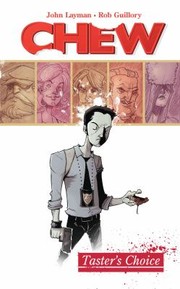
The only place to start. A detective who gets psychic impressions from anything he eats is recruited by an FDA that has become the most powerful agency in America after a bird-flu poultry ban. Rob Guillory's art is doing half the work from page one.
Widens the world — more food-based powers, more agencies, and the running gag that every one of these abilities is documented and bureaucratically catalogued. The series' structure becomes visible here.
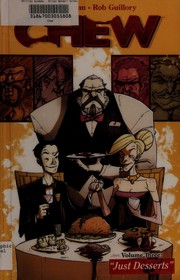
The first volume where the long-form plot asserts itself over the case-of-the-month format. It also lands the first real emotional blow, which is the series' habit for the rest of its run.
The Conspiracy Takes Shape
BeginnerFollow the middle of the series, where the background jokes turn out to be plot.
▸ Study plan for this stage
Pace: Another week for volumes 4, 5 and 6, at the same one-volume-per-sitting pace. Read them closer together than the first three — Layman is paying off setups from twenty issues back and the callbacks are easier to catch when the earlier volumes are still fresh.
- The Chu family as structure rather than comic relief: volume 4 promotes Tony's siblings from running gag to cast, and the family becomes the series' load-bearing emotional material
- The antagonist introduced in volume 5, and the moment Chew converts from a funny book with a plot into a plot with jokes in it
- The alien writing in the sky — planted early as background weirdness, foregrounded in volume 6 as the mystery the whole sixty issues have been about
- Escalation as the joke: each new agency, each new power, each new conspiracy layer is played deadpan, and the accumulation is the comedy
- Poyo. The series' recurring cyborg gamecock is a pure gag that Layman nonetheless plots around, and the fact that a rooster gets real narrative weight tells you what kind of book this is
- Amelia Mintz and the saboscrivner idea — writing about food so vividly the reader tastes it — as the closest thing the series has to a thesis about Layman's own job
- How Layman uses cliffhangers across volumes rather than across issues, which is why the trades read as chapters of a novel
- What does volume 5's antagonist want, and how is that goal different in kind from the criminal-of-the-week motives in volumes 1-3?
- Which specific jokes from volume 1 or 2 turn out to be plot by the end of volume 6? Name at least two.
- What is the current best explanation for the sky writing at the end of volume 6, and what evidence is it actually built on?
- How has Tony's relationship with the FDA changed since volume 1 — is he still an agent in the same sense?
- Why does the family material in volume 4 make the later volumes hurt more? What has the series bought itself?
- Start a second list beside your food-power list: every appearance of the sky writing, with volume and rough page. It shows up in backgrounds before anyone in the story mentions it, and reconstructing that trail is one of the real pleasures of a reread.
- After volume 5, write a one-paragraph prediction of how the series ends. Seal it. Volume 12 will tell you how much of the design was visible at the halfway mark.
- Go back to a volume-1 or volume-2 page you flagged in the last stage and reread it after volume 6. Note what it now means that it did not mean then.
- Chart the case-of-the-month versus arc split for volumes 4, 5 and 6: how many of the five issues in each are self-contained? The number drops, and watching it drop is watching Layman change the book.
Next up: The conspiracy is now visible and the cast matters to you, which are the two conditions volume 7 needs in order to do what it does.

The consequences of volume 3 play out and Tony's family becomes central rather than comic relief. Read straight on — Layman is now paying off setups from twenty issues back.

Introduces the antagonist the second half of the series belongs to. This is the volume that converts Chew from a funny book with a plot into a plot with jokes in it.

The alien writing in the sky and the wider mystery move to the foreground. If you have been reading the background signage and the margin gags, this is where that starts paying.
The Series Turns Dark
IntermediateRead the run where Chew stops protecting its cast and the comedy becomes a defence mechanism.
▸ Study plan for this stage
Pace: Volumes 7, 8 and 9 over a week, but give volume 7 its own night and do not follow it immediately with volume 8. Same 120-odd pages each. Avoid synopses, reviews and wiki pages for volume 7 in particular — the effect there is structural, not decorative, and knowing what happens removes most of it.
- Comedy as defence mechanism. From volume 7 the jokes keep coming at the same rate while the material underneath them stops being funny, and the mismatch is deliberate
- The cost of the closed-ending design: because Layman knew he had sixty issues, he could afford to break things permanently rather than restore the status quo
- Tony after volume 7 as a different character — track what he will now do that he refused to do in volumes 1-6
- Volume 8 as fallout rather than plot: a whole trade spent sitting in a consequence is unusual for a monthly comic and is the clearest sign Chew is not an episodic book
- Reassembly in volume 9, and the way Layman reconvenes the cast for the run to the ending
- Density of callback: volume 9 is the most tightly plotted stretch of the series, with payoffs reaching back to volume 1
- Guillory's art shifting with the tone — the cartooning does not get more realistic, which is why the darkness lands the way it does
- What does volume 7 change that cannot be undone, and how does the book signal that permanence rather than stating it?
- How does Tony's use of his power change after volume 7? Point to a specific scene where he does something earlier volumes established he would not.
- Volume 8 is largely aftermath. What would have been lost if Layman had skipped it and gone straight to reassembly?
- Name three volume-9 payoffs and the volume each one was set up in.
- Does the comedy still work after volume 7? Argue it either way using a specific gag.
- Before opening volume 7, write down what you expect the last third of the series to be about. Read volume 7. Rewrite it. Keep both.
- Reread the final chapter of volume 6 immediately after finishing volume 7 and identify what Layman had already put in place.
- Working through volume 9, log every callback you catch with the volume it points to. Anything you cannot place, look up afterwards — the misses tell you what to reread.
- Compare a comic page from volume 2 with a comic page from volume 8: same cartooning, different function. Write two sentences on what Guillory is doing differently with the same tools.
- Check your sealed volume-5 prediction against where the story now stands.
Next up: You have seen what the series is willing to spend, so the endgame's stakes are real rather than notional — and the food-power roster you have been listing since volume 1 is about to be used all at once.

The most tonally abrupt volume in the series, and the one readers remember. Do not read a synopsis first; the shock is structural, not decorative.

The fallout. Tony is a different character from here on, and the book's willingness to sit in that is what separates Chew from the crowd of high-concept Image titles.

Reassembles the cast and begins the run to the ending. The plotting is at its densest here — expect callbacks to jokes from volume 1.
The Ending
IntermediateFinish a series that actually was planned to end, and judge whether the sixty-issue design holds together.
▸ Study plan for this stage
Pace: Read volumes 10, 11 and 12 as one movement, ideally across two or three days rather than two weeks. Fifteen issues, roughly 370 pages total. Volume 12 is the last five issues and the series stops there — Layman announced the sixty-issue length at the outset and held to it.
- The roster payoff: volume 10 uses the food powers the series spent fifty issues cataloguing, which is why the list you have been keeping since volume 1 turns into a reading aid
- Planned endings versus imposed ones. Chew ends where it was always going to end, and the difference from a cancelled series is visible in how much is deliberately resolved
- What volume 11 finally discloses about the sky writing and the FDA, and how long that information was sitting in plain sight
- The emotional peak in volume 11 and the way Layman positions it before the finale rather than inside it
- Resolution versus tidiness — which threads volume 12 closes cleanly, which it closes bleakly, and which it deliberately leaves as a shrug
- The sixty-issue architecture as the thing under evaluation: whether the joke-into-tragedy design actually holds together at full length
- Guillory's final pages, and the visual callbacks to volume 1 that only work if you read it a dozen volumes ago
- Which food powers from your roster actually get used in volume 10, and were any of them introduced purely so they could be used here?
- What is the sky writing, and when was the earliest volume in which the answer was, in retrospect, available to you?
- Does the ending justify volume 7? State what volume 7 bought and whether volume 12 spends it.
- Which threads does volume 12 leave open, and does leaving them open read as design or as running out of room?
- Having finished, would you recommend the twelve trades or the five Omnivore hardcovers to a new reader, and on what grounds?
- Bring out your food-power list before starting volume 10 and tick each one as it appears. Anything that never gets used is worth noticing too.
- Reread volume 1 immediately after volume 12. It takes 45 minutes and roughly a third of it now reads as foreshadowing.
- Open your sealed volume-5 prediction and mark what you got right. This is the most direct measurement of how legible Layman's design was at the halfway point.
- Write a hundred words on whether the sixty-issue plan was a strength or a constraint — point to one volume that feels padded and one that feels compressed by it.
- Trace the sky-writing log you built in stage two against volume 11's disclosure and note the earliest appearance you missed on the first read.
Next up: You have read one of the very few long-form comics that ended on its own terms, which gives you a working standard for judging every unfinished serial you pick up next.

The endgame is declared and the food-power roster the series spent fifty issues building gets used all at once. Read 10 through 12 as one movement.

The penultimate volume and the emotional peak. Almost everything the series has withheld about the sky writing and the FDA is on the table by the end of it.

The last five issues. Layman announced the sixty-issue length at the start and stuck to it, which is rare enough to be worth noting — the ending is the one that was planned, not one imposed by cancellation.