Chester Himes books in order: where to start with the Harlem cycle
Chester Himes wrote two very different bodies of work, and reading them in the wrong order makes the crime novels look like slumming. He began as a naturalistic protest novelist in Los Angeles, could not make a living at it, moved to Paris, and was commissioned by Marcel Duhamel of Gallimard's Série Noire to write detective stories about Harlem — a Harlem he was reconstructing from memory in a foreign country. That is the whole key to the Harlem cycle, so this path starts with the protest novels, reads the nine Coffin Ed and Grave Digger books in publication order, and ends with his own two-volume account of how it happened.
Before Harlem: The Protest Novels
BeginnerRead the Los Angeles novels that established Himes, so the crime books land as a change of method rather than a change of seriousness.
▸ Study plan for this stage
Pace: 3 weeks. If He Hollers Let Him Go is 203 pages and covers five days in a wartime Los Angeles shipyard — read it in a week. Lonely Crusade is 398 pages, denser and slower, and needs two. Read them in that order and read them before any of the crime novels, so the Harlem books land as a change of meth
- Racial fear as a physical, bodily state rather than an attitude — which is what If He Hollers is actually about and how it is constructed
- The five-day structure and the dream that opens each day
- Wartime Los Angeles industry: the shipyards, the migration, and the union politics that came with them
- The Black organiser caught between the Communist Party and the plant in Lonely Crusade, and Himes's refusal to make any faction sympathetic
- The hostile reception of Lonely Crusade — attacked from the left, the right and the Black press at once — and the effect on his American career
- Naturalistic protest fiction as a mode, and what Himes could and could not do inside it
- The anger these books state directly, which the crime novels will displace into slapstick
- How does If He Hollers convey fear physically, and where does the dream material do work the plot cannot?
- What does Bob Jones actually want, and what does the novel say about whether it is available?
- Why did Lonely Crusade offend so many constituencies at once — what is it refusing to do?
- How is Himes writing about labour and the Party differently from his contemporaries in protest fiction?
- What in these two books survives into the Harlem cycle, and what is dropped?
- Track the dream sequences through If He Hollers: what each one contains and where it falls in the five days. The pattern is deliberate and it is the book's structural spine.
- Mark every scene in Lonely Crusade where a political faction is shown to be self-serving. The count is what got the book attacked, and having the list makes the reception comprehensible.
- Set the opening paragraph of If He Hollers beside the opening paragraph of A Rage in Harlem when you get there — same author, same anger, entirely different machinery. Make the note now.
- Write half a page on what Himes could say in a protest novel that he could not say in a detective novel, and keep it. You will test it at the end of stage four.
Next up: Lonely Crusade's reception effectively ended his American career and sent him to Paris — where a French editor commissioned the books the next stage begins.
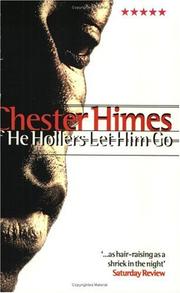
His first novel, set over five days in a wartime LA shipyard, and still the book most readers know. It is a study of racial fear as a physical state, and it is furious in a way the crime novels displace into slapstick.
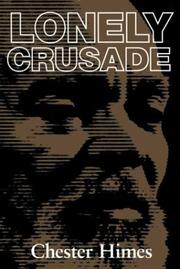
The second novel, about a Black union organiser caught between the party and the plant, and the book whose hostile reception effectively ended his American career. Read it second: it explains the exile that produced everything after.
The Harlem Cycle Begins
IntermediateMeet Coffin Ed Johnson and Grave Digger Jones and the comic-violent register Himes invented for them.
▸ Study plan for this stage
Pace: 2–3 weeks. These are short books: A Rage in Harlem is 159 pages, The Real Cool Killers 159, and The Crazy Kill comparable — a few days each. Read them in order. A Rage in Harlem was originally published as For Love of Imabelle and has been reprinted for decades under both titles; it is the same nove
- The Série Noire commission: Marcel Duhamel of Gallimard asking an exiled protest novelist for detective stories, and paying by the book
- A Harlem reconstructed from memory in a foreign country — the single most important fact about the whole cycle
- Coffin Ed Johnson and Grave Digger Jones: two Black detectives with nickel-plated revolvers, working for a police force that is not on their side
- The comic-violent register Himes invented here, in which farce and mutilation occupy the same paragraph
- The confidence trick as the cycle's founding plot shape, established in A Rage in Harlem
- The Real Cool Killers as the method at its tightest: one street, one mob, accelerating plot
- The Crazy Kill's bread-basket corpse and the point at which the comedy becomes an argument about how absurdity and violence coexist
- What is the relationship between Coffin Ed and Grave Digger and the police force they work for?
- How does A Rage in Harlem's plot actually work, and how much of it is anyone's plan?
- Why are the detectives more fully formed in The Real Cool Killers than in the first book?
- What is the comedy in The Crazy Kill doing, beyond being funny?
- How does Himes's Harlem differ from a Harlem written from residence, and can you point to specific effects of the distance?
- Read The Real Cool Killers and map the geography of the single street it takes place on from the text alone. Himes is working from memory a decade old and an ocean away, and the map you can draw is the evidence.
- Count the pages between the first violent act and the first joke in each of the three books. The interval shrinks, and that is the register being calibrated.
- Track Coffin Ed's acid-scarred face across the three novels — every time it is mentioned and what it is doing in the scene. It is the cycle's most reliable motif.
- Now compare the opening paragraph of A Rage in Harlem with the opening of If He Hollers, as you noted in the last stage. Write 200 words on what has changed in the machinery and what has not changed in the anger.
Next up: With the detectives established, the next stage is the run of fast, cheap, brilliantly plotted books Himes wrote for the Série Noire at speed.

The first of the cycle and the right place to start. Originally published as For Love of Imabelle and reprinted for decades under this title — the same novel, so buy one, not both. A gold-ore confidence trick that spirals through one night in Harlem.
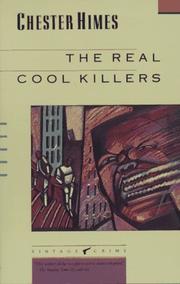
The tightest book in the series and the one that best shows Himes's method: a single street, a mob, and a plot that keeps accelerating. Read it second; the detectives are fully formed here in a way they are not in the first book.
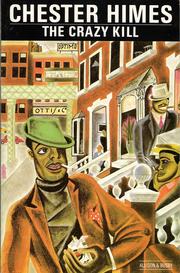
A body found in a bread basket after a wake, and the most farcical setup in the cycle. It is where the comedy of the series becomes its own argument about how absurdity and violence coexist.
The Middle of the Cycle
IntermediateRead the run of fast, cheap, brilliantly plotted books Himes wrote for the Série Noire at speed.
▸ Study plan for this stage
Pace: 2–3 weeks. The Big Gold Dream is 160 pages, All Shot Up 160, and The Heat's On 202 — Himes was writing these in a matter of weeks each and they read at a comparable pace. Read them in order. The Heat's On is where the humour starts to sour: it involves heroin, and the detectives are suspended from d
- Plot machinery as the genuine pleasure of these books — the cycle is a real detective series, not only satire
- The revival meeting and the apparent resurrection in The Big Gold Dream as a fully worked confidence-trick plot
- All Shot Up's political payroll robbery and its chase sequence, written with an eye on film
- Speed of composition as a visible quality: momentum, coincidence and the willingness to abandon a thread
- The Heat's On and the point at which the police force stops being reliably on the detectives' side
- Heroin in Harlem as a subject Himes treats economically rather than morally
- Series formula and its variations: the same detectives, the same street, a different confidence trick each time
- How does the confidence trick in The Big Gold Dream work, and how does Himes keep the reader a step behind?
- What is different about how All Shot Up is paced, and does the cinematic quality serve or hurt it?
- What changes in The Heat's On about the detectives' relationship with the department?
- Is the speed of writing a fault in these books? Point to a specific place where it shows and say what it costs and gains.
- What is the recurring formula of the cycle by this point, stated in four or five steps?
- Write out the plot of The Big Gold Dream as a numbered sequence of who deceives whom. Then do the same for A Rage in Harlem. The two structures are near-identical and the comparison is the fastest way to see the formula.
- Track the money across All Shot Up — every point at which it changes hands. The chase is organised around it and the accounting is exact.
- Note every scene in The Heat's On where Coffin Ed or Grave Digger does something the earlier books would have played as farce. That list is the souring, measured.
- Time yourself reading The Big Gold Dream. Himes wrote these at roughly a book every few weeks, and reading one at a sitting is the closest you can get to the conditions they were made under.
Next up: The formula you have just written out is the thing the last two books of the cycle deliberately break.
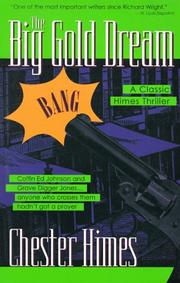
A revival meeting, a woman apparently raised from the dead, and a stolen fortune. Plot machinery at its most enjoyable, and a good demonstration that the cycle is genuinely a detective series and not just satire.
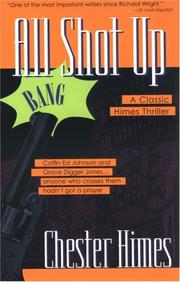
A political payroll robbery and a chase sequence that reads like it was written for film. Himes was writing these in a matter of weeks and the momentum shows.
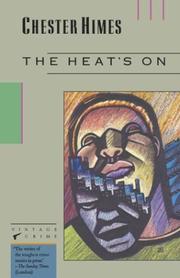
Heroin, a giant albino, and the detectives suspended from duty. The book where the humour starts to sour and the police force stops being reliably on their side.
Where the Cycle Ends
IntermediateFollow the series into open political rage, and see it break apart rather than conclude.
▸ Study plan for this stage
Pace: 3 weeks. Cotton Comes to Harlem is 207 pages, Blind Man with a Pistol 240, and Plan B 206 — but the last two read much more slowly than their length, because both refuse the structure you have just spent three stages learning. Read them in order. Cotton Comes to Harlem is the best known of the nine
- The back-to-Africa swindle in Cotton Comes to Harlem and Himes attacking every faction at once — nationalists, the church, white liberals, the police
- Why Cotton reads better after the earlier books: its cynicism depends on their relative warmth
- Blind Man with a Pistol as a deliberate refusal of detective-novel form — three plots that never converge and a case that is not solved
- The claim underneath that refusal: that the genre can no longer hold what Harlem had become
- Plan B as unfinished work: how to read a fragment as evidence of intention without treating it as a finished statement
- The detectives set against each other, and what it means for a series to destroy its own premise
- The 1960s as the actual subject of the last three books — riots, nationalism, and the collapse of the earlier books' comic distance
- Who does Cotton Comes to Harlem let off, if anyone?
- In what specific ways does Blind Man with a Pistol break the form you learned in the previous stage — name three?
- What is Himes arguing by refusing to resolve the case, and does the book make the argument or merely enact it?
- How should an unfinished posthumous book be weighed as evidence of an author's intention?
- Where does Plan B leave Coffin Ed and Grave Digger, and can the cycle be read as having an ending?
- Take the four- or five-step formula you wrote out in the last stage and check Blind Man with a Pistol against it point by point. Note which steps are present, which are inverted and which are simply absent.
- Trace the three unconverging plots of Blind Man with a Pistol separately, each on its own page. Seeing them written out apart makes the refusal legible in a way reading straight through does not.
- Read Cotton Comes to Harlem and list every group it satirises. Then decide whether the book has a position, and defend the answer.
- Return to the half-page you wrote in stage one on what Himes could say in a protest novel but not in a detective novel. Answer it now, with Blind Man with a Pistol and Plan B read. Most readers find they have to revise it.
Next up: The last stage goes back for the prison years and the Paris exile, in Himes's own account and then in the biography that tests it.

The best known of the nine, thanks to the 1970 film, and a back-to-Africa swindle that lets Himes attack every faction at once. Read it here rather than first — its cynicism depends on the earlier books' relative warmth.
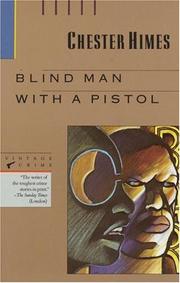
The last completed book in the cycle and a deliberate refusal of detective-novel form: three plots that never converge and a case that is not solved. It is the argument that the genre can no longer hold what Harlem had become.

Unfinished and published posthumously, in which the series' logic is carried to armed insurrection and the two detectives are set against each other. Read it as a fragment and an endpoint, not as a novel.
The Life That Explains It
IntermediateGo back to the prison years and the Paris exile, in Himes's own account and in a modern biography.
▸ Study plan for this stage
Pace: 6–8 weeks. The Quality of Hurt is 351 pages and My Life of Absurdity 391 — the two volumes of his autobiography, and they should be read consecutively. These are Himes's own account of his own life: bitter, self-serving in places, indispensable, and a participant's testimony rather than a neutral re
- The armed robbery, the sentence and the seven years in the Ohio Penitentiary as the foundation of everything he wrote
- The 1930 penitentiary fire, which Himes witnessed and returned to in fiction repeatedly
- The Série Noire commission described in his own words in My Life of Absurdity — the primary source for the origin of the Harlem cycle
- Paris and the expatriate Black American literary scene, and Himes's difficult relations inside it
- Censorship as a documented editorial act: what the 1952 publishers cut from Cast the First Stone and what the restored text puts back
- Autobiography as a partisan source — Himes is writing his own case, and Jackson shows him to be unreliable in specific and interesting ways
- What a scholarly biography can establish that a memoir cannot, and where Jackson's account and Himes's diverge
- What does My Life of Absurdity say about how the Harlem cycle came to be written, and how much of it does Jackson corroborate?
- On which specific points does Jackson show the autobiographies to be unreliable, and does he suggest why?
- What was cut from the 1952 Cast the First Stone, and how does the restored text change what the novel is about?
- How does the prison material in Yesterday Will Make You Cry relate to the violence in the Harlem cycle?
- Having read his own account and a scholar's, what would you now say the Paris exile did to his writing?
- Read the two autobiographical volumes consecutively and keep a list of every claim about his own career that you would want checked. Then check each against Jackson and record the verdict. That list is the honest way to use a memoir.
- Read the Série Noire commission passage in My Life of Absurdity and then reread the first ten pages of A Rage in Harlem. The commission is visible in the prose once you know what it was for.
- Read Yesterday Will Make You Cry knowing what was removed in 1952, and mark the passages that could not have survived that censorship. The restored material is not incidental — it is the centre of the book.
- Take one episode that appears in both the autobiography and Jackson's biography — the robbery, the fire, or the departure for Europe — and set the two accounts side by side. Note not just the factual differences but what each version is for.
Next up: You have read the protest novels, the nine-book Harlem cycle in order, the two books that break it, and both the participant's account and the scholarly one of the life behind all of it.
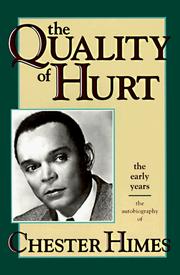
The first volume of his autobiography, covering the armed robbery, the seven years in the Ohio Penitentiary, and the move to Europe. Bitter, self-serving in places, and indispensable.
The second volume, and the one that describes the Série Noire commission and the writing of the Harlem cycle directly. Read it immediately after the first.

The restored full text of his prison novel, published in a censored, straightened form during his lifetime as Cast the First Stone. This edition puts back the Black protagonist and the homosexual relationship that the 1952 publishers removed — which is why it belongs beside the autobiography rather than with the early novels.

The standard modern biography, and the corrective to the two autobiographies, which Jackson shows to be unreliable in specific and interesting ways. The place to finish.