Start with A rage in Harlem. It is the first of the nine Harlem detective novels, it introduces Coffin Ed Johnson and Grave Digger Jones, and it is short, fast and immediately recognisable as something other than a standard crime novel. Himes wrote it in France in 1957 on commission for Marcel Duhamel's Série Noire, in English, for French publication first, and it was originally titled For Love of Imabelle.
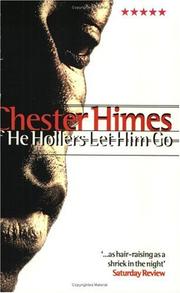
The obvious alternative is to start where his career started, with If He Hollers Let Him Go. That is a serious novel and worth reading, but it is a different writer: a 1945 realist protest novel about a Black shipyard worker in wartime Los Angeles living in constant physical dread. Most readers who come to Himes come for the Harlem books, and the protest novels land harder once you already know what he did next.
The Harlem cycle, in order
A rage in Harlem, The Real Cool Killers, The Crazy Kill, The big gold dream, All Shot Up, The Heat's On, Cotton comes to Harlem, Blind man with a pistol, and the unfinished Plan B.
One ordering note, because it confuses people. These novels appeared in French translation before they appeared in English, and the English publication dates do not match the French sequence — Cotton comes to Harlem reached American readers before The Heat's On even though the French editions ran the other way. The order above follows the sequence Himes wrote them in. The plots are loosely enough connected that this matters less than it sounds, but if you see two different orderings quoted, that is why.
The books get darker as they go. The early ones are farce with corpses in them — a con, a chase, a series of accelerating catastrophes played for speed. By Blind man with a pistol the detectives cannot solve anything, the riot logic of the late 1960s has taken over, and Himes has essentially written the anti-detective novel. Plan B is unfinished, posthumously published, and ends in a race war; Himes abandoned it, and it should be read as a fragment rather than as the series' conclusion.
The early protest novels
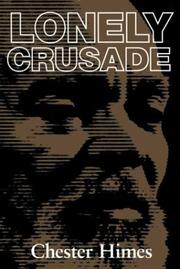
If He Hollers Let Him Go is the strongest of the two: five days in the life of a man who wakes up frightened and goes to bed frightened, written in a compressed present tense. Lonely crusade is about a Black union organiser caught between the Communist Party, the union and the company, and it was attacked from every political direction on publication in 1947 — the reception effectively ended that phase of his American career and is part of why he left for France.
The prison novel, and the 1952 censorship
Himes served seven and a half years in the Ohio State Penitentiary and wrote a novel out of it. What was published in 1952 as Cast the First Stone was not that novel: the manuscript was cut heavily, the narrator was made white, and the relationship at its centre was muted. The full text was restored and published in 1998 as Yesterday will make you cry, and that restored version is the one on this path. Read it as the book Himes actually wrote, and read the 1952 edition only as evidence of what American publishing would not print.
The memoirs and the biography
The quality of hurt and My Life of Absurdity are the two volumes of autobiography, and they are unreliable in the way most writers' memoirs are — self-serving in places, score-settling in others, and very good on exile. Lawrence P. Jackson's Chester B. Himes is the scholarly biography and the place to check anything the memoirs claim.
Content
The novels contain constant racial slurs in character voice, graphic violence played partly for comedy, and a persistent misogyny that most readers find harder to read past than the violence. None of that is incidental — Himes wrote the Harlem books as, in his own account, a kind of absurdity — but it is worth knowing before the first page. More literary reading orders are on Discover.
Follow the full ordered path here: Chester Himes books in order: where to start with the Harlem cycle.