Carson McCullers Reading Order: Where to Begin with Her Novels
McCullers published her first novel at twenty-three, wrote everything that matters before she was thirty-five, and then spent two decades in poor health producing very little. The whole body of work is short enough to read in a season, and it rewards being read whole rather than sampled. This path starts with the big first novel, moves through the two perfect short books, then takes the two odd ones and the posthumous material, and ends with a life.
Start With the First Novel
BeginnerMeet McCullers at full scale and learn her one subject — people who love someone incapable of loving them back — in the book where she gave it the most room.
▸ Study plan for this stage
Pace: Two to three weeks at 25-30 pages a day. The Heart Is a Lonely Hunter is the longest book on this path and the only one with a full ensemble; give it a steady daily pace rather than trying to finish it in a weekend, because the four confessors take turns and the structure only becomes visible once y
- The confessor structure: John Singer is deaf, says almost nothing, and becomes the receptacle for four separate people's monologues — the novel's engine is that none of them ever asks him a question
- McCullers's one subject, stated at full length here: love as an asymmetry, where the lover and the beloved want entirely different things
- The four petitioners as a deliberate cross-section of the mill town — an adolescent girl, a Black doctor, a labour radical, a cafe owner — each with a private grievance the novel refuses to merge
- Mick Kelly and the inside room, which is the closest McCullers gets to a self-portrait in the fiction
- Singer's own object of devotion, Antonapoulos, and why the reader is given that relationship while the four are not
- The Georgia mill town as a fixed setting the characters cannot leave, a constraint every later book tightens
- How conventional this novel is by her standards — a wide cast, ordinary chronology, close third person — and why that makes it the right entry point
- Each of the four talks to Singer and none of them asks about him. What does McCullers gain by making them all deaf in that sense while he is deaf in the literal one?
- What does Singer want, and when did you first realise the novel had told you?
- Mick's inside room is the book's most quoted image. What exactly is she describing, and does the ending honour it or break it?
- The four petitioners never converge. Would the novel be better if they did? Argue it from the structure rather than from taste.
- By the end, is Singer a character or a device? Point to a scene that decides it for you.
- Keep a running note of what each of the four tells Singer and what each believes he thinks. The gap between the two lists is the novel's argument.
- Write 200 words on the Antonapoulos relationship as McCullers presents it, then reread the novel's final pages against what you wrote.
- Mark every scene in which Singer is alone. There are few, and reading only those in sequence is the fastest way to see the second novel hiding inside the first.
- Summarise Mick's arc in five sentences without using the word coming-of-age. The difficulty of doing so is the point.
Next up: You now know her subject at its most spacious, which is what lets you see the next two books doing the same thing with almost nothing on the page.

A deaf man in a Georgia mill town becomes the confessor for four lonely people who never once ask about him. Written at twenty-three, and still the best introduction because it is the most generous and the most conventional book she wrote; everything after it is stranger and shorter.
The Two Perfect Short Books
BeginnerRead the two works most people mean when they say McCullers is a great writer, and see her method concentrated: a small cast, a fixed setting, and a love triangle in which nobody wants the same thing.
▸ Study plan for this stage
Pace: Two to three weeks. The Member of the Wedding is short and should be read in two or three sittings — it is a summer of three days and loses pressure if stretched. The Ballad of the Sad Cafe is a novella of well under a hundred pages; read it once quickly and once slowly the same week. The remaining
- Frankie Addams and the we of me — a twelve-year-old's demand to belong, given without irony and without an adult narrator standing behind her
- The kitchen as an almost theatrical unit: three characters, one room, a card game, and nearly the whole novel taking place there
- The three-day compression of The Member of the Wedding, which is why the book reads as a single sustained mood rather than as a plot
- McCullers's theory of love stated explicitly in The Ballad of the Sad Cafe: that the lover and the beloved come from two different countries, and that the beloved often fears the lover
- The triangle of Miss Amelia, Cousin Lymon and Marvin Macy as the theory's demonstration — each loves someone who loves someone else, in sequence
- The balladeer's voice: a communal narrator who reports the town's memory rather than any character's interiority, and the twelve-men-on-the-chain-gang coda that closes it
- The stories in the same volume, Wunderkind and A Tree, A Rock, A Cloud among them, where the same theory is stated in miniature by minor characters
- Frankie announces she will join the wedding and the reader knows immediately that she will not. Why does the novel work anyway?
- State McCullers's theory of love in your own words from the Ballad's opening pages. Does the novella prove it, illustrate it, or merely assert it?
- The Ballad is narrated by a voice that speaks for the town. What can that voice know that a character could not, and what does it refuse to tell you?
- In A Tree, A Rock, A Cloud, a man describes a method of learning to love. Read it against the Ballad's theory: are they compatible?
- Berenice, Frankie and John Henry sit at one table for most of a novel. What is the relationship between the three, and does any of them understand it?
- Read The Member of the Wedding in two sittings maximum, then write 200 words on what Frankie actually wants, without using the word belonging.
- Copy out the passage in The Ballad of the Sad Cafe where the lover and the beloved are distinguished. Then map every relationship in the previous novel onto it and record which ones fit.
- Compare the ending of the Ballad — the chain gang — with the ending of The Heart Is a Lonely Hunter. Write two paragraphs on why both books end on a group rather than a person.
- Read Wunderkind and note how much of it is about music and how much about being watched. It is her earliest published story and she was seventeen when she wrote it.
Next up: Having seen the warmth and the theory at their best, you are equipped to judge the two books where she withheld the first and pushed the second past where most readers will follow.
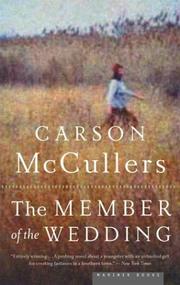
Twelve-year-old Frankie decides she will join her brother's honeymoon. It is the most emotionally direct thing she wrote and the best place to feel what her admirers are talking about, so read it before the harder novellas.
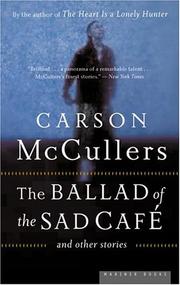
The novella that states her theory of love outright — that the lover and the beloved are two different species — and then proves it with a giantess, a hunchback and an ex-husband. Standard editions pair it with the short stories, including Wunderkind and A Tree, A Rock, A Cloud, which is why it is catalogued as Ballad of the Sad Cafe and Other Stories.
The Two Difficult Novels
IntermediateTake on the books that divide readers, and judge for yourself whether the second one is a failure or an unfinished experiment — the standard verdict is not obviously right.
▸ Study plan for this stage
Pace: Three to four weeks. Reflections in a Golden Eye is very short — one or two sittings — and its flatness is easier to take at speed. Clock Without Hands is the harder job and the one people abandon: give it two to three weeks at a modest daily quota and finish it, since the whole point of reading it
- The cold flat narration of Reflections in a Golden Eye, deliberately unlike anything in the first two books — no sympathy is extended to anyone, and the effect is closer to a case report
- A peacetime army post as a closed system: rank, boredom and repetition, with a voyeur, a horse and a murder arranged inside it
- Repression as subject rather than theme — the novel is about what people do when there is nothing to do and nothing may be said
- Clock Without Hands as her only direct treatment of desegregation, written across a decade of illness, and the reason it cannot simply be skipped
- The four-hander structure of the last novel — a dying pharmacist, a judge, the judge's grandson, and a young man of uncertain parentage — and the strain of holding them together
- The standard verdict that it is a failure, and the case against that verdict: it is unfinished-feeling rather than incompetent, and its ambitions are larger than anything since the first novel
- What a decade of illness did to the prose, which is visible sentence by sentence if you compare a page with a page of the Ballad
- Reflections in a Golden Eye extends sympathy to nobody. Is that a limitation or the achievement? Cite a scene either way.
- Why is the horse necessary? Answer in terms of what it does to the two characters who both want it.
- Clock Without Hands is widely called a failure. State the case for that judgement, and then the strongest case against it, before deciding.
- The last novel handles desegregation directly where the earlier books handled race obliquely. What did the obliquity let her do that directness does not?
- Compare a paragraph of Clock Without Hands with a paragraph of The Ballad of the Sad Cafe. What specifically has changed in the sentences?
- Read Reflections in a Golden Eye in one sitting, then write 200 words on the narrator's attitude to the characters. Name the technique rather than the mood.
- Finish Clock Without Hands even if you are not enjoying it, then write your own verdict in 300 words before reading anyone else's. This is the only way the stage's goal is met.
- Take the four viewpoint characters of the last novel and write one sentence on what each wants. Where you cannot, note it — that is the evidence for the failure verdict.
- Set the opening paragraph of each of the five novels side by side in date order and write two paragraphs on what changed in her prose across them.
Next up: With the whole of the fiction read and judged, the remaining material stops being novels and becomes evidence — about how she worked and how a career this short got this large.

A peacetime army base, a voyeur, a horse and a murder, told in a cold flat voice utterly unlike The Heart Is a Lonely Hunter. Read it fourth rather than second — its detachment is much easier to appreciate once you know she can do warmth.

Her last novel, written over a decade of illness and widely judged a failure. Worth reading as the fifth book because it is the only place she wrote directly about desegregation, and because you cannot assess the verdict without it.
The Completist Tail
BeginnerFinish with the stories, the play, the unfinished memoir and a biography, which together explain how a career this short became this large.
▸ Study plan for this stage
Pace: Eight to ten weeks, and the only stage that can be read out of order. The Collected Stories overlaps with the Ballad volume, so read only what is new to you — a week. The Square Root of Wonderful is an evening. The Mortgaged Heart takes two weeks read in pieces. Illumination and Night Glare is short
- The Collected Stories as a shelf decision rather than a reading one: it reprints both novellas, so its value is the uncollected pieces around them
- The Square Root of Wonderful as her original play, which failed, set against her own successful stage adaptation of The Member of the Wedding — the difference between adapting a novel and writing for the stage
- The Mortgaged Heart's juvenilia and essays, assembled posthumously by her sister, and why early drafts are only legible once the finished work is known
- Illumination and Night Glare as testimony rather than record: dictated in her last months, unfinished, and unreliable about dates and grievances in ways worth noticing rather than correcting
- Carr's biography as the corrective — exhaustive on the illnesses, the two marriages to Reeves McCullers, the drinking and the friendships — and deliberately placed last so the facts do not flatten the novels
- The shape of the career: everything of consequence written before thirty-five, then two decades of poor health and very little output, which is the fact the whole stage exists to explain
- How to read a writer's non-fiction about herself — as another performance, not as a key
- Where does Illumination and Night Glare contradict Carr, and which do you find more persuasive in each case? Note that being unreliable is not the same as lying.
- The Square Root of Wonderful failed and the Member of the Wedding adaptation succeeded. From reading the play, what is the difference?
- In The Mortgaged Heart, find an early piece that clearly anticipates a later book. What survived the revision and what did not?
- Carr is thorough about the illness and the drinking. Having read the biography last as instructed, do you think reading it first would in fact have flattened the novels?
- Given how short the productive period was, what accounts for the size of the reputation? Answer from the work, not from the life.
- Before starting the Collected Stories, list which pieces you have already read in the Ballad volume so you do not reread the two novellas by accident.
- Read the play in one sitting and write 200 words on what it is trying to do that the fiction does not. Be specific about a scene.
- Take one anecdote that appears in both Illumination and Night Glare and Carr's biography and write out both versions side by side. The discrepancy is more interesting than either account.
- After finishing Carr, reread the first twenty pages of The Heart Is a Lonely Hunter and write 300 words on whether knowing the life changed the reading. Say honestly if it did not.
Next up: This is the end of the path. The natural next move is outward to the writers McCullers is habitually filed with — Flannery O'Connor and Eudora Welty — where the comparison is more instructive than the label suggests.

Gathers the stories with both novellas, so it overlaps with the Ballad volume above. Read it for the pieces you have not met and treat the duplication as the price of a complete shelf.

Her original stage play, which flopped, unlike her own successful adaptation of The Member of the Wedding. A minor book, included because it is where you can watch her working outside her range.
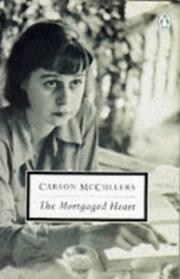
Juvenilia, essays and uncollected stories assembled by her sister after her death. Read it late: early drafts are only interesting once you know the finished work.
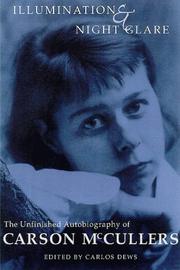
The autobiography she dictated in her last months, unfinished and often unreliable about dates and grievances. Take it as testimony rather than record, and pair it with the biography below.
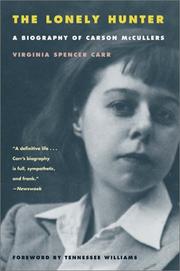
The standard biography, and the corrective to the memoir. Placed last on purpose: it is exhaustive about the illnesses, the marriages and the drinking, and knowing all of it in advance flattens the novels.