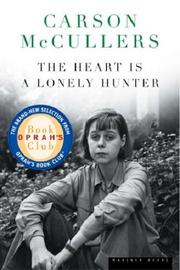
Start with The Heart is a Lonely Hunter. She finished it at twenty-three, it is the fullest thing she wrote, and its structure — a deaf man in a Georgia mill town who becomes the confessor of four people who barely understand him — is the whole McCullers method laid out at length. It is also the longest book here, which is the one argument against opening with it.
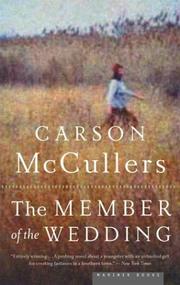
The obvious alternative is The member of the wedding, and if two hundred pages is what you have, take it. Twelve-year-old Frankie decides she will leave with her brother and his bride after the ceremony; almost nothing happens; it is one of the most exact accounts of adolescent loneliness in American fiction. It makes a fine first book and a slightly narrower introduction.
The three that matter
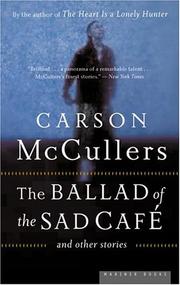
The Heart is a Lonely Hunter, then The member of the wedding, then The ballad of the sad café and other stories, which contains the novella about a woman, her hunchbacked cousin and her returning ex-husband that is probably her most perfect single piece of writing.
Read in that order you get the arc from expansive to compressed. Read in any order you get the same preoccupation: people who love in the wrong direction, at the wrong intensity, at someone who cannot receive it. She wrote about that and effectively nothing else, and she was extraordinary at it.
A buying warning
This is the one place a McCullers reader wastes money. The ballad of the sad café and other stories and Collected Stories of Carson McCullers overlap heavily — both carry the title novella and most of the short fiction. Various omnibus editions also bundle the novels and the novella together under one cover. Buy one of the two collections, not both, and check the contents page of any omnibus before adding separate volumes to the same order. Our catalogue lists these as distinct records because they are distinct editions, not because you need each one.
The rest of the fiction
Reflections in a Golden Eye is the second novel: short, lurid, set on a peacetime army base, and driven by voyeurism and repression. Some readers rate it just below the best work and others find it thin. It is worth the two hours either way.
Clock without hands is the last novel, written across years of serious illness and strokes, and it is the weakest. A dying pharmacist, a judge nostalgic for the Confederacy, an integration plot that the book cannot quite hold together. Read it if you want the complete fiction; do not read it fourth.
The square root of wonderful is a play, and it failed on Broadway. It is included here for completeness and for readers curious about what she was attempting in the theatre after the successful stage version of The member of the wedding.
The late and posthumous books
The Mortgaged Heart is a posthumous gathering of early stories, essays and unpublished pieces assembled by her sister. It is uneven by design and it contains a handful of things worth having. Illumination and night glare is the unfinished autobiography, dictated near the end of her life; it is fragmentary, sometimes self-mythologising, and moving in a way she did not intend.
Finish with The lonely hunter by Virginia Spencer Carr, published as The Lonely Hunter: A Biography of Carson McCullers. It is long, thoroughly documented and unsentimental about its subject, and some readers have found its portrait a harsh one. It remains the standard life.
Where to stop
Three books is a complete McCullers for most readers: The Heart is a Lonely Hunter, The member of the wedding and The ballad of the sad café and other stories. Add Reflections in a Golden Eye if you want the fourth. More American fiction sequences are on Discover.
Follow the full ordered path here: Carson McCullers Reading Order: Where to Begin with Her Novels.