Buchi Emecheta in Order: Where to Begin with the Novels
Emecheta wrote more than twenty books split between London and Nigeria, and the two halves are usually read in isolation — the London novels in one syllabus, the Nigerian ones in another. Reading them in sequence is the point: the same woman is writing about migration and about the world she migrated from. This path follows her own chronology of subject rather than of publication.
Start here: London
BeginnerBegin with the autobiographical novels of a young Nigerian woman in 1960s London.
▸ Study plan for this stage
Pace: About 2 weeks for roughly 330 pages across two short books. The prose is plain and fast, so 25 pages a day is comfortable. Read In the Ditch first even though it is chronologically the later story - that is publication order, and it is the order the path recommends.
- Adah on a north London council estate, drawn closely from Emecheta's own life as a single mother of five
- In the Ditch's documentary manner - it began as a column and reads like reportage with a novel's shape
- The welfare state observed from inside it: the social worker, the housing officer, the queue, and the vocabulary each imposes
- Second-Class Citizen as the prequel written second: Adah's Lagos childhood, her fight for schooling, her marriage and her arrival in England
- The two meanings of 'second-class' - what England makes of her, and what her marriage makes of her
- Francis burning Adah's manuscript, the single most important scene on this path, since the manuscript is The Bride Price
- Adah's 'Presence', the inner conviction that she is meant for something, which survives everything the two books do to her
- In the Ditch is unsentimental about poverty without being cold about the poor. How does Emecheta manage that balance?
- What does reading the books in publication order - effect before cause - do that chronological order would not?
- Who and what is 'second-class' in the second novel, and does the novel rank the racism and the marriage?
- Why does Francis burn the manuscript, and what does Adah's response tell you about what writing is for her?
- What is Adah's 'Presence', and does Emecheta present it as a gift or as a survival mechanism?
- Read the two books with only a day between them, and treat them as one long novel - they were conceived that way even though they were not written that way.
- Find the scene in Second-Class Citizen where Francis burns the manuscript, mark the page, and come back to it when you start The Bride Price in the next stage. That is the book being destroyed.
- In In the Ditch, list every official Adah has to deal with and the term each uses for her situation. The vocabulary is the argument.
- Write down every use of the word 'second-class' or its equivalents in the second novel and note who applies it. The distribution is not what the title suggests.
Next up: You have now watched the manuscript of the next novel burn, which is the most direct bridge any reading path can offer - the Nigerian books are the ones Emecheta had to write twice.
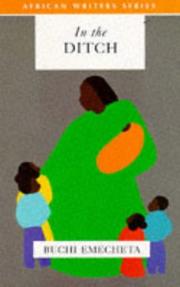
Adah on a north London council estate, drawn from Emecheta's own life as a single mother of five. Documentary and unsentimental.

The prequel written second — Adah's Lagos childhood, her marriage and her arrival in England. Read straight after In the Ditch and the two form one book.
Nigeria
IntermediateMove to the novels set in the world she left, which are angrier and more formally assured.
▸ Study plan for this stage
Pace: 4-5 weeks for three novels of 170-225 pages. One book every ten days works well. Read The Bride Price and The Slave Girl close together since they answer each other, then take a short break before The Joys of Motherhood, which is the heaviest of the three.
- The Bride Price: Aku-nna, whose marriage is negotiated over her head, and Chike, whom she cannot marry because his family descends from slaves
- The bride price itself as the mechanism the whole novel turns on - unpaid, it becomes a curse
- The ending of The Bride Price and the question of whether the novel confirms the superstition or indicts it
- The Slave Girl: Ojebeta, sold by her own brother Okolie and raised in a household in Onitsha, and the deliberate ambiguity of who is enslaved to what
- Emecheta's flattest and most damning claim - that marriage and slavery are, for her women, the same transaction under different names
- The Joys of Motherhood and Nnu Ego, promised that children will be her wealth and reward, and the bitterness of the title
- Nnu Ego in Lagos with Nnaife, and colonial wage labour dismantling the arrangements the marriage was built on
- The final scene at Nnu Ego's shrine, and what her sons make of her
- Does The Bride Price endorse the belief that kills Aku-nna, or expose it? Make the case both ways - the novel supports both readings.
- The Slave Girl's title has more than one referent. Who else in the book is owned, and by what?
- What exactly is Nnu Ego promised, by whom, and at what point does she understand that it will not arrive?
- How does the move to Lagos change the terms of Nnu Ego's marriage? What does wage labour do to a polygamous household?
- Why is The Joys of Motherhood the one Emecheta novel most readers know, and does it deserve that position over the other two?
- All three novels end badly for their heroines. Is this a political argument or a fatalism?
- Read the final page of The Bride Price twice, then write two short paragraphs: one arguing the novel confirms the curse, one arguing it convicts the community. Both should be defensible on the text.
- Set the transaction in The Bride Price beside the transaction in The Slave Girl and write down the exact terms of each - who pays, who receives, what is transferred. Putting them side by side is the reading.
- Keep a running list of everything Nnu Ego is told motherhood will bring her, with who says it. Read the list at the end against what she actually receives.
- Read the closing scene at Nnu Ego's shrine, then reread the first chapter. The novel is a circle and seeing the join is the point.
- Return to the burnt-manuscript scene you marked in Second-Class Citizen and write half a page on what it means that this is the book Francis destroyed.
Next up: With the Nigerian novels read, the later books can be seen doing what neither half alone could - putting the war, the university and the return journey into the same frame as the London estate.
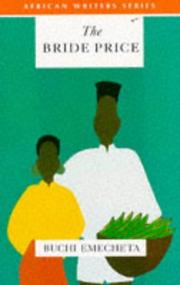
A girl's marriage negotiated over her head, and the tradition that punishes her for resisting.
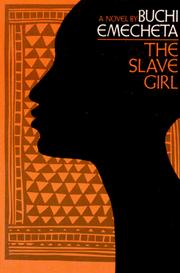
A young Igbo woman sold by her brother, and Emecheta's most direct statement about what ownership of women means.
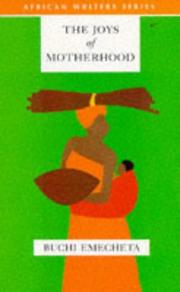
Her best-known novel, and the title is bitter. Motherhood as the thing a woman is promised will be enough. If you read only one Emecheta, this is it.
War, and the later novels
IntermediateThe historical novel and the return to the migration theme.
▸ Study plan for this stage
Pace: 4 weeks for roughly 570 pages across three books of 145-260 pages. Destination Biafra is the longest and hardest going; give it two weeks, then Double Yoke and Kehinde at about a week each.
- Destination Biafra as the civil war seen from a woman's vantage - Debbie Ogedemgbe, Sandhurst-trained, belonging fully to neither side
- That the novel was cut heavily by her publisher, which Emecheta resented, and that the compression is visible in the prose
- The trek and the atrocities, and Emecheta's refusal to make either side of the war innocent
- Debbie's position between Igbo and Yoruba, between the army and the civilians, and between British interests and Nigerian ones
- Double Yoke: Nko and Ete Kamba at a Nigerian university, and the two incompatible things an educated woman is required to be
- Professor Ikot and the abuse of academic power, written well before the subject was commonly addressed
- Kehinde as the natural close to the arc: a woman returns to Nigeria from London, finds her husband has taken a second wife, and discovers she has become English
- Migration as something that happens to a person permanently, rather than as a journey with a destination
- What does a woman narrator make visible about the Biafran war that a soldier's account would not?
- Where in Destination Biafra can you feel the publisher's cuts - which sections seem to move too fast for their material?
- What are the two yokes of Double Yoke, and does the novel think a woman can carry both?
- Kehinde returns home and cannot live there. Is this a novel about Nigeria, about England, or about the impossibility of return?
- Set Kehinde beside In the Ditch, twenty-two years apart. What has changed for a Nigerian woman in London, and what has not?
- Read Destination Biafra knowing it was cut, and mark three passages where the narrative jumps. Write a sentence each on what you think was removed.
- List the groups Debbie is caught between - ethnic, military, national, gendered - and mark the chapter where each allegiance is tested. The list explains why she is the right narrator.
- In Double Yoke, note every expectation placed on Nko by a different party. Read the list together and see whether any two are compatible.
- Read Kehinde with In the Ditch open beside you and write half a page comparing the two London households. This is the comparison the whole path was arranged to make possible.
- Write a paragraph in Emecheta's register - plain declarative sentences, no adornment, the injustice stated as fact rather than protested. The plainness is much harder to sustain than it looks.
Next up: You have now read the fiction on both sides of the migration; the memoir gives you the events without the fictional distance, and reframes everything already read.
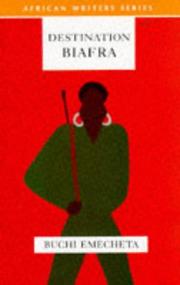
The civil war, from a woman's vantage. It was cut heavily by her publisher, which she resented, and the record carries a nonsense year.
University students caught between education and expectation.
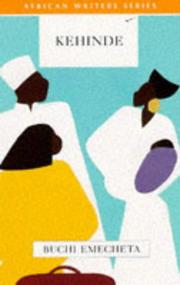
A late novel about a woman who returns to Nigeria and finds she has become English. The natural close to the arc that began with In the Ditch.
The memoir
IntermediateFinish with her own account, which reframes the autobiographical novels.
▸ Study plan for this stage
Pace: 2 weeks for about 240 pages. Read it with In the Ditch and Second-Class Citizen to hand, since the point of reading it last is the comparison - two or three chapters an evening, stopping whenever an episode you already know in fictional form comes round.
- Emecheta's own account of the years the London novels fictionalised, told without the protective distance of Adah
- How much of Adah was Emecheta, and where the fiction quietly altered the record
- The practical business of a writing life conducted around five children, night classes, and a full-time job
- The publishing world's reception of an African woman writing about London council estates in the 1970s
- What the memoir includes that the novels left out, and - more interestingly - what it leaves out that the novels included
- Autobiography as a form Emecheta had already been writing for twenty years under another name
- How the memoir reframes The Joys of Motherhood in particular, given that Emecheta was herself the mother the novel is about
- Which episodes appear in both the memoir and the London novels, and what did the fiction change in each?
- Is Adah a version of Emecheta or a character she used to say things she could not say directly?
- What does the memoir let her state plainly that the fiction only implies?
- Having read the memoir, does The Joys of Motherhood read differently - and is it a more or less personal book than it appeared?
- Where is the memoir less honest than the fiction? Every autobiography has such a place.
- Identify three episodes that appear both in Head Above Water and in In the Ditch or Second-Class Citizen. For each, write two lines on what the novel added or removed.
- Note every place the memoir mentions a book she was writing at the time, and build a timeline of composition. Set it against the publication dates of the nine other books on this path.
- Read the memoir's account of her marriage, then reread the burnt-manuscript scene one last time. The gap between the two versions is the most instructive thing in her whole body of work.
- Write a paragraph naming what the memoir leaves out, based only on what you know from the novels. Being able to do that is the proof that the reading order worked.
Next up: With more than twenty books to her name, the remaining novels and the children's books can now be picked up in any order - you know both halves of the writer and how they answer each other.

The autobiography — the same events as the London novels, told without the fictional distance.