Start with Second Class Citizen. It is the most direct book she wrote: Adah, a young Igbo woman, gets herself educated against her family's wishes, follows her husband to London, and discovers that the racism of 1960s Britain and the authority of her own marriage are two walls of the same room. It is plain, fast and furious, and it is the best single introduction to Emecheta.
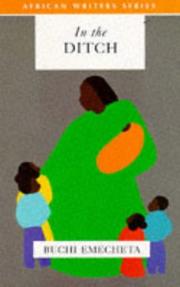
This means overriding publication order, deliberately. In the Ditch came out two years earlier and is listed first on this path for that reason, but it picks Adah up after her marriage has collapsed, living on benefits in a condemned council block. Read in publication order you meet a woman at the bottom and then learn how she got there; read the other way round, the two books are a single continuous story, which is what they became when Emecheta later had them published together as one volume. Read Second Class Citizen first, then In the Ditch.
The argument of this path
Emecheta's books are almost always read in isolation. The Joys of Motherhood appears on syllabi by itself; the London novels get read as memoir-adjacent apprentice work, if at all. Read in sequence they are something better than either: one long argument about what a woman is for, prosecuted across two countries and three generations, in which the London books are not the warm-up but the other half of the case. The Nigerian novels show a system that makes a woman's worth conditional on sons; the London books show her escaping into a country with a different system that reaches the same verdict by other means. Neither half lands as hard alone.
The Nigerian novels, in order
The Bride Price, then The slave girl, then The Joys of Motherhood.
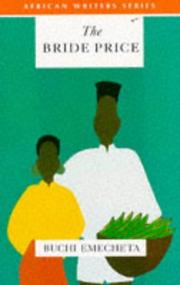
The Bride Price is a young woman's story about custom and the price attached to her; its ending is the one that most often provokes an argument in a classroom, because it can be read as fatalism or as indictment. The slave girl moves back to the early twentieth century and follows a girl sold by her own brother, and it makes the connection Emecheta wanted between literal ownership and the ordinary transactions of marriage. The Joys of Motherhood is the masterpiece and belongs third, when you can see what it is answering: Nnu Ego devotes her whole life to her children, is celebrated for it, and it costs her everything. The title is not affectionate.
The war novel, and the later ones
Destination Biafra is her Biafran war novel and her most ambitious failure — an attempt at a broad political canvas rather than a single woman's life. Emecheta complained publicly that her publisher cut it heavily before publication, and the book does read as though something structural is missing. It is worth reading for the ambition and for what it says about her range; it is not where anyone should start.
Double yoke is a short campus novel about a Nigerian student caught between being a good girl and being a graduate, and it is her funniest book. Kehinde returns to the London material decades on, with a woman who has built a life in Britain and is expected to give it up and go home. Read it last of the novels — it closes the loop Second Class Citizen opened.
The memoir
Head above water is her autobiography, and it is the right place to finish. Much of what looked like invention in the London novels turns out to have been reported, which changes those books retrospectively. It also documents how the writing actually got done: five children, a full-time job, and a manuscript written on the bus.
Where to stop
Four books are a complete reading: Second Class Citizen, The Bride Price, The slave girl and The Joys of Motherhood. If you read only one, make it The Joys of Motherhood — but you will get less from it than a reader who arrived via London.
More African fiction is on Discover.
Follow the full ordered path here: Buchi Emecheta in Order: Where to Begin with the Novels.
Ready to learn something deeply?
Build a reading path — free