Bleach Reading Order: Where to Start and What Order to Read the Manga In
Bleach ran for seventy-four volumes and its quality is not evenly distributed. Tite Kubo front-loads a fast, funny supernatural-detective premise, escalates it into one of the best tournament-structure arcs in shonen, then spends roughly twenty volumes in a war that most readers agree loses its shape, before recovering hard for the final arc. There is one correct order — volume 1 to volume 74 — so what a guide can usefully do is tell you which stretch you are entering and where people stall. These stages mark the four arcs. Note that our catalogue resolves Bleach volumes as bare numbers rather than as Vol. N, and a handful of volumes in the mid-forties have no clean English single-volume record at all, so the fourth stage samples the war rather than listing every volume in it.
Substitute Shinigami
BeginnerMeet Ichigo, learn the rules of Soul Reapers and Hollows, and decide within three volumes whether Kubo's comic timing works for you.
▸ Study plan for this stage
Pace: About a week. Volumes 1, 3 and 6 are roughly 190-200 pages each and a volume takes well under an hour; read volumes 2, 4 and 5 in between rather than skipping them, since the three listed here are checkpoints in a continuous run, not a selection. This first arc is where you decide whether to continu
- The premise's mechanics: Hollows, Soul Reapers, the konpaku, and what it means that Ichigo has borrowed rather than earned his powers
- The monster-of-the-week structure of the opening volumes and how each case is resolved in one or two chapters
- Kubo's tonal mix — broad comedy in the foreground with grief and death handled straight underneath, usually in the same chapter
- The page-layout signature: heavy blacks, empty white space, and full-page compositions used as beats rather than as action
- The supporting ensemble introduced across volumes 2-5 and the fact that each arrives with a power that is not explained yet
- The turn at volume 6, where Rukia is taken back to Soul Society and the episodic format ends for good
- What are the rules of Hollows and Soul Reapers as stated in volume 1, and which of them get broken later?
- What does Ichigo actually lose or risk by taking Rukia's powers, in the terms the first volume sets out?
- How does a case in volumes 1-5 typically resolve, and how long does one take?
- What changes structurally at volume 6, and what is the last self-contained story before it?
- Which of the supporting cast introduced in this stage arrive with abilities the reader is not yet told about?
- Chart the first ten chapters as separate cases — the Hollow, the person it is attached to, the resolution — and note the point where a case stops resolving inside its own chapter
- Pick three full-page spreads in volume 1 and write down what each one is doing at that moment in the scene; Kubo spends a whole page on beats other artists give a panel, and noticing it early makes the later fights legible
- Track the running joke about Ichigo's family across volumes 1-6 and note where the same material is played straight instead
- Count how many named characters exist at the end of volume 6 and keep the list; you will compare it against the end of volume 20
Next up: The rescue mission that begins at volume 6 opens directly into the arc most readers consider the series' peak.

Start here. A teenager who can see ghosts is handed a dead soul reaper's powers, and the opening chapters set the tone the whole series runs on — a monster-of-the-week structure played mostly for jokes, with the grief underneath handled seriously.
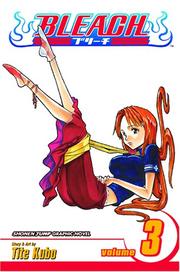
The supporting cast arrives and stops being scenery. If the ensemble comedy here does not land for you, the next seventy volumes will not change your mind.

The episodic phase ends and the plot commits: Rukia is taken back to Soul Society for execution. Read straight on — from here Bleach stops being a series of cases and becomes one continuous story.
Soul Society
IntermediateRead the arc most readers consider the series' peak, and understand the Gotei 13 and the captain hierarchy that every later arc assumes.
▸ Study plan for this stage
Pace: Two to three weeks for volumes 6 through 21 — the checkpoints here are 9, 15 and 20, at roughly 200-216 pages each, but this arc must be read in sequence because the fights are structured as a bracket and skipping a volume breaks the ladder. Around fifteen volumes at a volume an evening.
- The Gotei 13 and the captain-lieutenant hierarchy, which every later arc assumes without re-explaining
- Character-design density as world-building: Kubo introduces roughly thirty named officers in a few volumes and distinguishes them almost entirely by silhouette and costume
- Bankai as an escalation mechanic, and how it establishes the ceiling that later arcs keep having to raise
- The bracket structure — invaders paired against captains, resolved in sequence — and why it is the tightest plotting in the series
- The political conspiracy running underneath the execution plot, and the clues Kubo plants for it well before volume 20
- The reveal at the end of the arc and what it retroactively changes about volumes 6-19
- Why the end of this arc is a defensible stopping point for a reader who only wants the best of the series
- How is the Gotei 13 organised, and which captains are established as exceptions to its rules?
- What is bankai, what does achieving it cost, and how many characters have it by volume 20?
- What is the bracket of fights in this arc, and can you list who faces whom in order?
- What clues before volume 20 point to the conspiracy, and which ones did you miss on a first read?
- What does the volume 20 reveal change about the motives of everything that came before it?
- Keep a running roster of every captain and lieutenant as they appear, with the zanpakuto ability beside each; by volume 15 the list is unmanageable without one, and building it is what makes the later arcs readable
- Draw the fight bracket from volume 9 to volume 20 as an actual tournament diagram and mark which matchups are decided by power and which by information
- After finishing volume 20, go back to the first two chapters of volume 9 and list every line that reads differently now
- Compare a fight in volume 9 with one in volume 20 for page count and how much of it is dialogue; the ratio is where the series' later problems begin
- Set your character list from the end of volume 6 beside the one at volume 20 and count the growth — the number is the structural pressure the next arc inherits
Next up: The next arc restages this one at higher stakes, and the checkpoints in it are where the structure starts to give way.
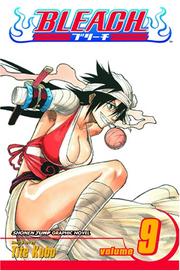
The invasion of Soul Society begins and Kubo introduces roughly thirty named captains and lieutenants in short order. This is where the series' famous character-design density starts doing the work of world-building.
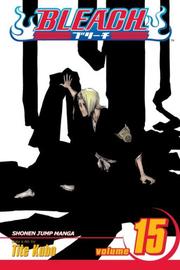
The middle of the arc, where the duels stop being one-sided and the political conspiracy behind the execution starts surfacing. Read the volumes between 9 and 15 in sequence; the fights are structured as a bracket and skipping breaks it.

The arc's payoff and the reveal that reframes everything before it. If Bleach ever fully earns its reputation, it is here — and the ending of this arc is a reasonable place to stop if you only want the good part.
Arrancar and Hueco Mundo
IntermediateFollow the escalation into open war, and recognise the structural problem — power inflation and an ever-widening cast — before it costs you the reading habit.
▸ Study plan for this stage
Pace: Four to six weeks and the hardest stretch to get through. Volumes 26 and 33 are the checkpoints, at roughly 190-216 pages, but the arc runs from the low twenties into the high forties and there is no honest way to read it partially. This is where most readers who abandon Bleach abandon it: fights ge
- The Arrancar as a deliberate restaging of the Soul Society hierarchy — a ranked enemy organisation with a matching tier of named opponents
- Power inflation: each new tier invalidates the ceiling the previous arc established, and the narrative cost of that
- The rescue-mission structure returning for the second time, and how it differs from the first use
- Fight pacing: the number of chapters a single duel occupies here compared with the Soul Society bracket
- The widening cast problem — every new opponent needs an introduction, a power reveal and a defeat, and the arc contains dozens
- Kubo's continuing strength in this arc, which is design and individual set-pieces rather than structure
- What actually resolves at the end of the arc and what is deferred
- How does the Arrancar hierarchy map onto the Gotei 13, and what does the parallel buy Kubo?
- How many chapters does a typical fight take in volume 33 compared with volume 15?
- What is the second rescue mission's structure, and where does it differ from the Soul Society one?
- Which threads opened in this arc are actually closed by its end?
- At what point did the arc stop working for you, and can you say what specifically caused it?
- Count chapters per fight across volumes 26 to 33 and plot the numbers against the same count from volumes 9 to 20; the graph is the clearest statement of what changed
- Keep adding to the character roster you started in the last stage and note the point where you stop being able to recall a character's ability without checking
- Take the Arrancar hierarchy and write it beside the Gotei 13 structure, matching rank for rank, and mark where the parallel breaks
- Pick the single best set-piece in volume 26 or 33 and write down why it works when the surrounding structure does not; this is the case for continuing
- Note where you stalled, put the book down for a week, and see whether you want to pick it up — that decision is the honest content of this stage
Next up: The final arc recovers much of what this one lost, and it pays off setups laid as far back as volume 20.
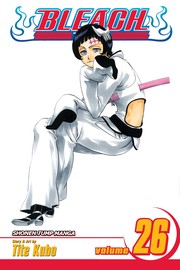
The new arc's antagonists arrive and the scale jumps. Kubo is deliberately restaging Soul Society at higher stakes, and for a dozen volumes it works.

The rescue mission into Hueco Mundo, and the last stretch of this arc that keeps a tight structure. Be warned that from roughly here the fights get longer, the cast keeps growing, and this is where most readers who abandon Bleach abandon it.
The Thousand-Year Blood War
IntermediateRead the final arc, which recovers much of what the middle lost, and understand why its ending is the most argued-about thing in the series.
▸ Study plan for this stage
Pace: Four to five weeks for volumes 55 through 74, with checkpoints at 60, 66, 70 and 74 at roughly 190 pages each. One caveat about this stage specifically: a large share of the later volumes have no clean single-volume English record in our catalogue — several resolve only to Japanese editions, databoo
- The Quincy invasion's central device: stripping the Soul Reapers of the bankai the series spent fifty volumes establishing, which is the strongest structural decision Kubo made after Soul Society
- The captains' backstories and the true history of Soul Society, answering questions raised as far back as the volume 20 reveal
- How the arc reuses the Soul Society cast rather than adding a new tier, and why that reads as a recovery
- The visible compression in the last stretch: chapters that cover in a page what earlier arcs would have given a volume
- The cancellation context — Kubo was working to an ending under a publication clock, and the compression is a publishing fact rather than a stylistic choice
- The decade-skipping epilogue and why it is the most argued-about thing in the series
- Which long-running setups the ending honours and which it drops
- What does the loss of bankai do to the arc's fights, and why does it work better than another power escalation would have?
- Which questions from the Soul Society arc are answered by the captains' backstories in volume 66?
- Where exactly does the compression become visible, and what is being skipped?
- What does the epilogue resolve, and which characters does it leave unaccounted for?
- Having finished, would you still say volume 20 is a reasonable place to have stopped?
- List every question the volume 20 reveal opened, then check them off as the final arc answers them; the ones still unticked at volume 74 are the ending's actual debts
- Compare a fight in volume 60 with one in volume 33 for chapter count and information density — the recovery is measurable, not just a feeling
- Take the last three chapters of volume 74 and note what each one covers; laid out, the acceleration is unmistakable
- Go back to volume 1 after finishing and reread the first chapter, listing what the series ends up meaning by the things it introduces there
- Write down which of the ending's choices you think are compression and which are intent; the argument about Bleach's ending is almost entirely about that line
Next up: This is the end of the run: seventy-four volumes read arc by arc, with the peak, the stall and the recovery each identified as you passed through them.

Deep into the last war. The Quincy invasion strips the Soul Reapers of the powers the series spent fifty volumes establishing, which is the smartest structural decision Kubo made after Soul Society.

The captains' backstories and the true history of Soul Society finally arrive, answering questions the Soul Society arc raised in volume 20. Reading this without the earlier arcs is pointless — almost every payoff here is a callback.

The last stretch, and where the series' famously compressed ending begins to show. Kubo was working under a cancellation clock and it is visible on the page.

The final volume. It resolves the plot and skips a decade in the last chapter, which is why the ending is divisive; read it knowing that the abruptness is a publishing fact rather than an artistic choice.