Start with Bleach, Volume 1 and read in numerical order to volume 74. There is no chronological-versus-publication debate, no side series to interleave, and no recommended skip. Tite Kubo serialised Bleach continuously from 2001 to 2016 and the volumes follow the chapters exactly.
Since the order is settled, the useful questions are different ones: what the arcs are, where the series is at its best, where it drags, and whether there is a good place to get off. Those have real answers, and long-time readers largely agree on them.
An honest note on our catalogue
Before the arcs: our list is a sample, not a set. It holds twelve volume records out of seventy-four — volumes 1, 3, 6, 9, 15, 20, 26, 33, 60, 66, 70 and 74. The coverage thins badly above volume 40, where the records available to us are largely non-English editions and supplementary databooks rather than English volumes. Treat the list as markers along the run rather than as the run itself. In practice most readers buy the three-in-one omnibus editions, which cover the whole series in about twenty-five books and are considerably cheaper than singles.
Volumes 1 to 8: the opening
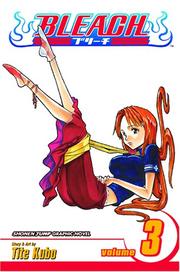
Bleach, Volume 1 and Bleach, Volume 3 are the setup: a teenager who can see ghosts takes on the powers of a soul reaper and starts doing her job. This stretch is episodic, monster-of-the-week, and lighter in tone than everything after it. Some readers find it slow. It is short enough that the question does not really arise.
Volumes 9 to 21: Soul Society
Bleach, Volume 9 opens the arc that most readers consider the peak of the series, and it is the reason Bleach has the reputation it has. A rescue mission into the soul reapers' own city introduces the captain ranks, the sword releases and the political conspiracy that drives everything afterwards. Bleach, Volume 15 and Bleach, Volume 20 sit inside it. If you are testing whether the series is for you, get to volume 9 before deciding.
Volumes 22 to 48: Arrancar and the war
Bleach, Volume 26 and Bleach 33 belong to the long middle war against Aizen and his hollow-derived lieutenants. This stretch contains some of Kubo's best individual fights and is also where the structural complaint about Bleach starts to bite: the cast expands faster than it can be developed, and the arc runs roughly twenty-seven volumes for a plot that resolves in one confrontation. Volume 48 closes it.
Volumes 49 to 74: Fullbring and the last war
A shorter transitional arc runs to volume 54 and is the least admired part of the series. Bleach, Vol. 60, Bleach 66, Bleach 70 and BLEACH Vol.74 belong to the Thousand-Year Blood War, the final arc, which is where opinion splits hardest. It is ambitious and it is visibly compressed: Kubo was working under a cancellation that shortened the ending, and several major characters and plot threads are resolved off-page or not at all. Some material has since been expanded elsewhere, in tie-in novels and in the anime adaptation, which restores a good deal.
Where to stop
Two places. Volume 21, at the end of Soul Society, gives you the best of the series and a genuine resolution. Volume 48, at the end of the Aizen war, is the more common stopping point and closes the story the first forty-eight volumes were actually telling. Readers who go on to volume 74 should know they are reading a rushed ending, and should decide whether that is what they want before buying twenty-six more books. More manga reading orders are on Discover.
Follow the full ordered path here: Bleach Reading Order: Where to Start and What Order to Read the Manga In.