Bertolt Brecht Reading Order: Where to Start with the Plays and the Theory
Brecht is almost always encountered as a theory first — alienation effect, epic theatre, the actor who shows rather than becomes — and readers arrive at the plays expecting homework. That is backwards, and it makes him sound joyless when he is in fact the funniest and most songful of the major twentieth-century dramatists. This path reads the plays first, in roughly the order they get harder, and holds the theoretical writing and the poems until the end, where they explain something you have already experienced.
Start with the Songs
BeginnerMeet Brecht as a popular entertainer with a political argument, and hear the alienation effect working before anyone names it for you.
▸ Study plan for this stage
Pace: Two to three weeks. Plays are short — The Threepenny Opera and Mother Courage and Her Children each read in two or three sittings — but read each one twice rather than once, which is the honest reading time for drama. Read the songs aloud. If you can find recordings of the Weill settings for The Thr
- The song that stops the play. In The Threepenny Opera the numbers do not express what a character feels; they step outside the action and comment on it, which is the alienation effect operating before anyone has explained it to you
- Macheath as a bandit who is indistinguishable from a businessman, and Peachum as a businessman running an industry of manufactured pity — the joke and the economics are the same thing
- Brecht rewriting an existing popular entertainment rather than inventing from nothing. The plot is lifted from John Gay's beggar's opera and the theft is part of the argument
- Mother Courage's refusal to learn. She loses all three children to the war she makes her living from and ends the play pulling the same wagon, and Brecht was explicit that any production which makes her wise has broken the play
- The scene captions and announcements that tell you what will happen before it happens — suspense about outcome is removed so that attention goes to cause
- Where the emotion actually is. Both plays are far funnier and far more moving than the theory predicts, and noticing that now inoculates you against reading Brecht as homework
- Kattrin's drumming as the test case: the most overwhelming scene Brecht wrote, and one he built out of a character who cannot speak
- Take any song in The Threepenny Opera and say what the scene around it was doing and what the song does to it.
- Peachum's business is organised charity. What is Brecht claiming about pity, and does the play let you feel any?
- Mother Courage is offered chances to save each child and each time makes a commercial calculation. Is she a villain, a victim, or a category the play declines to supply?
- Brecht insisted Mother Courage must not become wiser. Why would her learning something ruin the play's argument?
- Kattrin's death is the emotional peak of a play designed to keep you at a distance. How does Brecht get away with it?
- Having read only these two, what would you say the alienation effect actually is, in your own words and with no German?
- Read the Solomon song and the Song of the Great Capitulation aloud, then write 100 words on what each is arguing rather than on what it expresses.
- Take one scene of Mother Courage and Her Children and rewrite the scene caption to conceal what happens instead of announcing it. Then decide what the scene lost.
- Count the deals Mother Courage makes across the twelve scenes and note what she trades away in each. Laid out as a list, the shape of the play is unmistakable.
- Watch or listen to any production or recording of The Threepenny Opera songs after reading, and write a paragraph on what performance adds that the printed text cannot carry.
Next up: You have felt the technique working in two plays that are also straightforwardly entertaining, which is exactly the footing you need for the three exile plays that set moral problems and then refuse to close them.
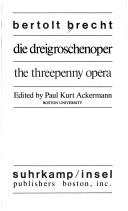
The right first Brecht: a beggar-king musical lifted from John Gay, with Kurt Weill's songs interrupting the action to comment on it. You feel the technique doing its job without any theory at all. Open Library files it under a bilingual title that leads with the German, but this is the standard English text.
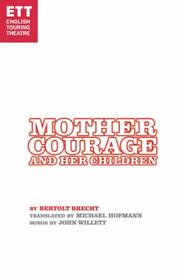
The masterpiece, and the play everyone should read second. A canteen woman follows the Thirty Years War making a living off it and loses all three children to it — and Brecht refuses to let her learn anything, which is precisely the argument.
The Parable Plays
IntermediateWork through the three great exile-period plays and be able to state the moral problem each one sets up and deliberately leaves unresolved.
▸ Study plan for this stage
Pace: Four to five weeks, roughly one play a fortnight with a second reading of each. Life of Galileo is the longest and most conventionally plotted; The Good Person Of Szechwan is the densest; The Caucasian chalk circle is the easiest read of the three. One practical warning for Galileo: more than one au
- Galileo's recantation as an unstable centre — Brecht rewrote the play and the same act reads as sane pragmatism in one version and as a scientist's betrayal of his profession in another
- Science as a social practice rather than a heroic individual pursuit, which is why the play spends so long on patronage, funding and who is allowed to look through the telescope
- Shen Te and Shui Ta as one person: a woman who can only afford her own goodness by inventing a ruthless cousin and becoming him, which is the clearest single demonstration of Brecht's method in the body of work
- The unresolved ending. The Good Person Of Szechwan closes by handing the problem to the audience and openly declining to solve it, and that refusal is the play, not a failure of nerve
- Goodness as an economic question. All three plays argue that virtue is a function of what you can afford, which is the Marxism doing actual dramatic work rather than sitting on top of it
- Azdak, the drunk judge who delivers rough justice by ignoring the law — the closest thing in Brecht to a hero, and the reason The Caucasian chalk circle is his warmest play
- The story-within-a-story frame of The Caucasian chalk circle, which resolves what Szechwan refuses to, and the deliberate difference in how the two endings feel
- State the moral problem of each of the three plays in one sentence each, then say which one the play answers and which it leaves open.
- In Life of Galileo, is the recantation defensible? Argue it from the text of the version you actually read, and note which version that was.
- Why can Shen Te not simply be good? Give the play's own economic account rather than a general one.
- Shui Ta is a costume and a voice. What does Brecht gain by making the ruthless self a disguise rather than a second character?
- Azdak decides cases by ignoring the law and mostly gets them right. What is Brecht claiming about justice, and does the play believe it or merely wish it?
- The chalk circle test decides the child's fate. Why does Brecht reverse the outcome of the biblical judgement it is modelled on?
- Read the recantation scene of Life of Galileo twice, once assuming he is a coward and once assuming he is a strategist, and write 200 words on which reading the text better supports.
- Write the closing speech of The Good Person Of Szechwan yourself, as a resolution, then say what your version costs the play. This is the fastest way to understand why Brecht refused.
- Chart Shen Te's finances scene by scene — money in, money out, and which self is present. The play's argument is visible in the ledger.
- Set the ending of The Caucasian chalk circle beside the ending of The Good Person Of Szechwan and write a paragraph on why the same dramatist wrote both.
- Pick any scene from these three and mark where you would expect a conventional play to build suspense. Note what Brecht does instead at each point.
Next up: Having seen Brecht construct moral problems with great care, the next stage shows him with the care removed — the earliest play written before he had any politics, and the three where the politics arrives at full volume.

The most conventionally gripping thing he wrote, and the one whose meaning he kept rewriting — the recantation reads as pragmatism in the early version and as betrayal after Hiroshima. Read it aware that more than one authorised text exists.

A woman can only survive her own goodness by inventing a ruthless male cousin and becoming him half the time. The clearest single demonstration of Brecht's method, and it ends by handing the problem to the audience rather than solving it.
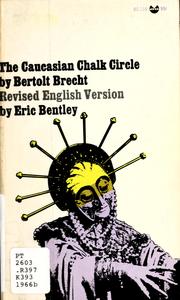
The warmest of the late plays, a story-within-a-story with a drunk judge who is the closest thing Brecht wrote to a hero. Read last in this stage because it resolves what Szechwan refuses to, and you should feel the difference.
The Politics, Direct
IntermediateSee Brecht writing agitprop, satire and early expressionist provocation, and judge where the polemic overwhelms the drama.
▸ Study plan for this stage
Pace: Four to five weeks for four short texts. Baal and The resistible rise of Arturo Ui read in an evening each. Fear and misery in the Third Reich is two dozen separate short scenes and is better read three or four scenes at a time over a week than in one sitting. Saint Joan of the Stockyards is in blan
- Baal as the origin point — an amoral poet who consumes everyone near him, written at twenty-one, with no epic theatre and no Marxism anywhere in it. Placed here rather than first so it registers as evidence about the author rather than as an introduction
- Arturo Ui's central manoeuvre: Hitler's rise retold as a Chicago cauliflower racket in mock-Shakespearean verse, so that a mythologised horror is reduced to gangsters squabbling over vegetables
- The word resistible in that title as the entire thesis. Brecht's objection to treating fascism as a natural catastrophe is that catastrophes cannot be opposed and men can
- Fear and misery in the Third Reich as the counter-example to everything else here — built from newspaper reports, nothing stylised, no songs, no distancing devices, and by a distance the most frightening thing in this path
- The domestic scale of that fear. The scenes are about a wife packing, a teacher's family at dinner, a butcher's shop, which is where terror actually lives
- Saint Joan of the Stockyards as the most explicit fusion of Marxist economics with classical parody — Joan of Arc as a Salvation Army officer in the Chicago meatpacking trade, in blank verse
- Where polemic overwhelms drama. Some of these are better arguments than plays, and being able to say which is a legitimate and necessary judgement rather than a disloyal one
- What in Baal is already recognisably Brecht, and what had he not yet acquired?
- Does the gangster analogy in The resistible rise of Arturo Ui clarify how fascism took power, or does the comedy make it too easy? Argue a position.
- Why is Fear and misery in the Third Reich so much more disturbing than the plays that use distancing devices? What does its plainness do that technique cannot?
- Saint Joan of the Stockyards puts an economics lecture inside a verse tragedy. Where does it stop being a play, and does it recover?
- Rank these four on how well the politics and the drama are integrated, and defend the bottom of your list.
- Brecht is arguing across all four that history is made by people and could have gone otherwise. Which of the four makes that case most convincingly?
- Read Baal and then immediately reread any scene of Mother Courage and Her Children. Write 200 words on what changed in the fifteen years between them.
- Take one scene of Fear and misery in the Third Reich and identify what a newspaper report of the same event would have contained. The gap is the dramaturgy.
- For Arturo Ui, list which historical figure each gangster corresponds to, then say which correspondences are illuminating and which are merely clever.
- Write a paragraph of Saint Joan of the Stockyards in plain prose, stripping the blank verse, and decide what the verse was doing.
Next up: You have now read eight plays across thirty years, which means Brecht's own account of what he was doing will land on specific scenes you can picture rather than on abstractions.

The first play, written at twenty-one — an amoral poet who consumes everyone near him, with no politics and no epic theatre anywhere in sight. Read it here, not first, as evidence of what he started from.

Hitler's rise retold as a Chicago cauliflower-racket gangster picture, in mock-Shakespearean verse. Broad, angry and enormously entertaining, and the title's insistence on resistible is the whole thesis.

Two dozen short scenes of ordinary Germans under Nazism, written in exile from newspaper reports. Structurally unlike anything else here and the most frightening because nothing is stylised.

Joan of Arc relocated to the Chicago meatpacking industry as a Salvation Army officer, in blank verse. The most explicit fusion of his Marxist economics with classical parody, and it needs the earlier plays behind it to read as more than a lecture.
Now the Theory, and the Poems
IntermediateRead Brecht's own account of what he was doing, and discover the lyric poet the theatrical reputation conceals.
▸ Study plan for this stage
Pace: Five to six weeks. Brecht on theatre is a collection of essays and notes written across decades and should be read in pieces rather than cover to cover — the Short Organum is the piece to read first and most carefully. The Messingkauf dialogues is short and reads more like a play than a treatise. Se
- Epic theatre defined by its author rather than by a lecturer — narrative rather than plot, the spectator made an observer rather than an accomplice, argument rather than suggestion
- The Short Organum as the compact statement of the whole programme, and the place to start in Brecht on theatre rather than in the earlier essays
- The alienation effect as a technique for making the familiar strange enough to be examined, which you have already watched work in eight plays and can now name
- The Messingkauf dialogues staging the theory as an argument between a philosopher, an actor, a dramaturg and an electrician — theory in dramatic form, more self-questioning than the essays and more readable
- The electrician as the point. Putting a technician in the argument is Brecht insisting that theatre is a workshop rather than a temple
- Brecht as a major German lyric poet, plain-spoken and unadorned, which is the discovery at the end of this path and the thing his theatrical reputation conceals
- The exile poems, which reach a directness the plays never permit themselves and which recast every song you read in stage one
- Now that you have read the theory, which of the plays follows it least? Does that make it a worse play?
- Brecht wants the spectator to observe rather than identify. Did that actually happen to you reading Mother Courage and Her Children, and if not, what does that tell you about the theory?
- What does the dialogue form of The Messingkauf dialogues let Brecht do that the essays cannot?
- The theory is written as though the plays followed from it. From the evidence of the plays, does it read more like a programme or like a rationalisation after the fact?
- How do the poems change your reading of the songs in the plays?
- Having finished the path, would you now tell a new reader to start with The Threepenny Opera, or somewhere else? Defend the change or the choice.
- Read the Short Organum with a list of the eight plays beside you and note in the margin, for each numbered section, which play best illustrates it. Some sections will have no match, and those are the interesting ones.
- Pick one scene you loved and write a 200-word account of how it would be staged following Brecht's own instructions. Then say whether you would want to watch it.
- Read five exile poems, then reread the Song of the Great Capitulation from Mother Courage and Her Children. Write a paragraph on what the two forms share.
- Choose the single poem in Selected Poems, 1913-1956 that most surprised you and write why in 150 words. The surprise is the point of putting the poems last.
- Write your own one-paragraph definition of epic theatre without using the words alienation or estrangement. The constraint forces you to describe what happens rather than to repeat the vocabulary.
Next up: This is the end of the path — the plays, the theory and the poems, in the order that makes each explain the last — and the natural next move is to reread The Threepenny Opera in an evening and watch how much of it you were previously hearing as entertainment alone.
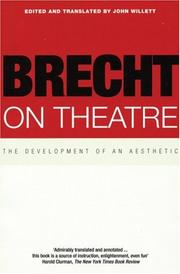
John Willett's collection of the essays and notes, including the Short Organum. Read only now: every principle in it will land on a specific play you can already picture.

The theory again but in dramatic form — a philosopher argues with an actor, a dramaturg and an electrician about what theatre is for. More readable and more self-questioning than the essays, so it makes a good companion volume.

The great surprise at the end of the path. Brecht is a major German lyric poet, plain-spoken and devastating in the exile poems, and reading them recasts every song in the plays you have just finished.