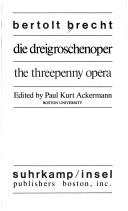
Start with The Threepenny Opera. It is short, it is funny, it has the songs, and it lets you meet Brecht as an entertainer before you meet him as a theorist. Beggars, a gangster, a corrupt police chief and a ballad about a shark: nothing about it announces itself as difficult, and yet the technique that everyone writes essays about is already fully operational.
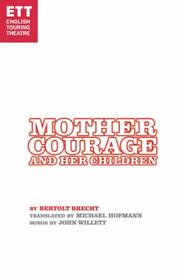
The obvious alternative is Mother Courage and Her Children, which is the masterpiece and the play most likely to be on your syllabus. Read it second. It is a much colder experience — a woman pulls a wagon through the Thirty Years War and loses all three children to it, and the play refuses to let you feel better about that — and coming to it after The Threepenny Opera means you already trust the writer.
The major plays
The Threepenny Opera, then Mother Courage and Her Children, then Life of Galileo. That third one is the most conventionally satisfying play he wrote: a scientist recants under threat and spends the rest of his life arguing with himself about whether he was right to. Brecht rewrote its ending after Hiroshima, and the two versions carry opposite verdicts on Galileo, which is worth knowing before you pick an edition.
The Good Person Of Szechwan is next, and it comes with a buying warning. The same play is sold in English as The Good Woman of Setzuan and as The Good Soul of Szechuan depending on the translator, and the catalogue record for it here is thin. If you search on any one of those titles you may miss the edition you want. It is the parable about a woman who has to invent a ruthless male cousin in order to survive her own kindness.
The Caucasian chalk circle completes the set: a servant girl saves a child who is not hers, and a drunken judge decides who the real mother is. It is the most humane of the major plays and the best one to read last of the five.
The early and the political
Baal is the first play, and it is a genuine wall — an amoral poet drinks and destroys his way through a hundred pages with no argument attached. Read it only if you want to see where he started. The resistible rise of Arturo Ui recasts Hitler's rise as a Chicago gangster's takeover of the cauliflower trade; it is broad, it is deliberately crude, and it plays better than it reads. Fear and misery in the Third Reich is a sequence of short realist scenes from ordinary German life under the Nazis, and it is the least Brechtian thing here, which is exactly why it is worth reading. Saint Joan of the Stockyards transplants Joan of Arc to the Chicago meat industry and is the most nakedly doctrinaire.
Two things are worth stating plainly at this point in the sequence. Brecht's working method was heavily collaborative, and scholars have argued for decades over how much of The Threepenny Opera in particular belongs to Elisabeth Hauptmann, with Margarete Steffin and Ruth Berlau contributing substantially to the later plays; the extent is disputed and the credit line on the covers has never reflected it. And his relationship to Stalinism and to the East German state remains contested among his biographers. Neither question is settled here.
The theory, last
Brecht on theatre is the standard collection of the essays: alienation effect, epic theatre, the audience that should think rather than weep. It is much more readable than its reputation, and it makes far more sense once you have four plays in your head. The Messingkauf dialogues is the same material as a conversation between a philosopher, an actor and a dramaturg, and some readers find it the better door.
Finish with Selected Poems, 1913-1956. Brecht is a major twentieth-century poet and this is the least-read part of him. Start with the exile poems.
Where to stop
Three plays and one book of theory is a real Brecht: The Threepenny Opera, Mother Courage and Her Children, Life of Galileo, Brecht on theatre. Everything else rewards the reader who wanted more. More theatre sequences are on Discover.
Follow the full ordered path here: Bertolt Brecht Reading Order: Where to Start with the Plays and the Theory.