Barbara Pym Reading Order: Where to Start with the Comedies of English Parish Life
Pym was dropped by her publisher in 1963, ignored for sixteen years, then rediscovered in 1977 when Philip Larkin and Lord David Cecil both named her the most underrated novelist of the century. Her books therefore appeared in two disconnected waves. This path reads the great middle-period comedies first and the late, much darker novel last.
Start here
BeginnerBegin with the novel everyone agrees is the entry point.
▸ Study plan for this stage
Pace: 1-2 weeks for about 256 pages. Pym reads quickly and the chapters are short, so 25 pages an evening is comfortable - but resist finishing it in two sittings, because the comedy depends on noticing small repetitions and speed flattens them.
- Mildred Lathbury as the 'excellent woman' of the title: a clergyman's daughter in postwar London whom everyone relies on and nobody considers
- The comedy located entirely in what Mildred does not say, so the reader supplies the judgement she withholds
- The Napiers - Rockingham and Helena - as the glamorous couple who move in downstairs and turn Mildred into an audience
- Everard Bone, and Pym's habit of ending on a prospect that is somewhere between a proposal and a job offer
- The parish as a complete social system: the vicar, the jumble sale, the flower rota, and the currency of tea
- Postwar austerity as a material fact - rations, shared bathrooms, made-over clothes - underneath the comedy of manners
- The narrow social range as a deliberate instrument rather than a limitation of Pym's world
- What exactly is an 'excellent woman', and does Mildred accept the description of herself?
- Where is the reader positioned relative to Mildred - are we ahead of her or behind her in understanding what is happening?
- The Napiers treat Mildred as a convenience. Does the novel want you to be angry on her behalf?
- What does the novel's ending offer Mildred, and is it a happy one? Pym's last pages are famously ambiguous.
- How does Pym make tea-making funny about forty times without repeating a joke?
- Mark every occasion on which Mildred is asked to make tea or is left to clear up, and note what conversation is being avoided each time. The list is the novel's argument about her position.
- Take one scene with the Napiers and rewrite a page of it from Helena's point of view. Mildred's invisibility becomes visible immediately.
- Read the final two pages twice and write two short paragraphs, one arguing the ending is a reward and one arguing it is a sentence.
- Find three sentences where Mildred declines to say what she thinks and write the unsaid version in the margin. That is Pym's whole technique in three lines.
Next up: You now know the parish world, its social rules and Pym's method of comic omission, which is exactly what the three great fifties novels assume you have.
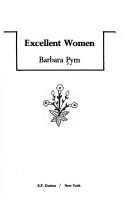
Mildred Lathbury, a clergyman's daughter in postwar London, observes everyone else's lives with devastating mildness. The comedy is entirely in what she does not say.
The comedies
BeginnerStay in the fifties parish world, which is her natural territory.
▸ Study plan for this stage
Pace: 5-6 weeks. Jane and Prudence, A Glass of Blessings and Less Than Angels each run to around 220-260 pages; one novel every ten days is right. Read them in that order and leave a few days between - the worlds overlap and the pleasures are cumulative.
- Jane and Prudence as a study in mutual envy: a vicar's wife who has lost her Oxford self and a glamorous former pupil with a series of unsatisfactory men
- Fabian Driver and Jessie Morrow, and Pym's willingness to let the plain, watchful woman win
- Wilmet Forsyth in A Glass of Blessings as the funniest of Pym's narrators because she is the most consistently wrong about everyone, including herself
- The Anglo-Catholic clergy of A Glass of Blessings - Father Thames, Father Bode, Father Ransome - and church politics as pure comedy
- Less Than Angels turning the anthropologists into the tribe, drawn from Pym's own years at an anthropological institute
- Catherine Oliphant, Tom Mallow and Deirdre Swan, and the research grant as the novel's engine of romantic competition
- The recurring cast - figures such as Esther Clovis wander between books - so the novels form one continuous parish rather than separate worlds
- Food and drink as Pym's most reliable index of character: what people offer, what they accept, and what they think of it
- Jane and Prudence each envy the other's life. Which of them does the novel think is better off, and does it say so?
- Why does Pym let Jessie Morrow beat Prudence, and what would be different if she had not?
- Wilmet is wrong about nearly everything. At what point in A Glass of Blessings did you realise it, and how does Pym signal it without breaking the first person?
- What does Less Than Angels gain by observing anthropologists anthropologically - and is the joke on them, on the discipline, or on the reader?
- Which of these three is the funniest, and is that the same as which is the best?
- Once you notice characters recurring between books, does it change how you read them?
- Keep one page of notes on every meal, cup of tea or drink offered across all three novels, with who offers and who accepts. Read it at the end - it is a complete social map.
- Watch for characters you have met before, including Esther Clovis, and write down which earlier book each came from. Doing this across three novels is how the recurring-cast pleasure opens up.
- In A Glass of Blessings, mark five places where Wilmet's account and the evidence in the scene disagree. Then write a paragraph describing one of those scenes accurately.
- Read the Fabian Driver plot in Jane and Prudence and predict the ending at the halfway point. Compare your prediction with what Pym does - the deviation is the point.
- Write a paragraph in Pym's register: two people discussing a third at tea, in which nothing unkind is said and everything unkind is conveyed.
Next up: With the mature comedies in your ear, the debut becomes legible as a young writer's imagined middle age rather than as an apprentice piece.
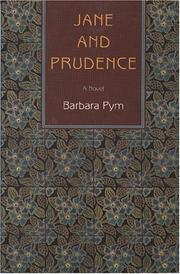
A vicar's wife and her glamorous former pupil, and the gap between what each envies in the other.
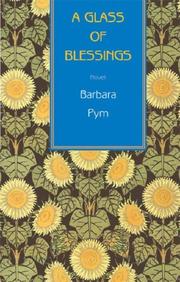
A well-off, bored woman misreads everyone around her, including herself. The funniest of them.
Anthropologists observed as if they were a tribe. Pym worked at an anthropological institute and the revenge is precise.
The first novel
IntermediateGo back to the debut, written when she was in her twenties.
▸ Study plan for this stage
Pace: About 10 days for 250 pages. Read it at the same pace as the others, but with the biographical fact in mind throughout - it was written by a woman in her twenties about two women in their fifties, and holding that in view is what makes it strange.
- Belinda and Harriet Bede, two middle-aged unmarried sisters in a village organised around the vicarage
- That Pym wrote it in her twenties, imagining herself and her sister at fifty - a young writer's rehearsal of her own future
- Archdeacon Henry Hoccleve, Belinda's long-unrequited attachment, and the comedy of a man who quotes constantly and listens never
- The literary quotation as a weapon and as a substitute for feeling, which becomes a Pym signature
- Harriet's succession of curates, fed and fussed over and never seriously wanted
- The absolute stability of the ending - the world is exactly where it started, which is presented as a good outcome
- How the whole apparatus of the later books is already assembled here: parish, tea, quotation, unmarried women observing
- What does it mean that a twenty-two-year-old imagined contentment rather than escape as the future she wanted?
- The Archdeacon quotes constantly. Track what he quotes and to whom - what is the quotation actually doing for him?
- Is Belinda's lifelong unrequited attachment presented as a waste, a comfort, or simply as a fact?
- Nothing changes by the end. Why does that read as a happy ending here and as something more troubling in the later books?
- Compare Belinda's resignation at fifty with Mildred's at thirty. Which woman has the better life?
- Count the Archdeacon's quotations across one chapter and note which are apt, which are showing off, and which are evasions. The proportions are the character.
- Read the closing chapter, then reread the closing chapter of Excellent Women. Write half a page on what Pym thinks a satisfactory ending for a woman looks like.
- Write down the ages of the two sisters and the age Pym was when she wrote them, then read a Belinda passage with that gap in mind. The tenderness reads differently.
- Pick one Bede-sisters scene and rewrite it with the sisters aged twenty-two. What breaks tells you what the age was for.
Next up: The debut is Pym's most comfortable book; the last one on this path is the same eye and the same method with every comfort withdrawn.
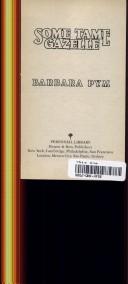
Two middle-aged sisters and the curates they fuss over. She wrote it imagining herself and her sister at fifty, which is a strange and touching thing to have done at twenty-two.
The late novel
IntermediateFinish with the book of the rediscovery, which is not funny at all.
▸ Study plan for this stage
Pace: About 10 days for 218 pages, and it is worth going slowly. This is the shortest reading commitment on the path and the heaviest one - read a chapter or two an evening rather than in long sittings.
- Four office workers - Letty, Marcia, Edwin and Norman - approaching retirement from jobs the novel never bothers to describe
- The book of the rediscovery: published in 1977, after sixteen years in which no publisher would take her, and Booker-shortlisted
- The office as a parish substitute, with none of the parish's obligations of care
- Marcia's flat, her hoarded tins and milk bottles, and her surgeon - the novel's most unbearable material, delivered entirely deadpan
- The retirement lunch and the fact that nothing replaces the structure it removes
- The identical technique to the fifties comedies - observation, omission, the unsaid - producing dread instead of comedy
- Loneliness treated as a social arrangement rather than a personal failing
- The prose is doing exactly what it does in Excellent Women. Why is the effect the opposite?
- What has been removed from the world of this novel that the earlier books relied on?
- Marcia is never explained or diagnosed by the narration. What does that refusal cost the reader, and what does it protect?
- Is Quartet in Autumn a bleak book or a clear-eyed one? Does Pym offer anything at all at the end?
- Having read the earlier novels first, does the late book feel like a departure or like a conclusion the comedies were always heading toward?
- Keep a running inventory of what Marcia keeps - tins, bottles, and the rest - in the order the novel reveals them. Reading the inventory as a list is more frightening than reading the chapters.
- Find a sentence in Quartet in Autumn and a sentence in Excellent Women built the same way, and write them one above the other. The identical construction producing opposite effects is the most instructive thing on this path.
- Reread the office scenes after finishing the book, watching for the moments each character is briefly seen by another. There are very few and they are the whole consolation.
- Write one paragraph in Pym's register about someone eating alone. Then read her version and note how much less she says.
- Set the four endings you have now read - Excellent Women, A Glass of Blessings, Some Tame Gazelle and this - side by side, and write two sentences on what changed in Pym's idea of a woman's future between 1950 and 1977.
Next up: Having read both waves, the remaining novels - the ones published after the rediscovery and the posthumous ones - can be read in any order, because you now know both Pyms.
Four office workers approaching retirement, alone. Booker-shortlisted in 1977 and much bleaker than anything before it — the same eye, with the comedy removed.