August Wilson's Century Cycle: What Order to Read the Ten Plays In
Wilson wrote one play for each decade of the twentieth century, ten in all, set almost entirely in the Hill District of Pittsburgh. That leaves every new reader with a real choice: read them in the order of the decades they depict, or in the order Wilson wrote them. This path takes a position — read them in composition order. Wilson did not plan the cycle in advance, he discovered it, and the plays written last are explicitly commentaries on the ones written first; the decade order rearranges a body of work into a chronicle its author never intended and flattens twenty years of a writer teaching himself.
The Two That Made His Name
BeginnerMeet Wilson's language and his central subject — inheritance, and what a man owes the generation behind him — in the two plays that reached Broadway first.
▸ Study plan for this stage
Pace: Two weeks, and no faster. Each play is a hundred pages or so and can be read in ninety minutes, which is exactly the trap — Wilson's plays are not information to be acquired, they are speech, and a reader who moves at prose speed gets almost nothing from them. Give each play two sittings: one straig
- The monologue as Wilson's basic unit — a character stops the play to tell a long story, and the story is the characterisation. Levee's account of what happened to his mother in Ma Rainey is the first great instance and the model for dozens to come
- The band room versus the studio: Wilson's habit of putting the real play in the waiting space and the nominal business elsewhere, which is the structural joke Ma Rainey is built on
- Ownership and who gets paid — Ma Rainey's fight over the recording, the white producers, and the question of who owns a music that Black musicians made
- Inheritance as the cycle's governing subject, stated most plainly in Fences: what a man owes the generation behind him, and what he actually passes on instead
- Troy Maxson's baseball grievance as a real injustice and a self-serving excuse at the same time, which is the kind of double thing Wilson does with almost every protagonist
- The unfinished fence itself, and Wilson's willingness to hand a play one large obvious symbol and then complicate it for two hours
- That Ma Rainey is the only play in the ten to leave Pittsburgh's Hill District — worth registering now, because the geographic constraint of the other nine is a deliberate choice you will feel accumulating
- Levee's mother monologue arrives without preparation and changes everything after it. What does it tell you about him that the surrounding scenes could not, and why does Wilson place it where he does?
- Ma Rainey herself is offstage for long stretches of a play named after her. What is that structural choice arguing?
- Is Troy Maxson right about baseball? Note that the play makes his grievance both legitimate and convenient — can you hold both at once, and does the play let you settle it?
- Fences is the most conventionally built play in the cycle, with a single household and a clean arc. Ma Rainey is looser and more musical. Which do you find stronger, and what is your criterion?
- What does each play do with the offstage or the supernatural — Gabriel's horn, the studio's white voices — and how directly does either one commit to it?
- Read Levee's long speech in Ma Rainey and Troy's speech about wrestling Death in Fences out loud, at performance pace. Time them. Wilson wrote for actors' breath, and reading silently at reading speed genuinely alters what the lines do.
- Write down, after Fences, what you think Troy passes on to Cory and what he thinks he is passing on. Two lists, side by side. Keep the page — the same gap between intention and inheritance recurs in every stage of this path.
- Take one Wilson monologue and mark where the sentences change length. He builds pressure with short lines after long ones and it is visible on the page once you look for it.
- Note every reference in these two plays to the South, to migration, or to something an older character remembers. There will be more than you expect, and the next stage is about what Wilson does when he finally dramatises that material directly.
Next up: These two plays keep the ancestral and spiritual material offstage, gestured at by older characters and by Gabriel — the next three bring it onstage and make it literal, which is the single biggest shift in the cycle.

The first play of the cycle to be produced, set in a Chicago recording studio in 1927, and the only one that leaves Pittsburgh. Read it first for the band-room monologues, which are the clearest introduction to how Wilson builds a character out of a single long story.
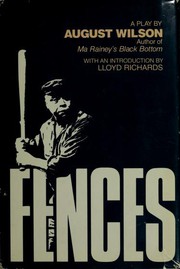
The Pulitzer winner and the most conventionally structured play in the cycle — a former Negro Leagues ballplayer, his son, and a fence he will not finish building. It is the best single argument for Wilson as a great American dramatist, and the easiest to read.
The Cycle Takes Shape
IntermediateWatch Wilson become more ambitious as he realises he is writing a cycle, and follow the arrival of the spiritual and ancestral material that Fences keeps offstage.
▸ Study plan for this stage
Pace: Three to four weeks. Three plays of roughly 110 pages each, and this is where the reading gets slower rather than faster, because Two Trains Running in particular is almost entirely talk and rewards a pace that would look lazy applied to a novel. Joe Turner, then The Piano Lesson, then Two Trains Ru
- The boarding house in Joe Turner as a portrait of the Great Migration in one room — people newly north, unmoored, and looking for something they cannot name
- Herald Loomis and the bone yard vision: the moment African cosmology enters the cycle as event rather than metaphor, and stops being something old characters merely allude to
- Bynum the binding man, and the idea of a song a person has to find — Wilson's most sustained supernatural device and the one the later plays keep referring back to
- The piano itself: an object carrying carved ancestral faces, the family's history and its price, and the argument over whether inheritance is to be used or preserved
- Boy Willie against Berniece as the cycle's governing question made into a two-hander — sell the past to buy a future, or hold it and refuse the transaction
- Two Trains Running's structure of almost no plot: a diner facing demolition, characters who come in and talk, and the offstage figures Aunt Ester and Prophet Samuel doing all the work
- Wilson's growing confidence with the unexplained — each of these plays asks the reader to accept more without a naturalistic account than the last
- The 1969 setting of Two Trains Running and how carefully Wilson keeps the decade's politics at the edges of a room rather than in the middle of it
- What is Loomis actually looking for, and what does he find? Track the difference between his stated search and the play's answer.
- Bynum says everybody has a song. Take that seriously as a claim rather than as a poetic figure — what does the play mean by it, and does it apply to any character in Fences?
- Boy Willie and Berniece both have a defensible position on the piano. Argue each at its strongest, then decide whether the play's ending resolves the argument or sidesteps it.
- The ghost in The Piano Lesson is literal. Does the play earn it, and how does its handling differ from Gabriel's horn in Fences?
- Two Trains Running has less incident than any play so far and is often named among his best. What is holding it together, if not plot?
- Aunt Ester is talked about constantly in Two Trains Running and never appears. What does her absence do that an appearance could not?
- After Joe Turner, write 250 words on what you understood the bone yard vision to mean. Then read the scene again and revise. Almost every reader's first pass is a paraphrase rather than a reading.
- Make a two-column list for The Piano Lesson: everything the piano is worth to Boy Willie, everything it is worth to Berniece. Wilson gives each side real material and the columns should come out roughly even. If yours do not, you have taken a side the play has not.
- In Two Trains Running, count the number of times someone mentions going to see Aunt Ester and note what each character wants from her. The pattern is the play's spine, and the exercise makes visible a structure that reads as drift on a first pass.
- Read Berniece's final scene at the piano aloud. It is one of the few places Wilson gives a character an action instead of a speech and the shift is the whole point of the ending.
- Add to the inheritance page you started in the first stage: for each of these three plays, what is passed down, and what does the receiving character do with it. You are now building the cycle's central argument yourself, out of the plays, which is the best possible preparation for the bookends.
Next up: You have now met Aunt Ester as rumour, seen the supernatural made literal, and watched Wilson trust his audience further with each play — all of which the darker later plays assume and none of which they restate.
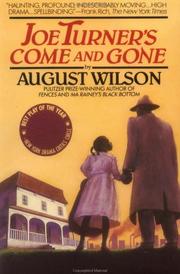
Wilson's own favourite: a 1911 boarding house full of people newly north from the South, and a man searching for the wife taken from him. The play where African cosmology enters the cycle and stops being metaphor.
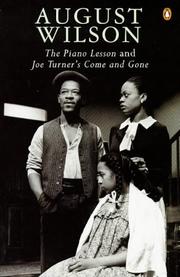
A brother wants to sell the family piano to buy the land their ancestors were enslaved on; his sister will not let it go. The cycle's clearest statement of its governing question, and the second Pulitzer.
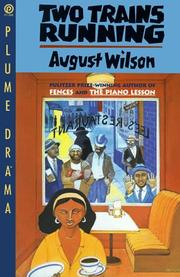
A 1969 diner facing demolition, and the play with the least plot and the best talk. Read fifth, once you trust Wilson enough to sit in a room and listen for two hours.
The Later Plays
IntermediateFollow the cycle into its darkest stretch, and see Wilson going back to rewrite his own earliest work once he knows what the project is.
▸ Study plan for this stage
Pace: Three to four weeks, and the hardest stretch emotionally. Seven Guitars first — around 115 pages and formally the trickiest so far, since you learn the ending in the opening scene. Then Jitney, the shortest and most naturalistic at under 100 pages, which reads fast and is a deliberate breath before
- Seven Guitars' retrospective structure: the play opens after Floyd Barton's funeral and then goes back, so every scene is watched with the ending known — Wilson's most ambitious formal move in the cycle
- The backyard as a stage: Wilson's move outdoors, and how a shared exterior space changes who can overhear whom
- King Hedley the elder, introduced here, whose beliefs and whose act at the end of the play generate consequences that arrive forty years later in another play. This is the clearest instance of the cycle commenting on itself
- Jitney's place in the sequence: written first of all this material in 1979, then substantially rewritten twenty years later, which is why it sits here rather than at the start — you are reading the revision, by a mature writer, of his own apprentice work
- The gypsy-cab station as a workplace play, with the leanest naturalism and the least mysticism Wilson ever wrote — a useful control case for what the supernatural material is doing elsewhere
- Becker and Booster in Jitney as the father-and-son conflict of Fences replayed with a different distribution of blame
- King Hedley II's 1980s Hill District: a neighbourhood in visible collapse, stolen refrigerators, and the cycle's least redemptive play
- How King Hedley II pays off Seven Guitars — the inheritance is literal, forty years late, and the play is close to incomprehensible in its emotional force without the earlier one
- Knowing Floyd's fate from the first scene of Seven Guitars, what do you attend to instead of suspense? Name two things the structure makes visible that a chronological telling would hide.
- What does Hedley believe about himself in Seven Guitars, and how does the play position you toward those beliefs — as delusion, as prophecy, or as something it declines to settle?
- Jitney has no ghosts, no visions and no Aunt Ester. Does it feel like a lesser play for it, or does it suggest the mysticism elsewhere is doing something optional?
- Compare Becker and Booster with Troy and Cory. Wilson wrote Jitney's original before Fences — what does he do differently the second time, and again in the rewrite?
- King Hedley II is the bleakest play in the ten. Is the bleakness earned by the cycle up to this point, or does it read as a different kind of writing?
- What exactly does King Hedley II inherit, and from whom? The answer is not simple and the play deliberately keeps it unstable.
- Read the opening scene of Seven Guitars, then the closing scene, then the opening again. The play is constructed to be read this way and the second pass at the opening is where the design becomes visible.
- Write a one-page family tree connecting the characters of Seven Guitars to those of King Hedley II. Wilson does not supply one and building it yourself is the only way the forty-year payoff lands with full weight.
- Take a page of Jitney's dialogue and a page of Joe Turner's and compare the sentence rhythms. Jitney is the naturalistic pole of Wilson's range and the contrast is the fastest way to hear what he does elsewhere.
- After King Hedley II, go back to your inheritance list and add these three plays. The list should now be long enough to make an argument with, which is what the last stage asks of you.
- Read Aunt Ester's death, as reported in King Hedley II, and note what the surviving characters make of it. You are being prepared for the last two plays and Wilson knows it.
Next up: Aunt Ester has been the offstage centre of three plays and has now died in one — which is exactly the state a reader should be in before meeting her alive, in 1904, in a play Wilson wrote ninth.
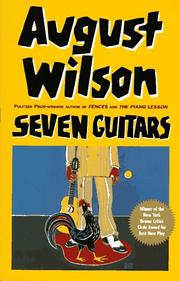
A 1948 backyard, a bluesman's funeral, and the story told backwards from it. Formally the most adventurous play so far, and it introduces King Hedley, whose son gets a play of his own.
Written first of everything here in 1979, then substantially rewritten twenty years later — which is why it sits at this point rather than at the beginning. A gypsy-cab station in 1977, and the leanest, most naturalistic thing he wrote.
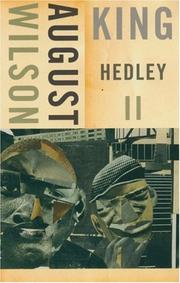
The 1980s, and the bleakest play in the cycle: two men selling stolen refrigerators in a dying neighbourhood, with Seven Guitars' consequences arriving forty years late. It requires Seven Guitars to land.
The Bookends, Written Last
IntermediateClose the cycle with the two plays that frame it at either end and were written after everything else, then read Wilson's own account of what he was doing and why.
▸ Study plan for this stage
Pace: Two to three weeks. Gem of the Ocean and Radio Golf are the two shortest plays in the cycle, around 90 and 80 pages, and they should be read close together — within a week of each other — because Radio Golf's central object is the house you have just spent a play inside. Then The Ground on Which I S
- Aunt Ester onstage at last, 285 years old, in 1904 — the figure three earlier plays treat as rumour, finally dramatised, and the strongest argument this path makes for composition order
- The City of Bones sequence in Gem of the Ocean: Wilson's most fully committed supernatural set piece, and one only a writer confident of his audience would attempt in a ninth play
- 1839 Wylie Avenue as an object rather than a setting — Aunt Ester's house, established in Gem of the Ocean and threatened with demolition in Radio Golf, which is how the cycle closes its own circle
- Radio Golf's Harmond Wilks: a developer running for mayor, prosperous, assimilated, and forced to choose — the cycle's last protagonist and the only one whose inheritance is a liability to his ambitions
- The cycle's arc from a woman who remembers slavery to a man who cannot afford to, compressed into two plays written at the end of Wilson's life
- The composition-order argument in practice: Gem of the Ocean arriving ninth means every reference to Aunt Ester in the earlier plays was a debt, and this is the payment. Read first, it would have been mere exposition
- The Ground on Which I Stand as Wilson's own account of the ground the cycle was built on — his 1996 case for Black theatre institutions, made against colour-blind casting, and a genuine and continuing argument in the American theatre
- Why the speech belongs after the plays: read first it is a position to agree or disagree with, read last it is a writer explaining what you have just watched him do
- Having met Aunt Ester as rumour in three plays and as a death in a fourth, what does seeing her alive in 1904 actually add? Would the effect survive reading Gem of the Ocean first?
- This path argues for composition order over decade order. Now that you have read all ten, make the opposing case as strongly as you can — what does the decade order give a reader that you did not get?
- What is Harmond Wilks being asked to give up, and what is he being asked to keep? The play declines to make the choice costless; where does it place the real price?
- Radio Golf is set in 1997 and was finished as Wilson was dying. Does it read as a conclusion he designed or as one circumstance imposed?
- In The Ground on Which I Stand, what exactly is Wilson arguing for and what is he arguing against? State both precisely — the speech is often summarised loosely in both directions.
- Wilson's position on Black theatre institutions was contested when he made it and is still argued over. Having read the ten plays, what does the work itself contribute to that argument, if anything?
- Read Gem of the Ocean and then immediately reread the first scene of Two Trains Running in which Aunt Ester is discussed. Write 200 words on what changed. This is the single cleanest demonstration on the path of what composition order buys.
- List the ten plays in decade order beside the ten in composition order on one page. Mark the four or five places where the two sequences diverge most sharply and write a sentence on what each ordering makes of that play. You now have your own answer to the ordering question rather than the path's.
- Finish the inheritance list you have been building since the first stage — all ten plays, what is passed down, what is done with it. Then write 500 words on what the cycle collectively argues about inheritance. This is the essay the whole path has been preparing.
- Read The Ground on Which I Stand aloud. It was written to be spoken and it is markedly more forceful at speaking pace, which is also true of every monologue in the ten plays and is the last thing this path wants you to notice.
- Pick the play you would give someone who had read none of them, and write one paragraph defending the choice against Fences, which is the default answer. Having a reasoned alternative is a fair test of whether you have read the cycle or merely finished it.
Next up: This is the end of the path. The obvious next step is not more Wilson but a return trip — reread Ma Rainey's Black Bottom now that you know what the cycle became, since it is the only play written before Wilson knew he was writing one.
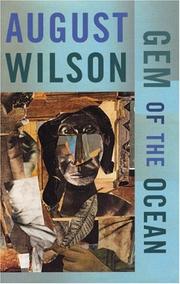
Chronologically the first play — 1904, with Aunt Ester, the 285-year-old spiritual centre the whole cycle has been referring to. Written ninth, and it is a completely different experience arriving here rather than at the start, which is the strongest case for composition order.
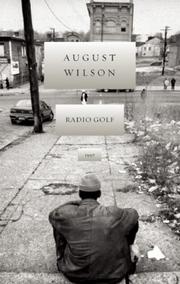
The last play, finished as Wilson was dying: a 1997 developer running for mayor who has to decide whether to demolish Aunt Ester's house. The correct final play under either ordering, and devastating if you have just read Gem of the Ocean.
The 1996 speech that became his manifesto, arguing for Black theatre institutions against colour-blind casting. Read after the plays, as the artist's own statement of the ground the cycle was built on.