Start with Ma Rainey's black bottom. It takes place across a single afternoon in a Chicago recording studio in 1927, it has no subplot and almost no scene changes, and by the end the whole argument of the cycle has been stated out loud by four musicians waiting in a band room. It is also the play that put Wilson on Broadway, and at roughly ninety pages it is the shortest commitment on this list.
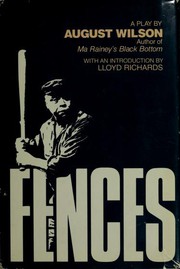
The obvious alternative is Fences, the Pulitzer winner, the one most people have seen. It is the more emotionally overwhelming play and a perfectly good place to begin. But Fences is a father-and-son story that works beautifully on its own terms, which means it can leave you thinking Wilson wrote domestic drama. Ma Rainey's black bottom makes the larger project visible immediately.
Publication order or decade order?
This is the real question, and it has two defensible answers.
The decade order runs Gem of the Ocean (1900s), Joe Turner's come and gone (1910s), Ma Rainey's black bottom (1920s), The Piano Lesson (1930s), Seven guitars (1940s), Fences (1950s), Two trains running (1960s), Jitney (1970s), King Hedley II (1980s), Radio Golf (1990s). It gives you the century as a continuous story and it is how the cycle is usually described.
The recommendation here is publication order anyway. Wilson wrote these across twenty-two years and his technique changed enormously; the late plays assume a reader who already knows the neighbourhood, the recurring names and the mythology. Gem of the Ocean was written ninth and reads like a summation, so putting it first hands you the summation before the thing being summed up. Read in the order he wrote them and you watch a writer discovering what the cycle is.
If you want the century as history rather than the writer as a career, decade order is the honest counter-case. It is not wrong. It is a different book.
The written order
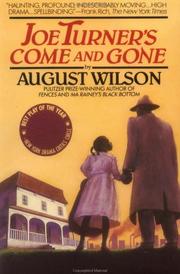
Ma Rainey's black bottom, then Fences, then Joe Turner's come and gone — which is the one Wilson himself named as his favourite and the most spiritually strange of the early plays. Then The Piano Lesson, a brother and sister arguing over whether to sell a carved family heirloom, and probably the best-constructed play in the cycle.
Two trains running slows the pace right down into a diner about to be demolished; it is talk, and the talk is the point. Seven guitars is the murder mystery told backwards from the funeral. Jitney is the odd one — he wrote it first, in the late seventies, then substantially rewrote it two decades later, so its place in any order is genuinely ambiguous. It is also, for many readers, the warmest thing he wrote.
The late plays
King Hedley II is the bleakest of the ten and the one critics divide over most sharply; it is set in a Reagan-era Pittsburgh that has lost the ground the earlier plays stood on. Gem of the Ocean goes back to 1904 and to Aunt Ester, the ancient woman who is referred to across several plays and appears in person only here. Radio Golf, written last and while Wilson was dying, closes the cycle in the 1990s with a developer planning to demolish Aunt Ester's house.
That Aunt Ester thread — Gem of the Ocean, Two trains running, King Hedley II, Radio Golf — is the closest the cycle comes to continuous plot, and it is one more argument for reading all ten rather than sampling.
The essay
The ground on which I stand is not a play. It is the 1996 conference speech in which Wilson argued for separately funded Black theatre institutions and against colour-blind casting, and it started a public argument with the critic Robert Brustein that ran for years. Both positions still have serious advocates. Read it after several plays, when you can hear it as the working theatre artist talking rather than as a manifesto in the abstract.
Where to stop
Four plays give you Wilson: Ma Rainey's black bottom, Fences, The Piano Lesson and Jitney. The full ten is a serious undertaking and worth it. More drama sequences are on Discover.
Follow the full ordered path here: August Wilson's Century Cycle: What Order to Read the Ten Plays In.