Attack on Titan Reading Order: Where to Start
Attack on Titan is thirty-four numbered volumes read straight through from one to thirty-four — there is no chronological alternative, no arc worth skipping, and the spin-offs (Before the Fall, No Regrets, Junior High) are optional side reading that sit outside the main count. The single easiest way to lose your place is the Omnibus line, which collects three volumes per book and renumbers them one to twelve, so a reader who buys Omnibus 4 after single volume 9 will repeat three books. This path stays in the single-volume numbering the whole way. An honest warning about our own catalogue: volumes 4, 16 to 20, 27 to 30, 33 and 34 are not catalogued in a form we can verify, so they are named here rather than listed — read them in their proper places.
Start Here: The Fall of Shiganshina
BeginnerGet through the setup — the walls, the breach, the cadet corps and the battle for Trost — and understand the rules of the world before the series starts breaking them.
▸ Study plan for this stage
Pace: About two weeks. Volumes 1, 2, 3, 5 and 6 run roughly 190 to 208 pages each and read in an hour or two, so three volumes a week is comfortable. Two practical notes before you start. First, volume 4 sits between Vol. 3 and Vol. 5 and is not in our catalogue — it closes the Trost arc and you should re
- The rules of the walled world — three concentric walls, fifty-metre Titans, the vertical manoeuvring gear, the nape of the neck as the only kill point. All of this is established in Vol. 1 and never re-explained.
- The three-branch military structure — Garrison, Survey Corps, Military Police — and the class logic that makes the top ten cadets choose between them. Vol. 2's training flashbacks exist to plant this.
- Eren's rage as the engine. It is not heroism and Isayama does not present it as such; the series spends thirty volumes testing what it costs.
- Trost in Vol. 3 as the structural turn: the volume where the premise stops being 'humans versus monsters' and becomes a mystery with a withheld answer.
- The trial and the Survey Corps in Vol. 5 — the first sign that the real conflict is between humans, and the introduction of Levi, whose relationship to Eren is custodial rather than heroic.
- The 57th Expedition formation in Vol. 6: the long-distance scouting formation, the signal flares, the colour codes. The next stage's entire action sequence assumes you followed this.
- Isayama's use of the ordinary soldier. Named characters die without arcs, and the cadets you are asked to care about are teenagers who are visibly not equal to the situation.
- What are the walls for, and what does the Vol. 1 breach establish about how much of the world the reader is being shown?
- Why does Isayama spend the whole of Vol. 2 on training flashbacks rather than pushing forward, and which of those cadets pay off later?
- What changes at the end of Vol. 3, and how does it convert the series from a survival story into a mystery?
- In Vol. 5, why is Eren put on trial at all, and what does each of the three branches actually want from him?
- How does the Vol. 6 scouting formation work, and what does its design tell you about how the Survey Corps values individual lives?
- Draw the three walls with Shiganshina and Trost marked on them, and add the breach points. The geography drives every arc through volume 15, and a reader who has not sketched it once will be lost during the Uprising.
- After Vol. 3, write down in one sentence what you think the Titans are and where they came from. Seal it and check it at the end of the path — the series is built to make first guesses wrong in an instructive way.
- Compare a crowd panel in Vol. 1 to one in Vol. 6. The improvement in Isayama's drawing across eighteen months is one of the more visible skill curves in commercial manga.
- Read the Vol. 6 formation briefing twice, once for plot and once tracing which flare colour means what. The next stage's chase is choreographed on those signals and is nearly unreadable without them.
Next up: With the walls, the corps and the expedition formation all in place, the next stage turns the same setup into a hunt — and the mystery introduced at the end of Vol. 3 acquires a second suspect.
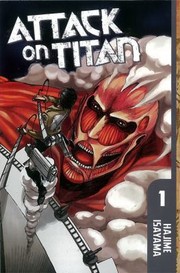
The only place to start. A hundred years of safety behind the walls end in the first chapter, and the series establishes its two constants: Eren's rage and the fact that nobody is safe. The early art is rough; it improves fast.
Training-corps flashbacks that introduce Mikasa, Armin, Jean and Annie. Second because every one of those characters pays off later, and this is the only volume that gives you them at rest.
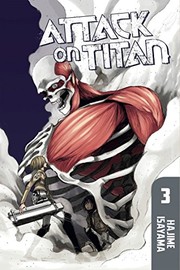
The Trost counter-attack, and the first reveal that resets the premise. Third, and the volume where the series proves it is a mystery rather than a monster book.
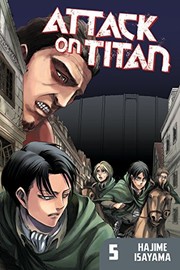
The trial, the Survey Corps, and Levi. Read volume 4 immediately before this one — it closes the Trost arc and is missing from our catalogue rather than from the series.
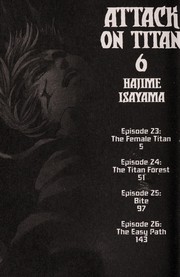
The 57th expedition beyond the wall begins, and the series opens up from a siege story into a field campaign. Sixth: the formation and its signal flares are explained here and assumed everywhere after.
The Female Titan
BeginnerFollow the first real whodunnit — an intelligent Titan inside the Survey Corps' own ranks — and watch the series commit to killing characters you have grown attached to.
▸ Study plan for this stage
Pace: Two weeks for volumes 7 through 11, which are around 190 pages each and among the fastest-reading in the series. Volumes 10 and 11 are one continuous chase and should not be split across a long gap. Read these five straight through if you can; the identity puzzle only rewards a reader who is doing t
- The intelligent-Titan problem — an enemy that plans, chooses targets and behaves as though it has been trained changes what kind of book this is.
- Erwin Smith's method: he spends lives to buy information, and Vol. 7 and 8 present that as strategy rather than as villainy. Whether you accept it is the question the arc actually asks.
- Isayama's use of information asymmetry. The reader is given exactly the clues the characters have, which is why the puzzle works and why summaries ruin it.
- The cost of the 57th Expedition, and the series' willingness to kill characters it has spent volumes making you like — established here as a permanent rule, not a one-off shock.
- The theology of the walls introduced in Vol. 9, which looks like a side detail and runs straight through to the final volumes.
- Ymir as the series' first character with a private history the reader is not told, and the model for how Isayama will withhold backstory from here on.
- The Utgard and forest sequences in Vol. 10 and 11 as the series' first extended set piece with no veteran support — the cadets alone, doing it badly.
- What does the Female Titan's behaviour in Vol. 7 tell you before any identity is revealed, and what does it rule out?
- Was Erwin's plan in Vol. 8 justified by what it produced? State the case both ways before deciding.
- What does Vol. 9 suggest about the walls themselves, and why is that a more disturbing revelation than anything about the Titans?
- How does the reveal opening Vol. 10 change the geography of the threat — where must the enemy have been all along?
- Across these five volumes, how much of what the characters believe about their world turns out to be institutional rather than true?
- Before opening Vol. 8, write down your suspect list for the Female Titan and the evidence for each name. Check it afterwards — the clues are all placed fairly, and seeing which ones you missed teaches you how Isayama plants things.
- Keep a running casualty list from Vol. 6 onward with a note on how much page time each character had. The ratio is the argument the arc is making about what a scouting expedition actually costs.
- After Vol. 9, write two hundred words on what you now think the walls are. Compare it with the sealed guess from the previous stage.
- Reread the Vol. 8 trap sequence panel by panel, tracking who is standing where in the underground. The staging is precise and most readers only follow it on the second pass.
Next up: The enemy has now been located inside the walls twice over, which sets up the next stage's question: if the threat was always internal, who has been governing, and what have they known?

The expedition goes wrong at speed and the Female Titan hunts the formation. Seventh, and the volume that establishes the series' willingness to spend its cast.

The trap inside the walls, and one of the series' best-staged sequences. Eighth: the identity puzzle only works if you read six and seven first and did the guessing yourself.

The aftermath, and the first hard look at what the walls actually are. Ninth — the theology of the walls introduced here runs all the way to the finale.

Ymir, and the Clash of the Titans arc begins in earnest. Tenth: the reveal that opens this arc is the series' second big structural surprise, so avoid summaries.

The pursuit through Utgard and the forest, with the cadets carrying the fight alone. Eleventh, straight on — ten and eleven are a single continuous chase.
Clash of the Titans, and the Uprising
IntermediateReach the turn where the enemy stops being outside the walls, and the series becomes political.
▸ Study plan for this stage
Pace: Ten days to two weeks for volumes 12 through 15, roughly 190 pages each. Volume 12 closes the arc begun in Vol. 10 and should be read straight after volume 11 rather than after a break. Volumes 13 to 15 are the most dialogue-heavy stretch in the series so far and the least action-driven — if you cam
- The tonal break at Vol. 12. Isayama treats it as the end of part one, and the series after it is recognisably a different book — political rather than survivalist.
- The Uprising as a coup story: the Military Police, the interior faction, the crown, and the question of who has actually been running the walls for a century.
- Memory and governance — the mechanism by which the population's history has been managed, which is the series' central political idea and is spelled out here.
- Historia's arc in Vol. 14 as the emotional centre of the middle third, and the point at which Isayama proves he can write a character rather than a situation.
- Levi's squad in a policing role: the series' most morally compromised stretch, where the protagonists torture, kidnap and depose, and Isayama declines to reassure the reader about it.
- The Survey Corps' change of status by Vol. 15 — from a discredited expedition service to the faction holding the state, and what that does to Erwin's freedom of action.
- Why does Isayama end the Clash arc in Vol. 12 with that particular cost, and what does the series lose and gain by it?
- Who has been governing inside the walls, by what mechanism, and how long has it been running?
- In Vol. 13 and 14, which actions taken by the Survey Corps would you condemn if another faction took them? Set out the strongest defence of each before answering.
- What does Historia want, and how does Vol. 14 reframe everything she has done since her introduction?
- By the end of Vol. 15, what constraint that has limited the Survey Corps since Vol. 5 has been removed, and what does that free them to do?
- Write a one-page account of the Uprising as a political event — factions, aims, means, outcome — with no reference to Titans at all. It is coherent as a coup narrative, and writing it that way is the fastest way to see what the middle third is about.
- List every character introduced before Vol. 12 who is dead by Vol. 15. The list is the series' actual argument about how it values its cast.
- Take one page of Vol. 13's exposition and rewrite it as a plain timeline of who knew what and when. Isayama delivers this in dialogue under pressure, and untangling it once makes the Marley arc legible later.
- Pause at the end of Vol. 15 and write down what you expect to be in the Shiganshina basement. This is the single best prediction exercise the series offers, and almost nobody gets it right.
Next up: The internal enemy is dealt with and the road to Shiganshina is open, so the next stage finally delivers the answer the series has withheld since Vol. 1 — and immediately makes it a bigger problem than the question was.

The Clash arc resolves and the cost is enormous. Twelfth: everything after this volume is a different series in tone, so treat it as the end of part one.

The Uprising begins — the Military Police, the crown, and the truth about who has been governing. Thirteenth, and the point at which readers who came for Titan fights have to decide whether they came for the right thing.

Historia's story, and the best character work Isayama had done to that point. Fourteenth: it is the emotional centre of the middle third.

The coup resolves and the Survey Corps finally has a free hand. Fifteenth — from here the series drives straight at the basement in Shiganshina, so this is a good place to pause and take stock.
Return to Shiganshina, and Marley
IntermediateSee the answer the whole series has been withholding, then absorb the time skip that relocates the story to the enemy's country.
▸ Study plan for this stage
Pace: Two weeks, and slow down for this one. Volumes 16 to 20 are the Return to Shiganshina build-up and are missing from our catalogue rather than from the series — read them in place before Vol. 21, or the payoff lands on nothing. Then volumes 21, 22, 23 and 24 at around 190 pages each. Volume 21 reward
- The basement in Vol. 21 as the series' hinge. Everything before it is a mystery; everything after is a history problem with no good options.
- The shift from survival to history — Vol. 22 reframes the walls' population as one side of a much older conflict rather than as humanity's remnant.
- The Marley arc's structural gamble in Vol. 23: dropping the reader into the enemy's country with unfamiliar viewpoint characters, and making the disorientation the argument rather than an accident.
- Gabi and Falco in Vol. 24 as deliberate mirrors of Eren and Armin — same age, same indoctrination, opposite side — which retroactively changes how the first twenty volumes read.
- Warrior candidacy and the internment zones: how a state manufactures loyal soldiers out of a persecuted population, drawn with enough specificity that the reader can see the machinery.
- The four-year skip as a character device. Eren returns changed and Isayama refuses to show the transition, so the reader has to infer it from behaviour.
- The end of the reliable protagonist. From Vol. 23 the series stops guaranteeing that the viewpoint you are given is the one you should adopt.
- What is in the Shiganshina basement, and why does the answer make the situation worse rather than better?
- How does Vol. 22 change the meaning of every Titan attack in volumes 1 through 21?
- Why does Isayama open the Marley arc from an unfamiliar point of view, and what would be lost by easing the reader in?
- Gabi believes what she has been taught with exactly the conviction Eren had in Vol. 1. What does the series want you to do with that parallel?
- What has happened to Eren during the four-year gap, and what evidence in Vol. 23 and 24 are you actually reasoning from?
- After Vol. 21, write out the world's history as you now understand it in a plain timeline — centuries, not years. The final third is incomprehensible without one and the series never provides it in a single place.
- Reread the Vol. 1 opening chapter immediately after finishing Vol. 22. It is a different scene with the basement in your head, and this is the best demonstration of what the reveal actually did.
- For Vol. 24, write a paragraph arguing Gabi's position as sympathetically as you can. If you cannot do it, you have not read the volume Isayama wrote.
- List everything you learn about Eren in volumes 23 and 24 from action alone, with no internal narration. The list is short, and its shortness is the point.
Next up: With both sides now given a case a reasonable reader could accept, the final stage runs that collision to its end — and the series stops offering anyone to root for.

The end of the Return to Shiganshina arc and the contents of the basement. Read volumes 16 to 20 first — they are the arc's build-up and are missing from our catalogue, not from the story. Twenty-one is the single most important volume in the series.

The consequences of the basement, and the first sight of the wider world. Twenty-second: this is where the series stops being about survival and starts being about history.

The Marley arc opens with a four-year jump and an almost entirely new cast. Twenty-third — go in expecting to be disoriented on purpose; the disorientation is the argument.

Gabi, Falco and the Warrior candidates, told with enough sympathy to make the earlier volumes uncomfortable. Twenty-fourth, and the volume that decides how you read the ending.
The Rumbling
IntermediateFollow the endgame, where every faction has a defensible case and the series refuses to hand you a side.
▸ Study plan for this stage
Pace: Two to three weeks, and this path can only take you to volume 32. Volumes 27 to 30 belong between Vol. 26 and Vol. 31 and are missing from our catalogue — they carry the Yeagerist coup and the formation of the alliance, and skipping them makes Vol. 31 unreadable. Volumes 33 and 34 finish the series
- The Liberio raid in Vol. 25, staged so the reader watches an atrocity from the side of the people committing it. The whole moral argument of the final third turns on this sequence.
- The War Hammer Titan and the exhaustion of escalation — by Vol. 26 new powers stop resolving anything, which is the point.
- Eren's split from everyone who trusted him: Isayama withholds his reasoning for volumes, so the reader has to decide how much to extend him on past credit.
- The Rumbling itself as a scale of violence the series has been building toward since the first page, and the deliberate refusal to make it thrilling.
- The alliance in Vol. 31 and 32 — former enemies cooperating not out of reconciliation but because the alternative is extinction, which is a colder and more convincing kind of unity.
- Genocide as the actual subject. Isayama does not use the Rumbling as a threat to be averted in the last chapter; it happens, at scale, and the survivors have to live in the world it makes.
- The refusal of a side. Every faction in the final third has a defensible case and none of them has clean hands, and the series declines to arbitrate.
- Why does Isayama stage the Liberio raid from the attackers' side, and what does the reader's discomfort during it accomplish that a conventional framing could not?
- By Vol. 26, what evidence do you actually have about Eren's intentions, as opposed to what you are assuming from four volumes of goodwill?
- The alliance in Vol. 31 and 32 forms between people with genuine grievances against each other. What holds it together, and do you find that convincing?
- The series presents Marleyan persecution of Eldians and the Eldian response as both real. How does it avoid collapsing into an argument that one justifies the other?
- Having read as far as Vol. 32, what do you now think the series has been about since Vol. 1 — and what would you have said after Vol. 3?
- After Vol. 25, write two hundred words on the Liberio raid from a Marleyan civilian's point of view. It is uncomfortable and it is what the volume is asking for.
- Build a two-column list of every faction's stated aims and actual actions across volumes 25 to 32. The gaps between the columns are where the series does its work.
- Track how many pages Eren appears on in volumes 25 to 32 versus volumes 1 to 15. The protagonist is withdrawn from his own story deliberately, and the count makes it undeniable.
- Read volumes 33 and 34 wherever you can find them, then write your verdict on the ending before reading any commentary. This is the single most spoiled and most flattened ending in modern manga, and a first-hand reaction to it is worth having.
- Return to Vol. 1's first chapter one last time. The opening scene reads as a completely different piece of writing once you know what the walls are and who put them there.
Next up: This is the end of the path — the main series in its single-volume numbering, with the four uncatalogued stretches named so you can fill them in — and the natural next move is a full reread, which Attack on Titan rewards more than almost any long-form manga.

The raid on Liberio, staged so that you watch it from the wrong side. Twenty-fifth: the whole moral argument of the final third turns on this sequence.

The fallout, the War Hammer Titan, and Eren's split from everyone who trusted him. Twenty-sixth, straight on from twenty-five.

The Rumbling is underway and the series reaches its point of no return. Volumes 27 to 30 belong in between and are missing from our catalogue; do not skip them, they carry the Yeagerist coup and the alliance.

The alliance's last stand as the walls march. Thirty-second, and as far as this path can take you — volumes 33 and 34 finish the series and are worth hunting down, because the ending is the most argued-about in modern manga.