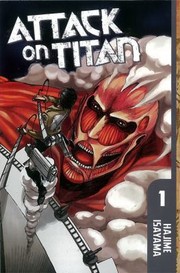
Start with Attack On Titan, Vol. 1. That sounds too obvious to say, except that two other entry points get recommended constantly and both are worse. The first is treating the anime as a substitute — it adapts the manga closely, but Hajime Isayama drew the ending years before the adaptation reached it, and the panels carry framing and foreshadowing the screen version compresses. The second is starting with a spin-off such as Before the Fall or No Regrets, both set outside the main timeline and both close to meaningless without it.
The honest warning about volume one is the art. Isayama's early pages are rough: proportions wobble, fight choreography is hard to follow, and faces shift between panels. Readers who bail on this series almost always bail here. The drawing improves steadily and the plotting is tight from the first chapter, so the standard advice holds — give it three volumes before deciding.
The wall arcs: volumes 1 to 15
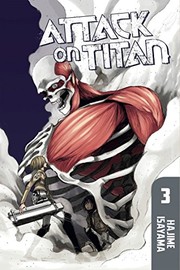
The opening stretch is survival horror with a military-academy spine. Attack On Titan, Vol. 1 establishes the walls, the breach and the premise; Attack On Titan, Vol. 2 and Attack on Titan, Vol. 3 put Eren through training and the first real deployment, and volume three is where most readers stop treating this as a monster story. Attack on Titan, Vol. 5, Attack on Titan, Vol. 6 and Attack on Titan, Vol. 7 run the Female Titan pursuit, the series' first genuinely intricate plot, and Attack on Titan 8 delivers the reveal that reframes everything before it.
From there Attack on Titan, Vol. 9 through Attack on Titan, Vol. 15 move the conflict inside the walls — Attack on Titan, Vol. 10, Attack on Titan, Vol. 11 and Attack on Titan, Vol. 12 cover the Clash of the Titans arc, and Attack on Titan, Vol. 13, Attack on Titan, Vol. 14 and Attack on Titan, Vol. 15 turn the story into political conspiracy. Read these in order without skipping; the reveals are cumulative and a summary will spoil them flatly.
The turn: volumes 21 onward
Our shelf jumps from volume 15 to Attack On Titan, Vol. 21, and that gap is ours, not the series'. Volumes 16 to 20 cover the Return to Shiganshina arc — the basement, and the answer the whole story has been withholding — and you should read them, we simply do not have catalogue records for them yet. The same applies to volumes 4, 27 to 30, and the final two, 33 and 34.
Attack On Titan, Vol. 21, Attack on Titan, Vol. 22 and Attack on Titan, Vol. 23 carry the story across its hardest break. Around volume 23 the setting moves outside the walls entirely, the perspective shifts to characters you have never met, and the genre changes from siege horror to something closer to a political tragedy about nationalism and inherited grievance. Attack on Titan, Vol. 24, Attack on Titan, Vol. 25 and Attack on Titan, Vol. 26 build that new world out, and Attack on Titan 31 and Attack on Titan 32 run the final confrontation.
Where to stop
There is a real answer here, and it is not the one fans agree on. A substantial group of readers stops at the end of the Return to Shiganshina arc, treating that as the story's natural close, because the back half asks you to re-evaluate characters you spent twenty volumes rooting for. Another group considers the back half the point of the entire work. The ending itself, in volume 34, is genuinely divisive — the disagreement is about whether it earns its final turn, and it is not settled. If you want the argument the series was actually making, read to the end; if you wanted the monster story, you already finished it.
One practical note: buy a single edition format and stay in it. The colossal editions collect five volumes each and renumber, so mixing them with singles produces gaps that look like missing chapters.
Follow the full ordered path here: Attack on Titan Reading Order: Where to Start.